image1

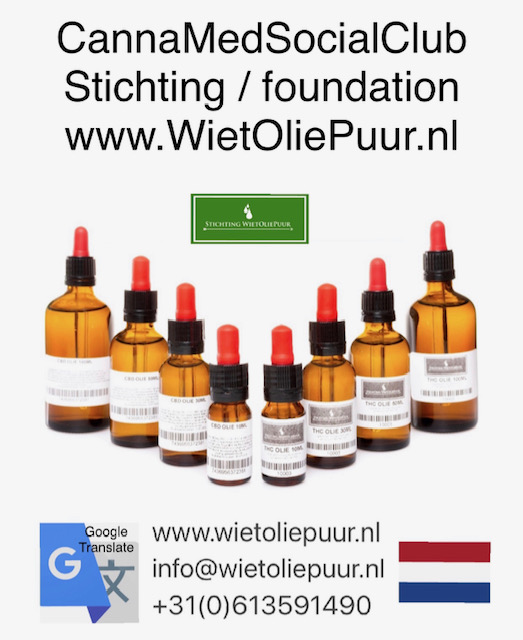
CannaMedSocialClub Stichting WietOliePuur

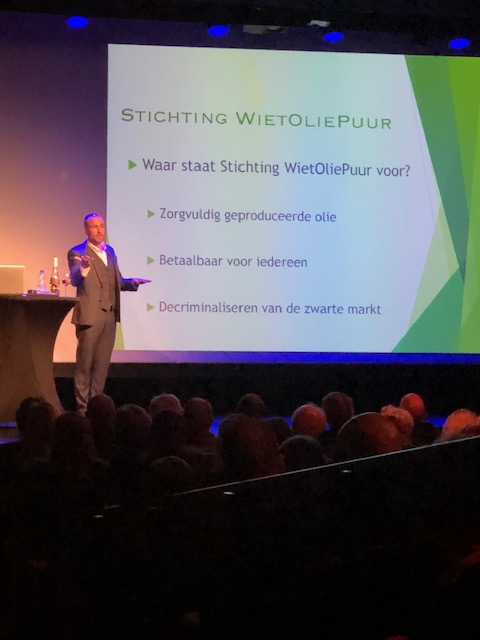
De CannaMedSocialClub stichting WietOliePuur is van menig dat elke volwassene toegang moet krijgen tot betaalbare Medicinale Cannabis. De stichting WietOliePuur zet zich in voor volwassen die met reguliere medicatie niet meer geholpen zijn.

We willen Thc en Cbd producten betaalbaar maken en voor iedereen boven de 18 jaar toegankelijk maken.

Tevens willen we de zwarte markt graag decriminaliseren omdat er veel te veel malafide wietolie verkopers zijn die geen idee hebben waar ze mee bezig zijn en geld verdienen aan ziekte mensen.
 

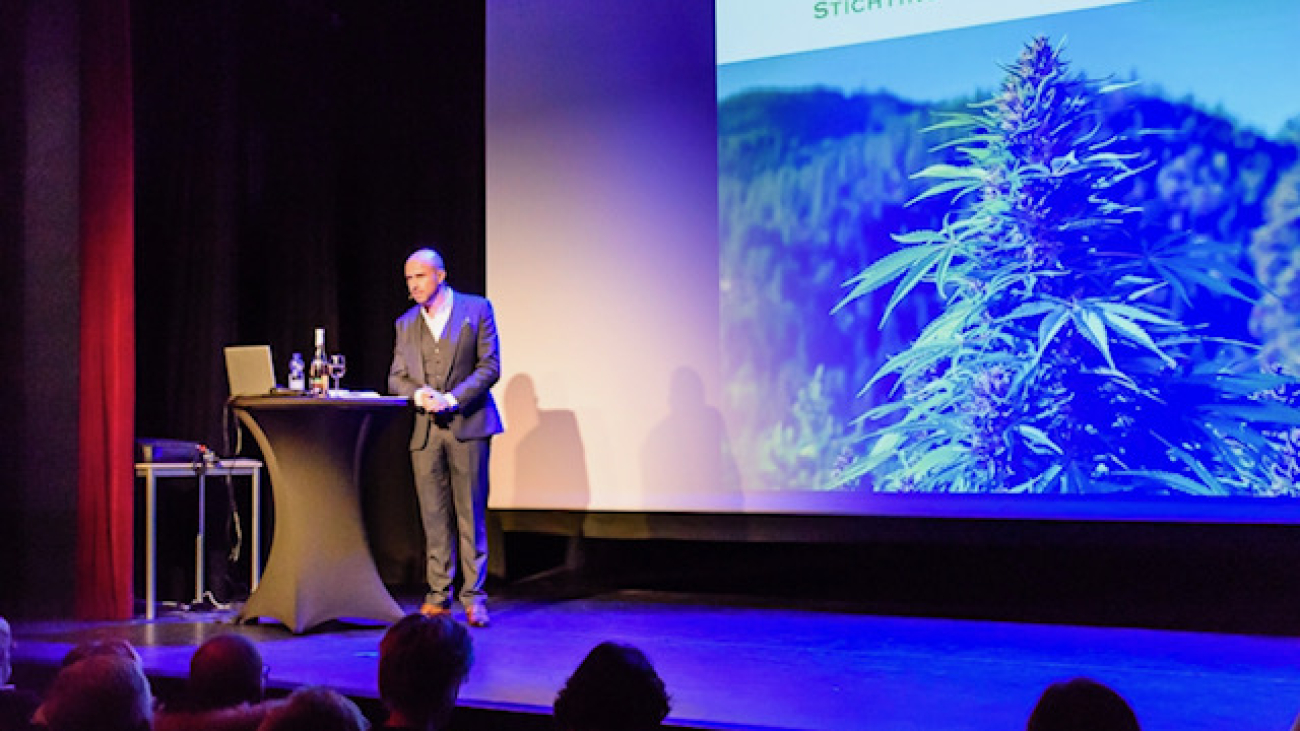
Alle producten bij de stichting maken we zelf en we kweken in Nederland binnen de regels die er zijn. We produceren duizenden cannabis en hennep planten elk jaar samen en- met / voor onze donateurs.

De stichting help iedereen bij het gebruik van dit soort producten en geeft advies en begeleiding. Ook willen we op deze manier … de CsC manier proberen de taboe sfeer te laten verdwijnen om cannabis en hennep producten te legaliseren.

Martinus van Lies,

Voorzitter / oprichter stichting WietOliePuur


ENG

The CannaMedSocialClub foundation WietOliePuur believes that every adult should have access to affordable Medical Cannabis. The WietOliePuur foundation is committed to adults who are no longer helped with regular medication.

We want to make Thc and Cbd products affordable and accessible to everyone over 18 years old.

We would also like to decriminalize the black market because there are far too many rogue cannabis oil sellers who have no idea what they are doing and earn money from sick people.

We make all products at the foundation ourselves and we grow in the Netherlands within the rules that exist. We produce thousands of cannabis and hemp plants every year together and with / for our donors.

The foundation helps everyone in the use of these types of products and provides advice and guidance. We also want to try this way … the CsC way to make the taboo atmosphere disappear to legalize cannabis and hemp products.

Martinus van Lies,

Chairman / founder of the WietOliePuur foundation
 

For a better drug policy1

The European Guidelines for Cannabis Social Clubs

Dear friends and members,

as part of the Freedom to Farm campaign, we are proud to publish the operation guide for Cannabis Social Clubs. 

Cannabis Social Clubs (CSC) are one of the most deeply-rooted and widespread models for regulating cannabis in the European Union. According to a study published a few months ago by the researchers of the University of Ghent, there are CSCs in 13 European countries. Although with some operational differences, this model guarantees a viable and effective regulatory option. CSCs also spread to various non-European countries. Currently, this type of organisation can be found in Argentina, New Zealand and they have been regulated in Uruguay since 2013.

CSCs are non-profit associations and base their activity on the self-supply of cannabis. The CSCs were born in Spain thanks to a long history of legal victories related to self-cultivation and shared consumption. At present, they are a real alternative to illicit markets, in which users themselves organize self-supply, thus guaranteeing the traceability and availability of the substance while reducing both legal and health risks. One of the main objectives of a CSC is the promotion of health and the reduction of potential risks or damages associated with consumption, as well as avoiding contact of users with illicit markets including preventing access for minors.

ENCOD is publishing the Guidelines to introduce good practices for Cannabis Social Clubs and to standardize the management model. Their purpose is to support civil society and offer a regulatory framework that ensures safe and controlled access to cannabis, as well as guarantee legal security for people who use cannabis.

You can also download the guidelines here.

Contact us for any further questions.

We wish you happy holidays and stay healthy!


cannareporter

“Cannabis was buried by a century of ignorance and prejudice” – Interview with Enrico Fletzer

CannaReporter spoke with Enrico Fletzer, President of the Executive Committee of the European Coalition for Fair and Effective Drug Policies (ENCOD), in order to understand the implications of voting at the 63rd session of the Commission on Narcotic Drugs (CND), which removed cannabis from the Annex IV in the 1961 Convention.

Please read the interview on the link below (available in Portugues, Spanish, and English language):

Enrico Fletzer: “A canábis foi enterrada por um século de ignorância e preconceito”


IMG_4433-1

Canna-chaos in Vienna?

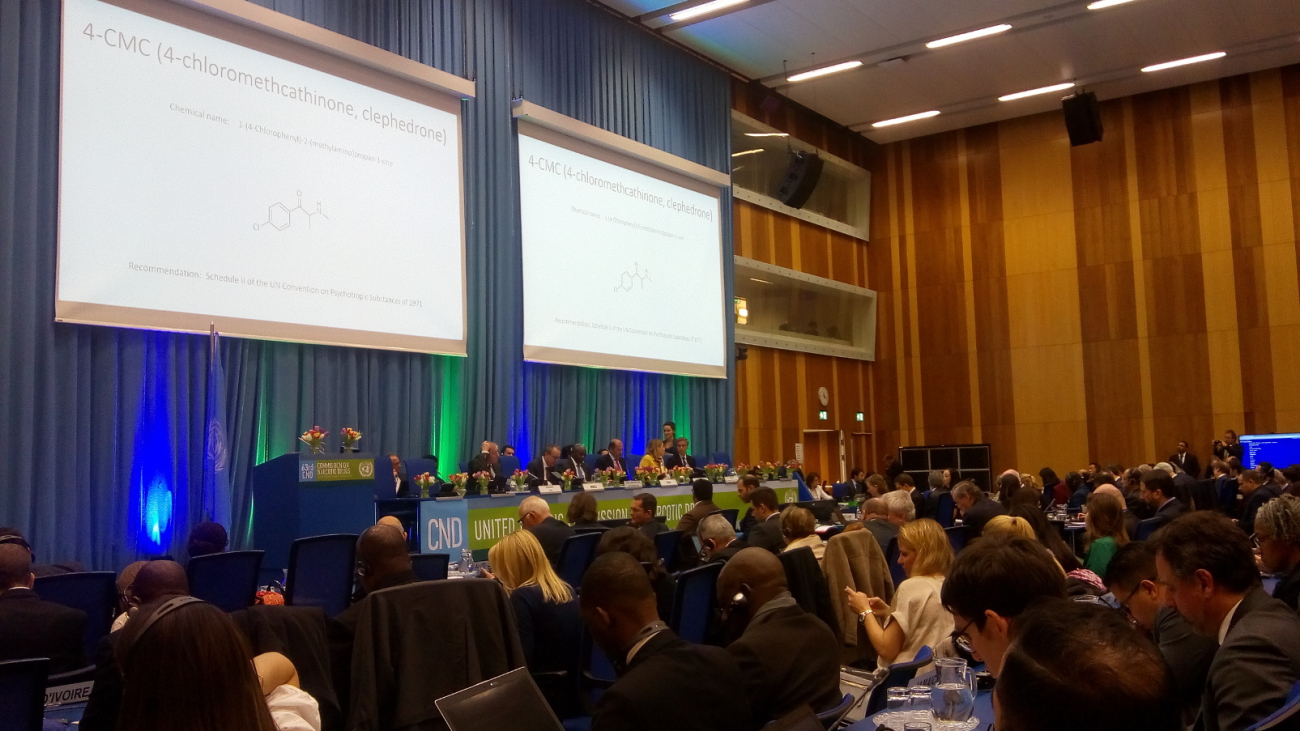
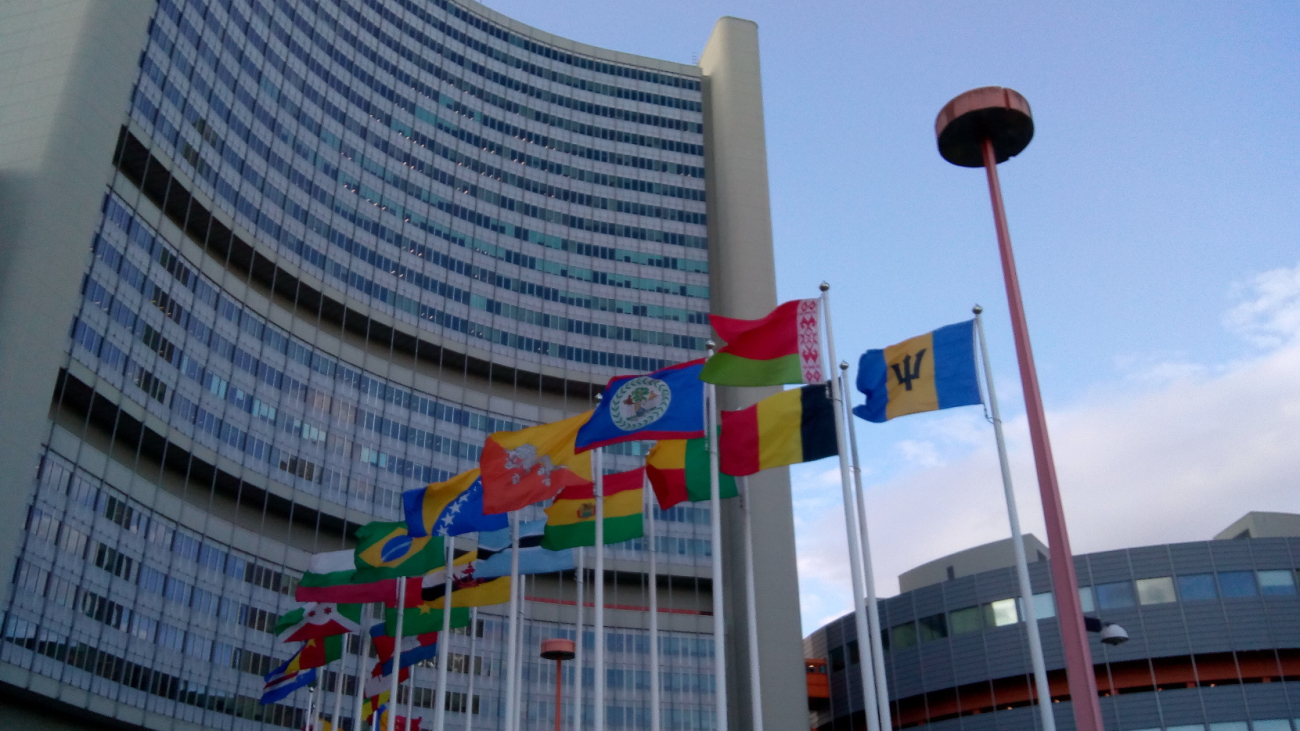
The genesis of the decision of today’s 63rd Reconvened Conference on Narcotic Drugs of the UN is certainly due to the perseverance of the international activists of ENCOD, FAAAT and the US Veterans for Safe Access and many other friends who from Mexico to Barcelona raised the cannabis issue and the legitimacy of the past control system which has been highly exaggerated as to cannabis issues.

For the first time, some poor and underprivileged activists of the civil society forced the WHO in Geneva after 5 years of intense work to make up their minds on the therapeutical potentials of the plant. It has been a long trip to stimulate and finally, the experts sent their recommendations to the drug authorities of the UN in Vienna. This long trip is not over yet. But considering it by some aspect quite unrealistic in some corridor discussions at the ENCOD GA in Slovenia, the actual result of 2nd of December 2020 is a real breaking point and a light in the darkness of the past century of cannabis prohibition.

As a matter of fact, the cannabis issue has been buried by a century of ignorance and bigotry starting with the fascist-racist imprinting of the Italian medical delegation at the 1925 meeting of the League of Nations that started to pose the cannabis issue as a threat to the white race throughout all the years where the science achieved seminal results in the cannabis research which were never taken to knowledge hitherto by the state community.

All efforts to reconsider cannabis as to the outdated 1961-1971 Single Convention on narcotic and psychotropic substances were postponed several times and discussed finally today at the 63rd Conference on Narcotic Drugs of the United Nations closing on the 6th of March 2020 and reconvened on 2-4th of December to establish the viability of cannabis in the global pharmacopoeia after the UN treaties in 1961 assessed its forfeiture in the medical applications despite the fact that most cannabis-related scientific the research was still to be done.

Two statements of civil society were sent to the CND, one lead by Encod (Vote Yes) with 195 signatures representing 53 nations stressing the need of the full recognition of the therapeutical potential of the cannabis plant and last but not least, the appeal, subscribed by Forum Droghe of Italy and others like Science for Democracy, that highlighted the importance of science-driven policies on this respect.

As a result, cannabis was taken out of schedule IV with the consent of 27 nations voting yes and 24 against. It is a historical change in the rather elephantine structure of the global drug control mechanism. Cannabis is still considered (mainly for political reasons, as admitted the WHO experts) as dangerous as heroin and fentanyl being left in schedule I. But the result will accelerate society to evaluate the empowerment of just and effective drug policies. The other proposals were rejected like the insert Dronabinol, the non-proprietary name of THC, from schedule II to schedule I. Also, the question of CBD was rejected and similar dispositions on extracts based on THC. There have been countries that rejected those recommendations being rather liberal on cannabis like Canada. Hungary seems out of control and meanwhile so obsessed that they opted against a major restriction of cannabis in schedule I as to pure THC remaining in Schedule II whereas the flowering tops remain notably in Schedule I.

Most probably the latitude of the single nations will grow and accomplishing the declarations of the former Bush and Obama drug czar John Brownfield whose doctrine allows the US to do whatever they might dispose of as to cannabis but tend to oblige the other nations to follow the flawed daily grind of the UN we have just attended today.
In the meanwhile and at the centre of our political agenda a simple and basic slogan:

Freedom to Farm!


PLEASE CHECK OUT THE CND MONITOR HERE:

Monitoring the vote on WHO medical cannabis recommendations (V6)

5-1

Human Rights and Public Health shape a new agenda on drugs

Dear members and friends,

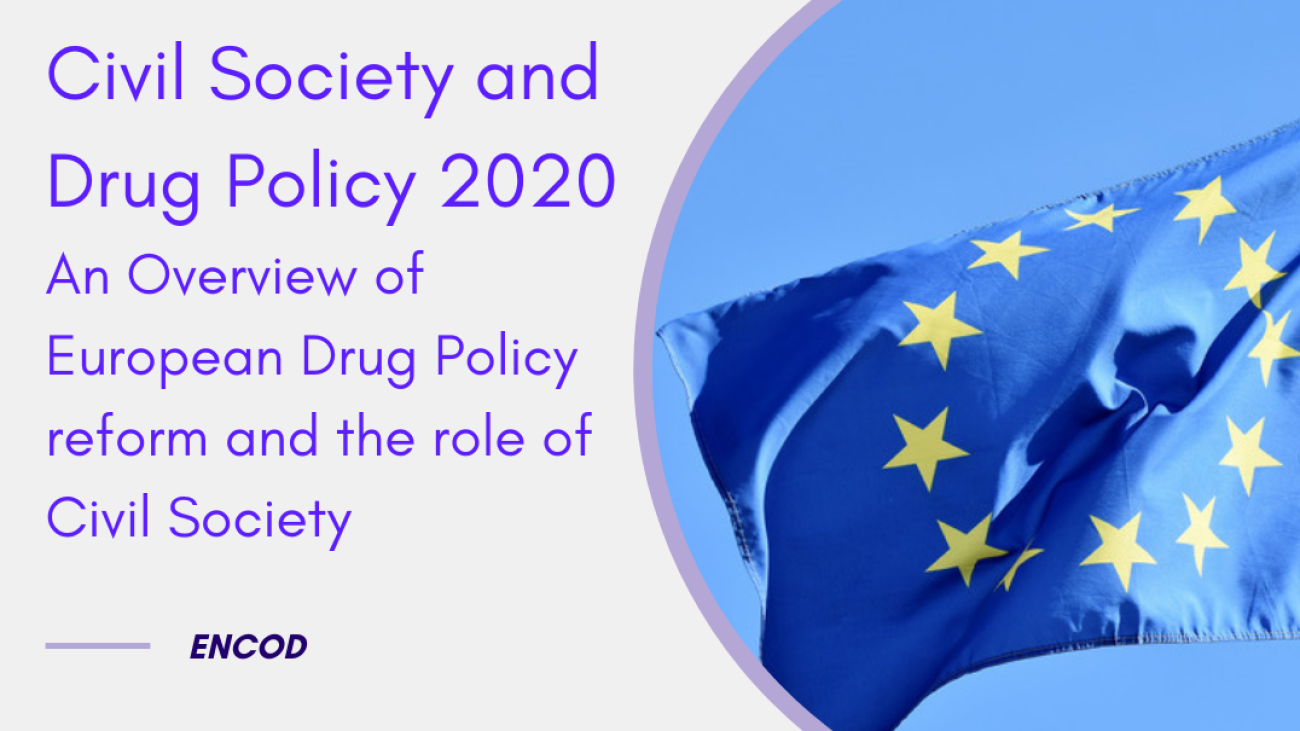
we are glad to publish the report Civil Society and Drug Policy 2020: An overview of European Drug Policy Reform and the Role of Civil Society. The report points out the need to overcome drug use criminalization in those European countries where actions related to personal use continue being criminal offences. It emphasises the urgency of cannabis regulation in some countries. Additionally, it describes the European PWUD movement, its claims and protest tools.

Starting today, the Commission on Narcotic Drugs (CND) is having the Reconvened 63rd session where countries are expected to vote on cannabis rescheduling, besides that the European Union is carrying out the definition of the new Drug Agenda 2021 – 2025, which the European Council and Parliament will debate in the coming weeks. This report tries to convey the vision of Civil Society to public decision-makers to generate a drug policy that protects the rights of individuals and Public Health.

We want to thank all the contributions and support from Civil Society stakeholders to make it possible.

Download the report here.


IMG_20200304_111824-111111

WHO cannabis patients statement released!

Dear friends and colleagues,

It is our pleasure to announce that the statement Support patient access to medicine, vote yes! has been released by the UN under document symbol E/CN.7/2020/NGO/7.

Feel free to send it to your governments and national authorities, to ensure they are aware that civil society is monitoring them, and ensure they take action to improve access to cannabis for patients! In case you are not aware of relevant government authorities’ in charge of “drug control” in your country, you can find their contact on this list (from last year though). You can also find here contacts of the Embassy of your country in Vienna, Austria (where the UN headquarters hosting the vote is located).

Otherwise, feel free to share broadly this statement to your contact lists, media, social media, but also during family time and everywhere such a broadly-supported statement can help change minds… and policies!

To date, there have been a total of 193 NGO signing, from 52 different countries!


inpud and drug reporter

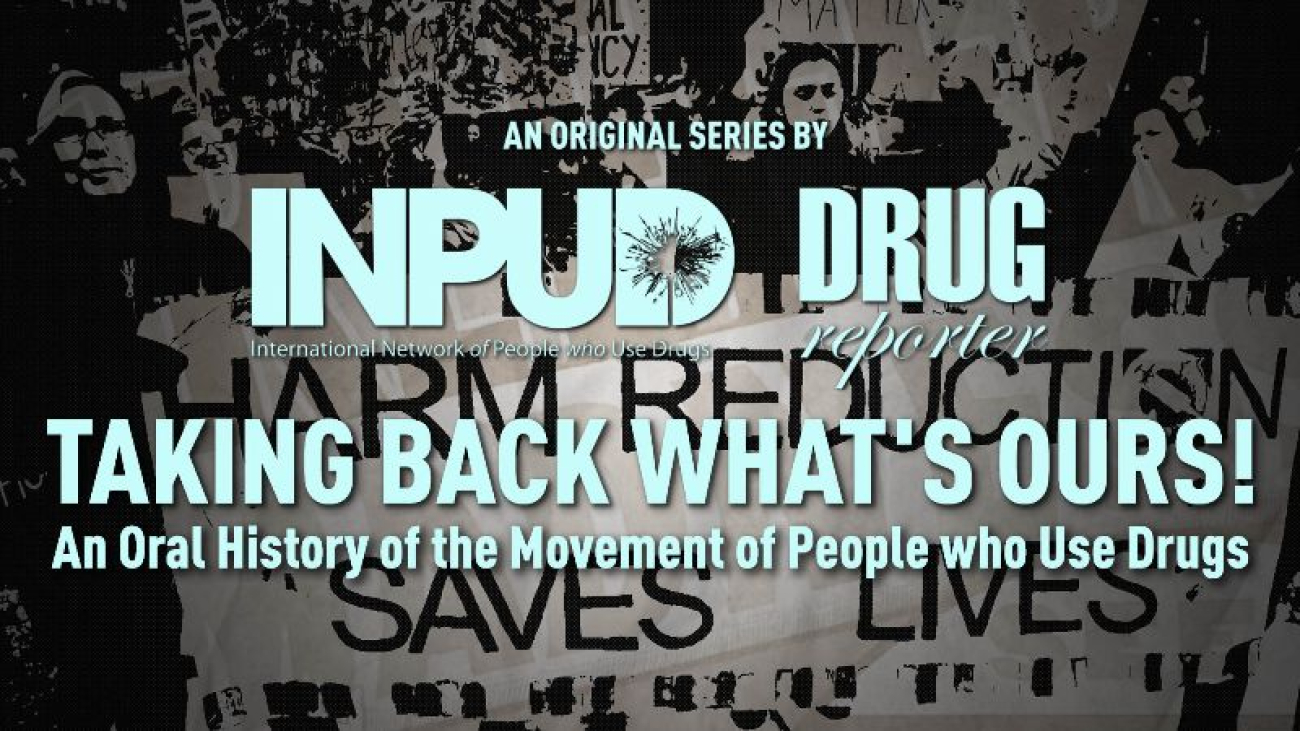
TAKING BACK WHAT’S OURS! An Oral History of the Movement of People who Use Drugs – Documentary Series by INPUD and Drugreporter

Dear members,

we invite you to watch the documentary series “Taking back what’s ours!” made by INPUD and Drugreporter:


The Rights Reporter Foundation (Drugreporter) and the International Network of People who use Drugs (INPUD) produced a new documentary film series titled “TAKING BACK WHAT’S OURS! An Oral History of the Movement of People who Use Drugs” that aims to document how the movement of people who use drugs have formed around the world, how they maintain momentum and mobilise, and how they undertake their work and show resilience in a context of criminalisation, marginalisation and oppression.

The episodes follow the timeline of the development of the movement of people who use drugs from Amsterdam to Afghanistan and globally. The production of the series has been a great adventure. We conducted 34 video interviews in 20 countries around the world. 8 interviews were filmed by the Rights Reporter Foundation, the rest by members of the Drugreporter Video Advocacy Network, video activists, and freelance videographers worldwide. The documentary series was also part of the online conference “HIV 2020: Community Reclaiming the Global Response” which ran from July through October of 2020.

You can watch or download each of the episodes by clicking here, or by clicking on the images below:

Episode 1. The Netherlands, Belgium and France – The first episode uncovers the history of the movement in the Netherlands, and how it inspired activists in Belgium and France. The episode features Theo van Dam, Tonny van Montfoort and Miguel Velazquez Gorsse.
Episode 2. Canada – The second chapter is about Canada, featuring Ann Livingston, Zoë Dodd and the Vancouver Area Network of Drug Users (VANDU) team.
Episode 3. Germany, Denmark and Norway – This episode is about the achievement of drug user groups in Germany, Denmark, and Norway, featuring Dirk Schäffer, Jørgen Kjær and Arild Knutsen.
Episode 4. South Africa – This time we discover the vibrant user movement in South Africa, featuring Angela McBrideNelson Medeiros, and Shaun Shelly of SANPUD.
Episode 5. United States of America – Activists from the United States look back on the history of the movement of people who use drugs in the fifth episode, featuring Louise Vincent, Hollis, Robert Suarez and many more.
Episode 6. Australia and New Zealand – In this episode of the oral history of the movement of people who use drugs, we learn about the successes and challenges in Australia, from four veterans of the user movement, Jude Byrne, Annie Madden, Geoff Ward and Charles Henderson.
Episode 7. Asia – Despite criminalisation, torturous forced labour camps, capital punishment and state sanctioned murder of people who use drugs, the movement of people who use drugs in Asia remains strong and resilient. Watch the new episode of our series telling the oral history of the movement of people who use drugs in Asian countries, with Simon Beddoe, Bikas Gurung, Anand Chabungbam and Edo Agustian. 
Episode 8. Afghanistan, Tanzania and Mexico – In this episode of the oral history of the movement of people who use drugs, we introduce three countries with new and emerging user movements, featuring Happy AssanAbdur Raheem Rejaey and Brun González.
Episode 9. Russia, Georgia and Ukraine – In this episode of the oral history of the movement of people who use drugs, we travel to three Eastern-European countries, where activists effectively fight very restrictive drug policies. The episodes feature Anya SarangSasha Volgina, Olga Byelyayeva, Anton Basenko, Paata Sabelashvili, David Subiliani and Koka Labartkava.
Episode 10. The United Kingdom and the International Network of People who Use Drugs – In the final episode of our documentary series on the history of the rights movement of people who use drugs, we introduce activists from the UK and from the International Network of People Who Use Drugs, featuring Judy ChangAndria Efthimiou-Mordaunt and Mat Southwell


IMG_20200303_155518-8

ENCOD’s ECOSOC status granted!

Dear friends, members, activists, media operators and all!

We are happy and proud to announce that with a long letter Mr. Marc-André Dorel, acting chief of the United Nations Non-Governmental Organizations Branch, informed us that ENCOD – European Coalition for Just and Effective Drug Policies – has obtained the special consultative status at the Economic Social Council of the United Nations, short ECOSOC status.
This result will empower our 26 years effort in supporting the most neglected parts of the global communities and particularly the consumers and producers of plants declared illegal.
Our new status within the plethora of the United Nations bodies and organizations will help us and the drug reform communities, but this official recognition will absolutely have to go along with our strong commitment to act according to our programs based on self-empowerment of citizens to end the war on drugs.

There could be also a possible happy end in sight if we all manage to save our planet: both ENCOD and ECOSOC promote the implementation of the Agenda 2030 Sustainable Development Goals. Most of us consider them to be strictly connected for instance to the drug political agenda as to coca and poppy but especially on cannabis. Formulated in a very interesting publication that has become a very important focus for its implementation of both social and development goals into which all parties are officially engaged to implement.

Due to our new status within the UN community, ENCOD will have more power to engage for the right of native people and marginalized communities to implement healthy, just and effective ways of combining the millenary relation of humankind with drugs by respecting people and nature.


In this sense always forward, never backwards.

Your Encod President

Enrico Fletzer


foto

The future of CBD

02.09.2020

End of July EIHA shocked us all with a press article about some upcoming decisions of European Commission regarding CBD.

Gossips and rumours started, nobody really knew what it was about.
ENCOD members are private persons, PWUDs, shops, NGOS, etc., they all have common but also different interests. Together with our members and co-activists we came up with this letter to state our opinion.

We hope we expressed what is really important and hope that the European Commission will understand the needs of people concerned and decide accordingly.

——————————-

18.09.2020

We received the first reply from the European Commission, Directorate for Health and Food Safety.