
arton1382

Drug prohibition – an untenable hypocrisy

Julian Critchley has come out and said what those in charge of UK drug policy won’t admit: prohibition doesn’t work

Danny Kushlick
guardian.co.uk,
Wednesday August 13 2008

The former head of the government’s UK anti-drug co-ordination unit (UKADCU), Julian Critchley, posted to BBC Home Affairs correspondent Mark Easton’s blog last week, The War on Drugs, calling for the legalisation of drugs. In his post he also reports how those he met during his time at the unit knew that criminalisation was causing more harm than the drugs themselves. (This comes as no surprise to anyone who has read the damning report from the prime minister’s strategy unit from 2003.)

Critchley says:

“I think what was truly depressing about my time in UKADCU was that the overwhelming majority of professionals I met, including those from the police, the health service, government and voluntary sectors held the same view: the illegality of drugs causes far more problems for society and the individual than it solves. Yet publicly, all those intelligent, knowledgeable people were forced to repeat the nonsensical mantra that the Government would be ‘tough on drugs’, even though they all knew that the Government’s policy was actually causing harm”.

Critchley is to be congratulated for speaking out with such candour on the issue. I have met many former and current civil servants who are of the same opinion, but haven’t gone public. What Critchley makes absolutely clear is that many, if not most of those working in the drugs field are knowingly colluding with a regime that actively causes harm. Their silence is not based on ignorance but is tacit support for one of the great social policy disasters of the last 100 years.

Critchley, having retrained as a teacher, concludes with the following:

“I find that when presented with the facts, the students I teach are quite capable of considering issues such as this, and reaching rational conclusions even if they started with a blind Daily Mail-esque approach. I find it a shame that no mainstream political party accords the electorate the same respect”.

His final comment ought to send a shiver down the spine of every UK voter. If you voted in the last election, you probably voted for prohibition. You voted to gift hundreds of billions of pounds to organised crime each year, to undermine the social and economic development of producer countries such as Colombia, Afghanistan as well as transit countries such as Guinea Bissau and Jamaica. You voted to double the amount of acquisitive crime in the UK and to double the prison population with it. Your “X” contributed to misery and degradation for millions of the most marginalised people on earth. Unless we all do something to change it, you will probably vote for prohibition next time too.

In 2003 at a press conference, I asked the then drugs spokesperson at the Home Office, Bob Ainsworth MP, whether the government would support a cost benefit analysis of drug law enforcement. Quick as a flash his reply came back: “Why would we want to do that unless we were going to legalise drugs?” Does that sound like a man ignorant of where that audit trail would lead?

It is the candour of the likes of Critchley and others that exposes the hypocrisy of those failing to speak out and makes prohibition untenable in the long term. As Joseph McNamara, former police chief of Kansas City and San Jose put it: “The drug war cannot stand the light of day. It will collapse as quickly as the Vietnam war, as soon as people find out what’s really going on.” Tragically and despicably, the government’s commitment to populist posturing means that the collapse will come far too late for many.

Backing grows in Bern for marijuana decriminalization

Swisster
5 July 2008

by Malcolm Curtis

Four federal parties rally in support of an initiative to replace a ban
on cannabis use for adults, while strictly enforcing its prohibition for
those under 18. Swiss voters are set to vote on the issue, rejected by
parliament four years ago, in a November referendum.

A coalition of federal Swiss political parties of various stripes has
renewed a bid to decriminalize marijuana in the country. Elected members
of the Radical, Christian Democrat, Socialist and Green parties on
Friday endorsed an initiative that would regulate cannabis use while
making it illegal for children under the of 18.

The initiative is scheduled to be voted on by Swiss voters on Nov. 30.
The parties have urged people to say yes to the proposal. Members in
Bern said the initiative offers a “reasonable policy” governing the use
of marijuana that is preferable to the current prohibition.

They noted that the proposal effectively protects young people by
banning it for those underage. However the group maintains that for
adults smoking a joint is a personal choice over which each person can
make their own decision.

“It is necessary to remove emotion from the debate,” said Geri Müller, a
Green party member of parliament from Aargau, according to a report
carried by the ATS news service. Stéphane Rossini, Socialist party
member from Valais, said it was not a matter of minimizing the
seriousness of marijuana use but to go beyond dogmatic arguments and
issues of conscience.

Marijuana officially remains a banned drug in Switzerland though
possession in small quantities for personal use is tolerated in many
cantons. The politicians calling for changes to the law say the current
prohibition has failed to cut use. Christa Markwalder, Radical member of
parliament from Bern, said an estimated 500,000 people in Switzerland
are regular or occasional users of cannabis. The more than 27,500
complaints lodged annually with police (based on 2005 figures) have only
served to needlessly overload the police and judicial systems,
Markwalder indicated.

The initiative previously only had the official backing of the Socialist
and Radical parties. Four years ago, the federal parliament threw out a
similar proposal put forward by the government. Switzerland gained a
reputation for its liberal drugs policy in the late1980s, but public
opinion later changed. It remains to be seen whether this time round the
pendulum will swing back on this issue.

arton1377

Cannabis growing offers pot of gold for farmers

The Sidney Morning Herald
13/07/2008
Australia

Cannabis growing offers pot of gold for farmers

FRANK WALKER

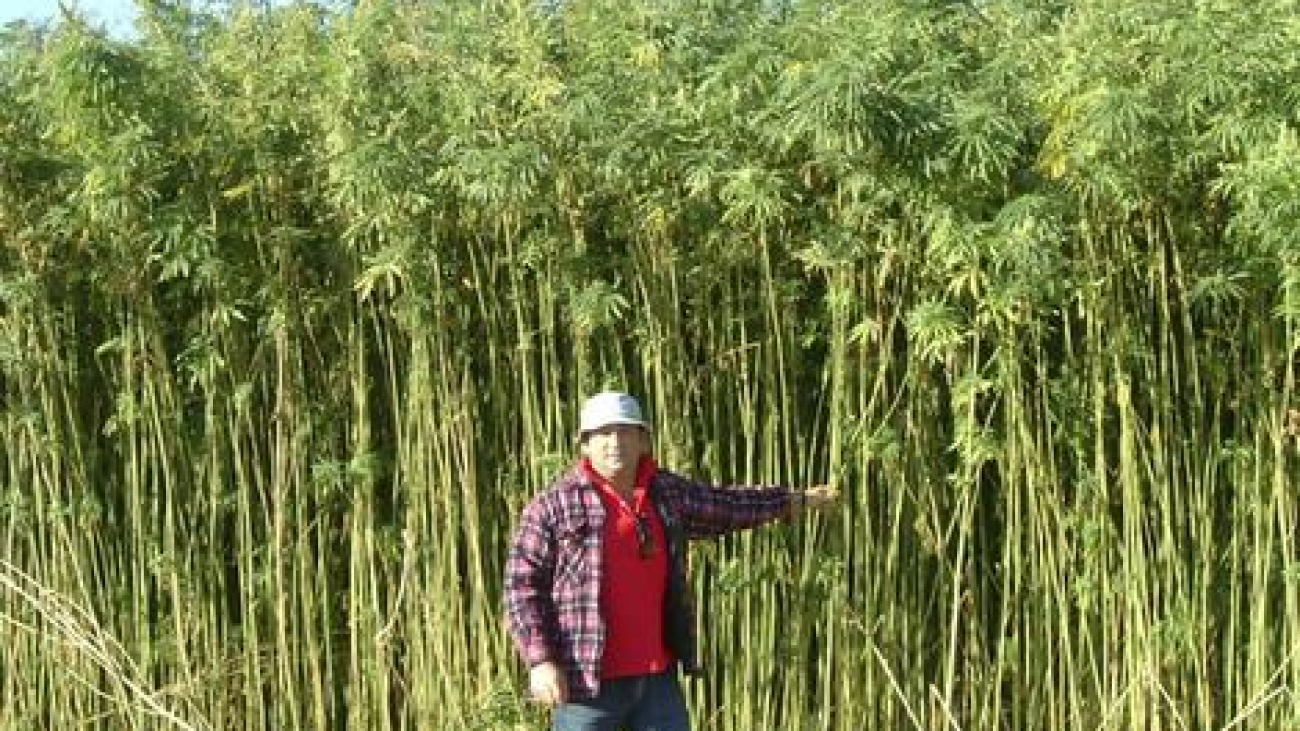
NSW farmers could be growing cannabis by spring with the approval of the Iemma Government – but this marijuana can’t be smoked to get high.

It will be a variety of the cannabis plant containing tiny levels of tetrahydrocannabinol (THC), the chemical that puts the pleasure in pot.

Smoke this Government-approved cannabis and all you’ll get is a cough. The Government has just passed the Hemp Industry Act allowing farmers to grow industrial hemp under licence.

Primary Industries Minister Ian Macdonald said the plant could be used to help create fuel, building materials, insulation, a base for skincare products, paints, paper products and textiles.

“It is a potentially lucrative industrial industry because farmers will have the option of another fast-growing summer crop that can be used in rotation with winter grain crops,” Mr Macdonald said.

The minister said hemp was environmentally friendly, water efficient and extremely hardy.

This is a marked turnaround for governments, which for more than 60 years have seen hemp as synonymous with drugs. NSW follows four other states in allowing industrial hemp crops.

Hemp was a major product for textiles, rope and paper around the world until the 1930s when it was overtaken by the oil and timber industries.

Mr Macdonald said there was an issue with getting the plant accepted as a crop because industrial hemp and marijuana plants look similar.

National Party deputy leader Andrew Fraser said he was concerned farmers could mix the crops and grow the illegal variety.

But under the law only farmers with no criminal record can get a licence to grow hemp. Police and agricultural inspectors will monitor properties regularly.

Narromine farmer Ross Browning found 13 police officers raiding his farm when he was involved in an industrial hemp trial project.

“Somebody stole heads of the plants from my field and dobbed me in when police arrested him for possessing dope. They demanded I pull it all out until I showed them the licence. But they still took samples from my crop and sent it away for testing.

“When it came back with almost no THC reading I was off the hook, but the thief was still in trouble.”

Griffith farmer Pat Calabria has been experimenting with hemp varieties for seven years, but believes Australia has a long way to go to catch up to the rest of the world.

“This could become a major crop in Australia like it is in Europe, but we need processing plants and a market for this crop to take off,” he said.

http://www.smh.com.au