Minutes from the ENCOD online GA 2020 on the 31st of January 2021 from 2 pm to 19.30 pm.
In total 17 members were present.
1. Country reports: France, Germany, Malta, Netherlands, Slovenia, Spain, Italy, Czech Republic, Austria, Belgium
France
People think cannabis is legalised, there are many CBD shops even though some are targeted by police. KanaVape company contributed much to this perspective of CBD being legal.
Evolution in the harm reduction sector, they are interested in the CSC and putting cannabis in the harm reduction programs.
On the policy level, there was a lot of change. You can get fined for smoking cannabis on the street (200 € if paid immediately), if you are caught several times you can be prosecuted.
In the parliament there’s a group of MPs from different political parties, they want to study all different uses of cannabis: medical (France has launched a program for 3000 patients to get access to medical cannabis), well-being (CBD hemp products), adult use (recreational use), industrial uses of cannabis (what kind of products can we obtain from cannabis).
More willingness for civil disobedience. French public opinion: 75% of people think the current law is bad and it should change, 85% people think public health and human rights should be taken into account when reforming drug policy.
Due to Corona the prices on the black market rise for double or triple. Also the quality is decreasing. CBD is being sold as high THC weed on the black market being sprayed with synthetic cannabinoids. This can cause problems. Alcohol consumption is increasing too.
Germany
It took three years to grow medical cannabis in Germany and from now on it will be available for patients on prescription. The quality of the medical cannabis from pharmacies increased and is getting better, but there’s not enough in quantity, so the plans are to keep on with import.
Similar to France, Germany had raids of CBD shops and harsh sentences. It’s not legal but it’s being done a lot.
The DHV made a huge campaign with judge Andreas Müller and filed a “Normenkontrollantrag” (request to review the cannabis laws by the federal constitutional court). The authorities tried to stop Müller’s involvement in cannabis cases but were not successful so far.
All the events (GMM and Hanfparade) were online and quite successful. People were invited to give their opinion on social media and post it to the national decision-makers. “Cannabis is not broccoli”: https://www.youtube.com/watch?v=L27ffKWOBBE. The DHV made a campaign with 6 billboards to react to this statement of Bundesdrogenbeauftragte Daniela Ludwig, as part of a campaign to criticise Betäubungsmittelgesetz BtMG (narcotics act, law on narcotics).
“Cannabis is not broccoli” is reminiscent to “the prohibition of carrots” video clip: https://encod.org/uncategorized/the-prohibition-of-carrots/
Malta
In 2020, the situation of drug policy in Malta did not change and continued to echo the legal amendments introduced in 2015 (Drug Treatment not Imprisonment Act), whereby small amounts of substances (3.5grm cannabis, 2 XTC pills, 2grm cocaine) have been de-penalised and a fine, instead of court proceedings apply.
It is curious that official EMCDDA reports and other data related to Malta define these changes as falling under a ‘decriminalised’ system. However, this is not the case and a Government official (behind closed doors), made it clear that Malta is in de-penalized system. In fact, persons caught with an amount within the law are still picked up and interrogated by the police at the police station. The person then is summoned before a tribunal and given a fine.
Cases before the tribunal amounted to 790 in 2016, 708 in 2017 and 608 in 2018 [1]. Media reports highlight that by the end of 2018, the numbers between 2015 and 2018 totalled to 3,000 [2]. Data from 2020 is not yet available, however due to the ongoing Covid-19 pandemic and restrictions on entertainment venues, there was obviously less media attention to busts carried out by the police, potentially also because the usual summer festivals where not held and therefore the police had less access to mass gathering events. Interestingly, a recent study using university students as samples highlighted that there was increased drug use by students during the lockdown and that religion acts as a protective factor against substance misuse [3].
The situation concerning medicinal cannabis patients has somewhat improved in some areas, yet remained the same in others. Malta has now a total of 4 different strains and CBD:THC ratios. Nonetheless, only flower form is available and this continued to be heavily priced (16.50 € / gram). Patients have no other means to obtain cannabis and if found cultivating a plant, although not facing effective jail term, are still taken to court to prove that this is not done for trafficking. Furthermore, persons requiring medicinal cannabis but had a history of problematic substance use are barred completely from applying.
[1]https://family.gov.mt/en/Documents/EN%20Drug%20Report%202019.pdf
[2]https://timesofmalta.com/articles/view/close-to-3000-drug-offenders-handed-second-chance-since-2015.707411
[3]https://cdn-others.timesofmalta.com/7420b7de4c1f321b8e974cf44dca9345e1025211.pdf
Local experts explain that once a person has been addicted to heroin, then the person will become addicted to cannabis (THC). This is causing grave injustices, especially for persons who have stopped using heroin for over 15 years and now need medicinal cannabis for other ailments. CBD oil is still technically not officially available in pharmacies and it is not clear if you need a prescription or not.
4/20 April 2020 Video by Parliamentary Secretary Hon Rosianne Cutajar, on the importance to combat stigma and discrimination for people who use cannabis and the government’s promise to bring about changes.
January 2021, the PM declared he is in favour of cannabis for recreational purposes.
ReLeaf Malta issued 2 resolutions in April and May 2020 and continued to liaise with the government and key local stakeholders. According to them 4 main areas are in need of urgent attention:
1) Decriminalisation of seeds and growing for personal use
2) Establishment of small cannabis social clubs
3) Removal of criminal sanctions and revision of ridiculously small amounts allowed by law
4) Promote the rights of medicinal cannabis patients (accessibility, affordability and choice)
Netherlands
Fair Trade Coke – towards a constructive, humane and sustainable alternative is an organisation to destigmatize the coca leaf and cocaine and to reframe the public opinion about the coca plant and cocaine. There are a lot of drug seizures of cocaine in the Netherlands and it is being destroyed. It’s a fail rather than a success.
The organisation is working on the spiritual value of the coca leaf, how it can be an example of how we look at nature, treating it as a spirit, and redefining our understanding of it.
https://www.instagram.com/fairtradecoke/
http://fairtradecoke.org/publications/
There’s the intention to prohibit coffee-shops in Amsterdam to sell cannabis to tourists. The experiment of the coffee-shop chain allows 10 growers to grow cannabis for coffee-shops in 10 municipalities. This means a standstill regarding any other cannabis innovation in the Netherlands for the next 8 years, with the exception of this experiment.
One CSC in the Netherlands specialises in the medical use of cannabis and has 200 members, each growing 5 plants from which they produce extracts and supply their members with it for free or a small contribution.
Spain
Conversation with parliamentary group Podemos will present a proposal about cannabis social clubs and medical cannabis regulation. Due to Covid, all the processes were delayed.
Agricultural NGO, harm reduction, and other organisations are joining forces and pushing for regulation.
People from CSCs got sentenced, seed companies are being shut down. The radicalization of organised crime groups. On one hand, social movements are repressed, on the other certain non-European companies are getting licenses to produce medical cannabis for export.
The tobacco shops started to sell CBD products, but that was discontinued.
There’s a new delegate on the national drug program. The discourse is changing in the country (for example: commission on the problem of drugs → commission on studying addiction).
Italy
Confusing situation since the fall of the last government. CBD shops are generally legal. Much of the CBD products are produced in Italy and sold in France. Cannabis mainly comes from social supply, mafia is generally more involved in cocaine business.
Slovenia
Far-right party is in power now. There was some news about them wanting to regulate the cannabis laws but nothing concrete came out of it. Recently, the municipality of Ljubljana closed a famous squat called ROG and threw out several organisations and initiatives working there, including harm reduction programs. More information is available at: https://vimeo.com/user9963769
https://idpc.net/blog/2021/01/ljubljana-authorities-destroy-community-hub-that-housed-harm-reduction-initiative
During the Covid-19 pandemic, there’s a lot of raids by police, mainly aimed at small cannabis growers across the country.
Czech Republic
Last year in-person GMM in September, with only 300 people, but it was good. Robert Veverka used it to campaign for the elections. It was a good meeting, representatives of the Pirate Party also joined and gave a speech.
The Czech Hemp Cluster did a presentation about licensing for medical cannabis cultivation. The price of medical cannabis produced in the Czech Republic is high so it was cheaper to import it from abroad. The health minister changed the law which will allow medical cannabis cultivation and export. That will improve the situation. 30g of 180g will be covered by health insurance. The new proposed law will be discussed in the near future.
Pirate party proposed to have the right to grow 5 plants but that didn’t succeed. There will be also more discussion on industrial hemp and extractions. One government representative is involved in the cannabis industry and also pushing the reform further. 2021 probably brings some improvements and a good future for cannabis in the Czech Republic is expected. Dušan Dvorzak is still in prison.
Austria
The last big meeting in Vienna was the 63rd Session of the United Nations Commission on Narcotic Drugs (CND) in March 2020. There was the terror attack, everybody was frightened. The police are doing a lot of raids and find grow-ops in private flats where the doors are left wide open, very strange. Due to Covid lockdown restrictions, there are many police controls and people are being raided at the same time for drugs.
The citizens initiative has been in the parliament for a bit over a year, being passed from one office to another. The political parties are not really in favour, though the official drug-control institutions who work with PWUD support our position and give feedback accordingly to the ministries.
Cannabis used for Covid-therapy:
https://kaernten.orf.at/radio/stories/3087614/?fbclid=IwAR35AwiaHi2HNrvD2aKXd3z2F9zI8UwfErmoEcDQMYAzJMWyJz-HTnUCEPw
Switzerland
Many people are in the flourishing CBD business. “Adult use” is widely tolerated, and a fine for users – up to 10 grams – was tried and the found unconstitutional. Cannabis is de facto decriminalised. However, a dispensary in Geneva (working in the grey area but accepted by the authority) was closed, due to a raided grow operation that was closely linked to the private space of the owner. The authorities are very aware of the scientific research in the field but find it difficult to change the cannabis laws accordingly.
Belgium
The situation in Belgium hasn’t changed since Joep left us. The only news is that the third appeal for Trekt Uw Plant will be decided on February 24 but that will not change anything because TUP went bankrupt last year.
2. Administration
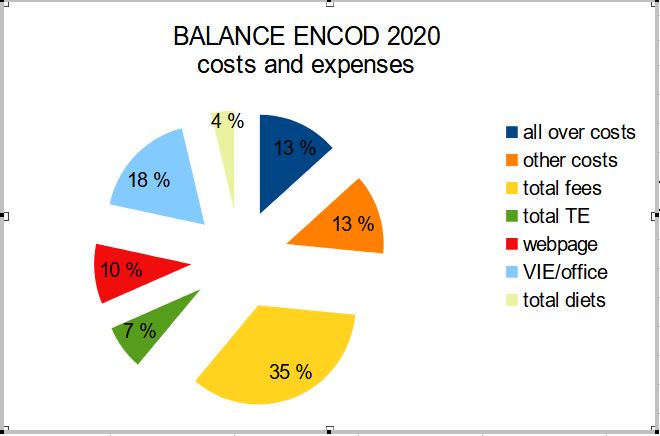
In 2020 we received little memberships and donations due to the Covid-19 pandemic. There were other past debts to the Belgium government that we were not aware of. The debt will be paid but our budget will get significantly decreased. Therefore, we have to put even more effort into future fundraising campaigns.
Total income from memberships and donation in 2020 was € 4.506,97.
Since we are not having a representative in Belgium and are not familiar with the administrative procedures in Belgium, we think moving ENCOD from Belgium to Austria would be the best option we have. 14 people voted for moving ENCOD from Belgium to Austria, 1 remained neutral, 2 didn’t vote.
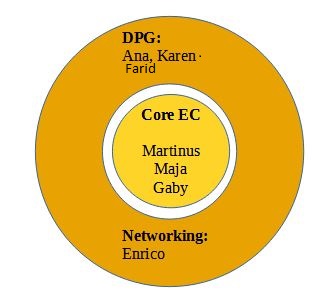
In Austria associations have three mandatory positions. Those are: president, secretary and treasurer. Gaby proposed to elect 3 people for these positions as the core Executive Committee (EC) who are in charge of administration and basic activities of the organisation, and implement the “inner circle” as the extended Executive Committee (EC), which will take care of project development. Gaby also proposed to include in our network little local initiatives and activists who are not able to pay the membership in exchange for a news article report or any other kind of contribution.
3. Project proposals and presentation of EC candidates
See all the applications here.
4. Elections for the new EC
The new core EC was elected. There was only one candidacy for the position of the treasurer: Gaby.
Also only one candidacy for the position of the secretary: Maja.
The candidates for the position of the president were Martinus van Lies, Enrico Fletzer, and Ana Afuera. After anonymous voting Martinus van Lies was elected president with 8 votes, Enrico Fletzer had 3 votes, and Ana Afuera also had 3 votes. 3 people didn’t vote.
The changes will take effect once the association is registered in Austria.
The new core EC is Martinus van Lies (president), Gabriele Kozàr (treasurer), and Maja Kohek (secretary). The rest of the applicants (Enrico Fletzer, Ana Afuera, Farid Ghehioueche and Karen Mamo) will all join the extended EC and participate in the monthly meetings with the core group. Any other members are invited to participate in the monthly meetings of the “inner circle”.
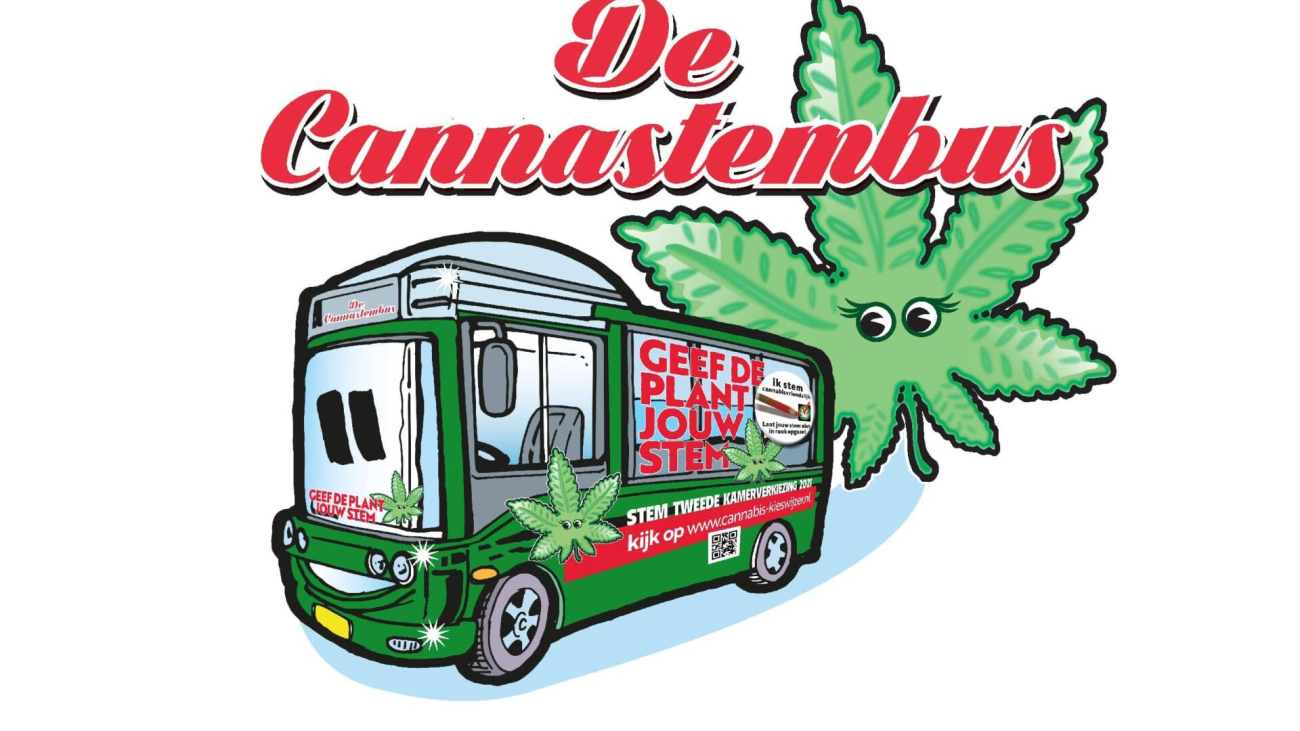
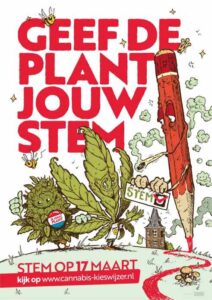 Seven of the hundred thousand copies of “De Nationale Cannabis Krant” contain a Golden Ticket. The lucky finders get to spend an unforgettable cannabis day in Amsterdam, including a visit to the Cannabis College, the Hash, Marijuana & Hemp Museum and various coffeeshops, a private canal tour and a VIP dinner with special guests. Participation is limited to persons aged 18 and older. The VOC foundation, established in 2009 to speed up legalization of cannabis in the Netherlands, cooperates with the “Maatschappij en Cannabis” foundation, creators of the “Cannabis-Kieswijzer” and the new “Cannabis-Stemwijzer”, and with the national coffeeshop unions PCN and BCD. The paper will be available for free at cannabis coffeeshops from February 9, the website www.denationalecannabiskrant.nl contains a PDF and additional information. Cannabis-friendly voting With “De Nationale Cannabis Krant”, the VOC tries to get the negative effects of cannabis prohibition higher on the political agenda and to get as many cannabis consumers as possible to vote cannabis-friendly in the elections. The center pages feature an election poster, designed by Amsterdam based artist Mossy Giant. The slogan “Geef de plant jouw stem” translates as “Give your vote to the plant”.