
MINUTES Annual General Assembly 2025_VFF
Annual General Assembly
ENCOD, European Coalition for Just and Effective Drug Policies
10th and 12th October 2025, Eindhoven, The Netherlands
Agenda ENCOD General Assembly 2025
October 10th-12th – Eindhoven (NL)
Attendees online: Giuliano Gavazzi (Pot Radio Italy), Paulo Thiessen (Brazilian lawyer based in France), Olli Waack (CSCD Germany), Paolo Occidente (Pot Radio), Sandy W. Madar (Denmark working in Morocco), Dusan Dvorak (Cannabis is the Cure, Czech Republic), Frantisek Pisarik (Czech Republic), Manuel Spindler (Austrian activist) and Kenzi Riboulet Zemouli (Independant researcher, Barcelona-based).
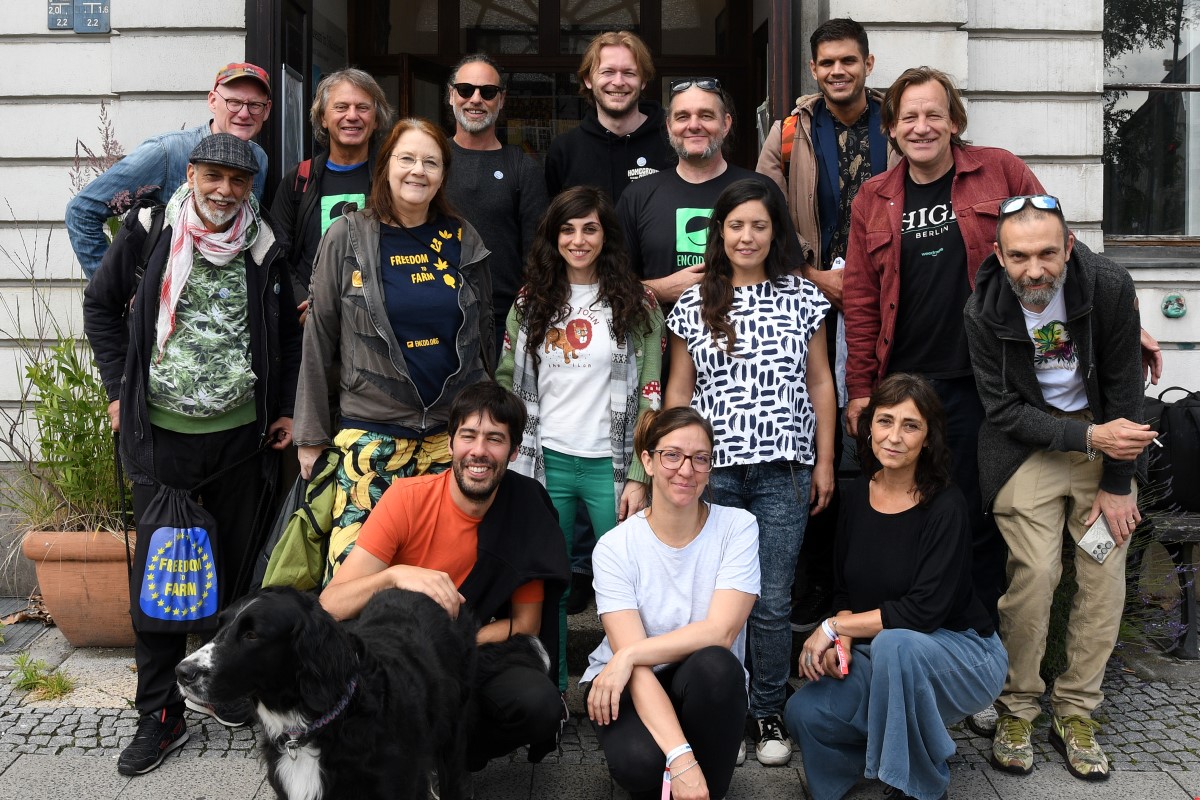
Attendees in-person: Göran Zängerlein (My Brain My Choice, Germany), Gaby Kozàr (ENCOD Coordinator & Treasurer, Austria), Derrick Bergman (VOC, the Netherlands), Henry Wieker (CSC Hannover and BCAv, Germany), Farid Ghehioueche (ENCOD President, Cannabis Sans Frontieres, FAAAT & Cannabis Embassy, France), Mauro Picavet (Secretary VOC, the Netherlands cannabisindustrie.nl and co-founder of Home Grown Cup), Jakub Zientala (Polish lobbyist in Brussels) and Ana Afuera (ENCOD Secretary, ConFAC, Spain).
Friday, October 10th
- Presentation
Farid presents the General Assembly (GA) Agenda. The General Assembly of ENCOD convened in Eindhoven, The Netherlands on 10th, 11th and 12th of October. It is intended to review the activities, achievements, and challenges of the past year and to define priorities for the year ahead.
Members, partners, and representatives from across Europe gathered to discuss ongoing developments in drug policy, organizational strategies, and the evolving role of ENCOD in promoting fair, humane, and evidence-based approaches to drug policy. The meeting provided a valuable space for reflection, coordination, and collective decision-making, reaffirming ENCOD’s commitment to just and effective drug policies.
This year, it was focused on developments in the Netherlands, particularly the ongoing experiment regulating the “back door” of coffee shops. This initiative aims to address the long-standing issue of supply within the Dutch cannabis industry by creating a controlled and legal framework for the production and distribution of cannabis to licensed coffee shops. By examining this experiment, the GA seeked to understand its potential impacts on public health, safety, and the broader European discussion around cannabis regulation.
- ENCOD GA challenges: Vote on the Agenda (Advocacy pollbox1)
In ENCOD invitation was the possibility to submit a project in advance to be voted at the GA. There are three projects for voting
1 This activity is designed to gather ideas and identify priorities for ENCOD. Participants are given a sheet of paper and can write down any ideas or actions they believe ENCOD should pursue, such as initiatives related to driving tests, decriminalization, cloning, medical cannabis access, legal regulation, Psychedelicare ECI, European demonstrations, festivals, etc.
Once everyone has submitted their suggestions, the ideas are collected in a “poll box.” The group then reads them aloud and classifies them into topics or categories. Finally, participants discuss and decide on concrete next steps, assigning responsibilities for who will do what to turn the ideas into projects or actions.
- Cannabis Trade from Morocco (Sandy Winkler Madar): The idea is to create a project to export cannabis from Morocco to the Netherlands.
- Consumption Site in Vienna (Manuel Spindler): The idea is to create a place where CBD consumers could consume CBD, a smoker’s social club, where ENCOD could also have a place to be.
- EU NGO (Cannabis is the Cure): Creating a European NGO for defending the rights of people prosecuted for cannabis offences.
Find below the complete information (point 10)
- Country Report (10 minutes / country)
Austria
The Government is not going to open the debate. They are not going to do anything about budgetary issues. Trafficking is rising. People are finding other ways they are dealing with edibles without labeling, not good for consumption. Increasing the consumption of kratom. CBD is going to be considered as a tobacco. The court ruled, and the Government got the opinion of the court and wanted to make it a law. CBD cannabis alliance to get back the landscape of CBD from before. Cannabis Citizens Initiative: activism meeting point: they want to found a club CBD smoking.
Czech Republic
Frantisek explains the Czech history and situation, via AI translation. 10 million Czechs, 5 million Slovaks. The average sentence for cannabis is 4 years in prison. Every year police seizes 20 tons of cannabis. Only 500 kilograms of official medical cannabis. In 2022 the THC limit for medical cannabis went up from 0.3 to 1.%. From 2026 cultivation of 3 plants with more than 1% THC by a person of 21 years or older is legal. 25 grams can be kept in public. Medical mushrooms will also be legalized from 2026, medical cannabis can be prescribed by a general practitioner. Doctors can prescribe cannabis for 3 months in advance Public Czech tv for the first time since 1990 showed a documentary with draconian sentences for growing just 9 plants, highlighting the absurdity of the laws. There should be a EU law on cannabis, decriminalisation of homegrowing plants and mushrooms, protection of psychoactive plants and mushrooms under UNESCO, and consumer protection. The cannabis war is over if you want it.
Jakub’s presentation (CZ): He works with Jindrich Voboril. Reformist in all drugs. They want to regulate to protect public health and individual rights. He is working with Kratom players. They are involved in data collection. NPS in Europe. Reform in the Czech Republic, data-based. Testing and monitoring. Everybody in the production should be registered, over of adult age medical permitted. The Czech Republic wants to implement a law to enhance Harm Reduction. 10.000€ licensing for production, 25.000€ a year for license. They choose Kratom because it is outside of the International Conventions. In June next year it could be approved.
Slovakia
https://drive.google.com/drive/folders/1izFeZji6NCWt87HaSCZvlhzSRm7WV0ZY
Brazil
In Brazil, the situation remains challenging as police repression continues to target therapeutic cannabis associations, creating significant obstacles for patients and community-based initiatives. These groups also face ongoing difficulties in securing medical support, as many doctors remain hesitant to prescribe cannabis-based treatments despite patient demand. Toward the end of November, a national event focused on CBD and hemp is expected to take place, offering an important opportunity to foster dialogue, strengthen advocacy, and highlight the urgent need for clearer regulations and greater acceptance of therapeutic cannabis in the country.
Denmark
In Denmark, the situation in Christiania remains a focal point of national debate as authorities continue efforts to reshape the area’s long-standing cannabis market. At the same time, the country’s medical cannabis framework—allowing cannabis only through prescription—remains limited in scope, with access restricted and participation from healthcare professionals still relatively low. These developments highlight the tension between community practices, public policy, and the evolving landscape of medical cannabis regulation in Denmark.
France
French activists tried to follow up the centenary of Cannabis prohibition. They organized five demonstrations this year. Norml France edited a booklet “how cannabis should be legalized in 2025” (Guidelines). Last November, a seminar on “drugs and Human Rights” was hosted by CNAM, with the support and participation of the Pompidou group, OHCHR.. Alarming consumption and dangerous intoxication with Nitrous oxide, as well on Ketamine, and other synthetic neocannabinoids are rising. The amount of people who smoked cocaine is rising, the price has come down, and within two years cocaine consumption has doubled. Drug saliva tests by police are leading to more problems as people are losing their Driving license, a trend that is very alarming, while there are specific regions more affected. Medicinal cannabis experiment: still remains and experiment which should have been generalized in 2024. But because of the lack of a budget decision and no government to decide, the experiment’s end was postponed and the same this year may have happened. As well as the supervised injection rooms, only 2 (Paris and Strasbourg), which are still under a lot of uncertainty because the current government is considering it as a “bad sign and a dismissal against the scourge of drugs”.
Germany
See here a summary of the German situation by Georg Wurth /DHV.
Henry: The new law has to pass the process. Lower Saxony 66 clubs has the most liberal 360 clubs in the whole of Germany. Most of the clubs fail. Some of them are facing huge challenges, funding and places.
Olli: 30% is supplied from self cultivation and 30% in pharmacies. Possession between friends should be decriminalized. Evaluation said that the law works to decriminalise. The far right is against it.
The home grow could be attacked by prohibitionists
Goeran: Psilocybin therapy rising. New psychoactive substances: they want to forbid any LSD analogs. Additional regulation on GLMPDO
Italy
See video of Paolo Pot Radio / and this one
Meloni’s decree. They will organize the new Demonstration 8th Nov in Rome with the aim to promote Harm Reduction and right to cultivate. Trade Unions, CBD shops, social workers and other key stakeholders. People are being arrested for 3 or 4 plants at home, synthetic cannabinoids are rising and the hospital attention due to it are rising as well. Society is very closed to talk about drugs.
Malta
ARUC fired Karen for asking for transparency. 19 associations working, 500 members. Data is not published about the quantity of dispensaries. Prices are high (8-14 €), no restrictions on strains, mandatory to have CBD dominant strain (amendments). The competition for a higher THC is passing to another landscape.
ARUC makes inspections to home growers and sends police in some cases if it smells. They have trouble with privacy. There is a big difference between what is written and what is implemented. Politicians misinform and control the narrative related to cannabis.
Spain
Spain has formally approved a framework for the regulation of medical cannabis, marking an important milestone after years of advocacy. However, the implementation process remains slow and uneven, with key details still pending and limited progress on ensuring real access for patients. While the approval represents a symbolic step forward, significant gaps persist in terms of distribution channels, product availability, and medical training.
As a result, many patients continue to rely on informal networks or Cannabis Social Clubs, highlighting the urgent need for a fully operational and patient-centered system. Meanwhile, Cannabis Social Clubs continue to face significant pressure: in Barcelona, the City Council has intensified its actions against CSCs, threatening the stability of long standing community models.
Aythami, ex-treasurer of ConFAC, has now been imprisoned for one year, with a sentence of five years of imprisonment, he and all the team of the club. This fact is an alarming example of the legal uncertainty and criminalization still faced by activists and community organizers across the country.
- FOCUS: The Netherlands situation
Participants discussed recent developments in the Netherlands regarding drug use trends and policy. It was noted that growing social inequalities are pushing some people toward increased alcohol and crack cocaine use, while the media tends to exaggerate and criminalize these issues, contributing to stigma. Although medical cannabis was regulated in 2023, access remains very limited, with only a small number of patients receiving prescriptions. Concerns were also raised about the spread of vaping among young people, including the presence of synthetic cannabinoids in some products.
Psychedelics Utrecht has started recruitment for a psilocybin study as part of broader scientific exploration into therapeutic uses of psychoactive substances. The Dutch government is also preparing an experiment to bring all psychoactive substances under a single legal framework, while ayahuasca continues to face negative and criminalizing media coverage. Additionally, the Netherlands now ranks alongside France in levels of cocaine consumption, and as of July 2025, a new ban on designer drugs has come into effect (Rijksoverheid, 2025).
Several developments shaped the national drug landscape over the past year. Synthetic cannabinoid vapes—marketed as THC products—have increasingly appeared in high schools, with recent testing showing they contain no THC but instead dangerous “spice” compounds, as NPS – neocannabinoids.
About LSD and DMT:
Psychedelic research continues to advance, with Maastricht University studying these substances. The UMC Utrecht, alongside UMCG Groningen and Leiden University Medical Center, has begun recruitment for the COMPASS Pathways phase 3 trials on psilocybin assisted therapy for treatment-resistant depression.
Meanwhile, a new ban on entire groups of new psychoactive substances (NPS) was adopted by the Senate and came into effect on 1 July 2025, placing broad chemical families under a new Schedule IA of the Opium Act. Amsterdam has expressed interest in conducting an experiment with legal MDMA/XTC, reflecting growing debates about regulated supply.
Ayahuasca continues to gain popularity within self-help and spiritual communities, although negative incidents reported in the media have fueled public concern. Within the party scene, the normalization of GHB and cocaine remains pronounced. Overall, the Netherlands has some of the highest levels of ecstasy use in Europe and shares the top position with France for cocaine consumption, with cannabis and amphetamine use also above the European average.
The Dutch government launched the Controlled Cannabis Supply Chain Experiment to test whether it is feasible to regulate the full cycle of cannabis, from cultivation to sale in coffee shops, under quality-controlled, legal conditions. Starting on 7 April 2025, coffee shops in 10 participating municipalities are permitted to sell only cannabis produced by selected licensed growers, dramatically reducing reliance on illicit sources.
The experiment’s impact on crime, public health, safety, and nuisance will be closely monitored by an independent research team, while the Netherlands Food and Consumer Product Safety Authority (NVWA) is in charge of quality control for the cannabis products. Government of the Netherlands
Legally, the experiment is underpinned by the Controlled Cannabis Supply Chain Experiment Act, which decriminalises cultivation, transport, and sale within the experiment’s framework and sets detailed requirements for growers, coffee shops, and regulators. The project is designed to last four years, unless terminated early, giving the government, local authorities, and researchers time to evaluate whether a regulated supply chain can replace the current informal or black-market alternatives.
See more information about the experiment.
- ENCOD Administrative management
- End Belgium registration
ENCOD members approved the closure of ENCOD Belgium. However, the official documentation still requires the signatures of Executive Committee members before it can be submitted to the Belgian authorities for formal processing.
- Empower EC/Inner Circle
The Assembly highlighted the need to strengthen ENCOD’s Inner Circle to ensure continuity and sustainability of activities, particularly in light of current workload pressures and team health challenges, and emphasized the importance of recruiting new members to support the organization’s ongoing work.
- Call for 2 new positions
Social Media Manager
Finance and Treasurer Assistant
A call was launched for two new volunteer positions: a Social Media Manager to enhance ENCOD’s online communication and outreach, and a Finance and Treasurer Assistant to provide administrative and financial support. These roles aim to distribute responsibilities more effectively and empower new members to actively contribute to ENCOD’s ongoing mission. These positions were voted on Sunday, the 12th. Olli as a deputy secretary to assist Ana and put it public on our Webpage. This position is not financially supported, as not voted, and this remains an agreement within the EC to add volunteers who work efficiently.
Saturday October 11th
- Activity Report
The 2024–2025 ENCOD Activity Report highlights a period of dynamic growth, advocacy, and adaptation across Europe and internationally. Over the past two years, ENCOD has strengthened its presence in key policy spaces, from grassroots demonstrations to institutional forums such as the United Nations, promoting harm reduction, human rights, and community-based cannabis regulation.
Significant efforts were dedicated to monitoring and engaging with the evolving cannabis framework in Germany, organizing workshops, and building networks with emerging Cannabis Social Clubs and harm reduction initiatives. Internationally, ENCOD collaborated with partners such as the Cannabis Embassy and supported projects like Psychedelicare ICE, contributing to global dialogues on culture, knowledge, and drug reform.
The organization also launched a new website and maintained active communication through Instagram and BlueSky, supported by dedicated volunteers. Together, these actions reflect ENCOD’s ongoing mission to connect people, influence policy, and advocate for fair, humane, and evidence-based approaches to drug regulation. See here.
- ENCOD Finances Report
The meeting discussed the financial situation of ENCOD, with approximately 6,000 euros in the bank account and thousands more pending. The Financial Report will be forwarded by the end of the year. We lost our main sponsor, and we are looking to fill this gap with new funding. To increase the ENCOD income:
– Present small and concrete projects to cannabis brands.
– Improve our communication channels.
– Derrick will give the ENCOD team some tips to increase our fundraising possibilities.
- Next year’s challenges: International level
- CND voting on Coca leaf WHO/ECDD recommendations (Goeran, Gaby, Farid): Review of coca leaf. 15 Oct to send an oral statement to the ECDD Group of the WHO. 9th Oct was the deadline for written statements.
The re-scheduling of coca leaf is different from cannabis because Schedule I is not the worst list (in comparison to Schedule 4), even though it could endorse indigenous rights. Recommendations will be public in December. Recommendations should be voted on during the 69th CND in March 2026. For the experience with cannabis, they delayed for two years.
- Drug Policy and Social Behaviour. Thanks to Janneke, Brenda, and Axel Klein for this great job.
- Proposal: revamp Friends of the Coca Leaf.
- You can see these academic reports in the Activity Report.
- We are celebrating the centenary of cannabis prohibition:
- Idea: Plaque remembering cannabis prohibition in the birthplace of cannabis prohibition.
- UNESCO Mundiacult (UN Summit on cultural politics): FAAAT, NORML France and Cannabis Embassy.
MONDIACULT is the world’s largest conference on cultural policy. A delegation of cannabis activists met official delegates to raise our talk about the sociocultural aspect regarding the consideration of cannabis as an Intangible cultural heritage of humanity. More information online. We should change the narrative about cannabis from “hard prohibition” to “cannabis as a solution”. In this open consultation process, the social movement and cultural organisations need to be transparent. Sandy is wanting to collaborate in this initiative.
- 2026 / Big celebrations (Farid): UNGASS+10, Joep memory, CSC code of conduct, and CSC model at the UN.
This 2026, there are some anniversaries we could have the opportunity to express our narrative. The idea is to create a mobile exhibition with the history of the last 50 years, called ‘Celebrate our Cannabis Culture’.
Celebrate our Cannabis Culture Exposition: it could be a good exhibition to move throughout Europe. UNGASS and tolerance policy: focused on the Netherlands and France, summarizing other countries to be inclusive. Educate, not lie: debate about. It can include:
- Joep passed away 10 years ago.
- 10 years anniversary of UNGASS.
- FOCUS: 1976 Tolerance policy was implemented in the Netherlands (50 years) vs. France: policy of prohibition. We can assess the impacts of both policies.
- Also, we can include other countries such as ARSEC Supreme Court Sentence in Spain 1996 (CSC), Germany, Portugal, etc.
- Other ideas/projects raised by ENCOD members
From January 9th to 23rd, we have to apply for the Side Event (first proposed, first served). Three ideas for a Side Event:
Friends of Coca Leaf is an idea to focus on
UNGASS: how European countries applied UNGASS (idea)
Celebrate our cannabis culture
- Next year’s challenges: European level
- EU New Drug Strategy (Ana, Jakub – guest presenter)
Jakub provided an overview of the current European situation regarding cannabis and CBD, highlighting regulatory developments, market trends, and ongoing policy debates across the EU. He emphasized the challenges faced by the sector, including uneven national regulations and barriers to patient and consumer access. As a lobbyist based in Brussels, Jakub also offered his expertise and collaboration to ENCOD, proposing ways to strengthen advocacy and influence European-level policy in line with harm reduction and rights-based approaches.
The team provided an overview of the current European situation regarding cannabis, highlighting the rapidly evolving regulatory landscape, ongoing national reforms, and the persistent contradictions between progressive local initiatives and restrictive EU-level frameworks. His update underscored both the momentum toward more health- and rights-based approaches across several member states and the challenges posed by the implementation, political resistance, and legal uncertainty throughout the region.
The establishment of the new EU Drug Strategy is currently underway. The participative evaluation process of the previous strategy has already been completed, and the drafting phase of the new strategy is now in progress. This upcoming framework aims to guide the European Union’s approach to drug policy over the coming years, addressing emerging challenges and ensuring coherence between public health, social, and law enforcement perspectives. The process reflects the EU’s commitment to evidence-based policy and cross-sectoral collaboration in shaping a balanced and effective response to drug-related issues. Have more information here. (Since ENCOD GA: new EU strategy and new EU action plan were adopted: https://home-affairs.ec.europa.eu/eu-drugs-strategy-0_en ; https://home-affairs.ec.europa.eu/eu-action-plan-against-drug-trafficking_en
- Other EU initiatives.
The General Assembly agreed to establish a dedicated working group on cannabis and driving, involving representatives from several EU countries. The group’s main objective is to address the challenges related to current detection levels and testing practices across Europe. Participants emphasized the need to reassess existing thresholds, as many drivers face penalties such as losing their licenses due to detection windows that can extend up to three days after consumption, an approach widely viewed as disproportionate and unfair. The group will collaborate to propose fairer, evidence-based standards that better reflect actual impairment rather than mere presence of cannabis in the system. Dutch Group proposes Jef Martens to lead this initiative.
A decision has been made to organize a European Conference in September 2026, focusing on the topic of cannabis and driving. The event will bring together experts, policymakers, and stakeholders from across Europe to discuss the implications of cannabis use on road safety, legal frameworks, and scientific research related to impairment and testing. Jakub will assist in coordinating this important initiative.
10.Pollbox: Identifying common trends: establishing future activities and Priorities a. Fair Trade Hash
If the Netherlands proceeds with cannabis imports, Morocco could advance with domestic production as part of a collaborative pilot initiative. The project aims to involve young people in storytelling and communication efforts, highlighting the social and economic potential of regulated cannabis production. The envisioned plan includes potential export to several countries, such as the Netherlands, France, and Spain, with coffee shops serving as an effective starting point for market integration and testing. See presentation.
August de Loor was mentioned as a potential contact person, given his experience and connections within the sector, although he represents a more traditional, “old school” approach. While August may not fully agree with the project’s direction, the group acknowledged the importance of including him in discussions to ensure broad representation and continuity.
The discussion also covered developments related to the establishment of a fully regulated supply chain for controlled substances, where import and export would be permitted under a legal framework. Oversight would be managed by the National Center for Monitoring Drugs and Addiction, though it was noted that no official submissions have been made yet regarding the implementation process. A new Drug Policy Coordinator has been appointed to oversee these upcoming changes and guide the development of the regulatory system.
ENCOD was encouraged to explore ways to adapt this model in other countries, promoting regulatory consistency and knowledge-sharing across Europe. The topic of kratom was briefly discussed, with a note to attach Jakub’s contact for further coordination and policy input on this issue.
In terms of consumer access, it was agreed that clients should be required to show identification when obtaining substances, ensuring traceability and responsible distribution. Delivery services would be permitted under the regulated framework, provided they comply with verification and safety standards.
Overall, this pilot project is seen as a valuable opportunity to advance the broader debate on international cannabis trade, regulation, and cooperation between producer and consumer countries. Next steps: set up a working group. ENCOD will arrange the first meeting with interested countries: the Netherlands, France, and Spain. Derrick and Sandy will lead this meeting. Called: Fair Trade Hash. My Brain, My Choice (Phline), Henry, and Spain.
- Austrian CBD Club
Manuel Spindler and the Austrian network reported on ongoing activities in Austria, including a weekly roundtable that brings together activists and advocates to discuss developments related to cannabis and CBD regulation. One of the key topics under discussion is the classification of CBD as a smoking product, which, under current Austrian law, would restrict its sale to licensed tobacco shops. As an alternative, the idea was raised to create CBD consumption sites, where individuals could consume CBD products by presenting a ticket obtained from a tobacco shop. However, questions remain about how such a system could be organized, who could oversee it, and how it could be financially sustained. See draft.
The group also discussed the potential establishment of an ENCOD headquarters in Vienna, which could serve as a hub for coordination and possibly host this initiative as part of a new club structure.
Jakub emphasized the importance of addressing these issues within the framework of European Union law. He pointed out that the production of some products of CBD is harmonized under EU regulations. He also mentioned that laws against monopolies and EU tax exemptions must be considered, along with the rules governing novel products. This legal perspective reinforces the need for a coordinated, EU-aligned approach to CBD policy and regulation in Austria.
- Dusan Dvorak: Cannabis is the cure
A proposal for Cannabis is the Cure was discussed to create a European NGO, focused on defending the rights of people prosecuted for cannabis-related offenses. The organization would operate across Europe, providing legal support, advocacy, and awareness-raising to ensure that individuals affected by cannabis laws receive fair treatment. This NGO could also serve as a network for sharing experiences, legal strategies, and best practices among activists and legal professionals in different countries, strengthening pan-European efforts to protect the rights of cannabis users and challenge disproportionate penalties. See proposal.
11.ENCOD New tools: Presentation of the new Website and social media trends
The meeting focused on several key topics related to communication and outreach, including updates on ENCOD’s new website, internal communication tools, and social media strategy.
The new ENCOD website is currently under construction, with static pages completed and a responsive design already in place. Final content creation and the migration of historical materials remain to be done, with an approximate deadline set for the beginning of next year. The group expressed gratitude to Joep Oomen and André Fürst for creating the original website. Acknowledged Kevin as the designer of the new one. It was also noted that AI could be a valuable tool for translating archived and new articles to make them more accessible. Sandy will help with the new website.
In terms of internal communication, the group discussed the creation of an intranet for members, with Discord proposed as the main platform to facilitate engagement and information sharing. Based on positive feedback from Derrick, who shared VOC’s successful experience using Discord, the group agreed to give the platform a one-year trial period to evaluate its effectiveness.
Regarding external communication, there was an in-depth discussion about relaunching ENCOD’s presence on X (Twitter). While some members raised concerns about the platform’s transparency and influence, the majority agreed that X remains an important channel for engaging journalists, politicians, and the public. Therefore, it was approved by majority decision that ENCOD will keep and relaunch its X (Twitter) account.
Sunday, October 12th
12.Election of 2 new appointed members
The GA 2024 selected Oliver Waack for a one-year trial position in the Inner Circle. His collaboration during the previous year was deemed successful, and based on this positive experience, the Assembly decided to retain him as a full member of the Inner Circle, as a deputy secretary to assist Ana, and put him in this position on our Webpage. This position is not financially supported.
Social Media position: We need software to publish in all the media at the same time. Find a person who is able to manage it. Maybe increase the budget to pay somebody to do this job. Sandy will help with social media. Gaby will connect Sandy with Kevin for the Website. Derrick will help update the social media protocol. This position is not financially supported. Let’s arrange a meeting in a couple of weeks. Gaby will arrange the first meeting. Group on Discord for the website and social media.
13.Wrap-up of GA decisions:
- Cannabis and Driving Group
The GA highlighted concerns that saliva tests for cannabis are causing significant harm, often resulting in unfair penalties. To address this, Jef from the Netherlands will lead the initiative alongside Mauro. ENCOD will establish a task force on Cannabis and Driving issues, with Jef as a potential coordinator.
Key points and actions discussed include:
- Research: Collaboration with Maastricht University and consultation with experts like toxicologist Andrew Bonnelo to gather evidence for policy change. ● Authorities & Practice: Engagement with traffic police representatives, including LEAP’s Nuria Calzada, to review current practices, and discussions with manufacturers of testing devices.
- International Collaboration: Linking with the Portuguese International Organization for Driving Licences to exchange knowledge and strategies
- Events & Conferences:
A European Conference on cannabis and driving will be organized, with Jakub providing support.
For the European Parliament, Derrick will reach out to Luke Ming Flanagan to explore hosting a dedicated conference.
- Communication & Coordination: Jef and Mauro will create a Cannabis and Driving channel in the ENCOD Discord to facilitate discussion and updates.
- Government Liaison: Efforts will be made to connect the Austrian Ministry responsible for driving this initiative to ensure alignment with national regulations.
This task force aims to combine research, advocacy, and practical collaboration to create fair, evidence-based policies on cannabis and driving across Europe.
- Fair Trade Hash Task Group
- Sandy and Derrick will lead the task group to develop a model for importing Moroccan hash to coffee shops.
- Internal communication will be coordinated via a WhatsApp group (HiH_fair) and a Discord group.
- Derrick will also focus on increasing ENCOD membership by reaching out to the cannabis industry and companies.
- Gaby will prepare a list of former members and companies to support Derrick’s outreach.
- Germany was highlighted as a promising country to attract new members.
- Celebrate Our Cannabis Culture Working Group
This group will focus on pursuing UNESCO intangible cultural heritage cannabis recognition. They agreed to develop a portable exhibition highlighting cannabis history in different countries, particularly focusing on 2026 events marking significant anniversaries in France, the Netherlands, and the UN cannabis policy.
- Farid will provide documentation regarding the UNESCO application process to support the working group.
- The Cannabis Embassy will organize a transportable exhibition of three panels, designed to be movable for events in 2026 and beyond.
Joep Oomen will be involved, along with representations of different national policies: Dutch tolerance versus French prohibition.
Panels should feature clear, attractive visuals, including cannabis leaves, and well-written explanatory text.
The content will cover the last 50 years of cannabis tolerance policy in the Netherlands (since 1976) compared to the French prohibitionist policy.
High-quality, stable double panels are recommended for displaying.
- Hanka and Hanf Museum could be involved to strengthen the exhibition’s credibility.
- A side event is planned to accompany the exhibition, enhancing engagement and visibility.
- Funding for the panels and exhibition is expected to be easily attainable.
These initiatives aim to combine advocacy, cultural recognition, and education to strengthen ENCOD’s impact across Europe.
- Other initiatives
- Join the international Cannabis Bus: Cannabis Tour.
- Coca Leaf: Tuesday is the last time to present a report. Farid sent a statement. ● Manuel to explore establishing a CBD smokers club in Vienna under the ENCOD umbrella: approved.
- Dusan’s proposal: we will forward documents to everybody to discuss it further: Victims of prohibition: cost history of lives, restore affected populations, civil disobedience. Fund organization, and then you can become a member of ENCOD. Next year’s discussion.
- ENCOD to continue using Twitter/X for outreach despite concerns, due to its reach journalists and politicians.
- ENCOD to improve its Discord usage for better internal communication. ● Kevin to continue development of the new ENCOD website, including multi language functionality.
14.Debate and vote on the 2025-2026 ENCOD action plan
| Month | Events |
| October | ECDD WHO Coca review |
| November | Cannafest Prague / Cannoko Berlin / Fuertedélica /PCN Conference 28th (Friday) – International panel – |
| December | CND Intersessional Meeting |
| January | Application Side Event |
| March | 9th – 13th, CND Vienna |
| April | Spannabis Bilbao / ICBC Berlin |
| May | Global Marijuana March |
| June | Mary Jane Berlin |
| August | HanfParade |
| September | European Parliament Conference |
| October | Cultiva Hanfexpo |
| November | Cannafest Prague / Cannoko Berlin |
| December | 69th CND Intersessional Meeting |
15.Others
- Presentation Report My Brain My Choice:
My Brain My Choice: Action Plan of Germany Drug Policy Civil Society: living together without stigma. Here is the report to read: Link report. Think-tank about drug users involved in the process. It will be translated into English.
- ECI Psychedelicare:
Promote therapy with these substances. Sign the initiative and spread the link.
- The Grand History of Cannabis – Mossy Giant / La Crema Gracias You can find the book here.

 Creative Commons Attribution