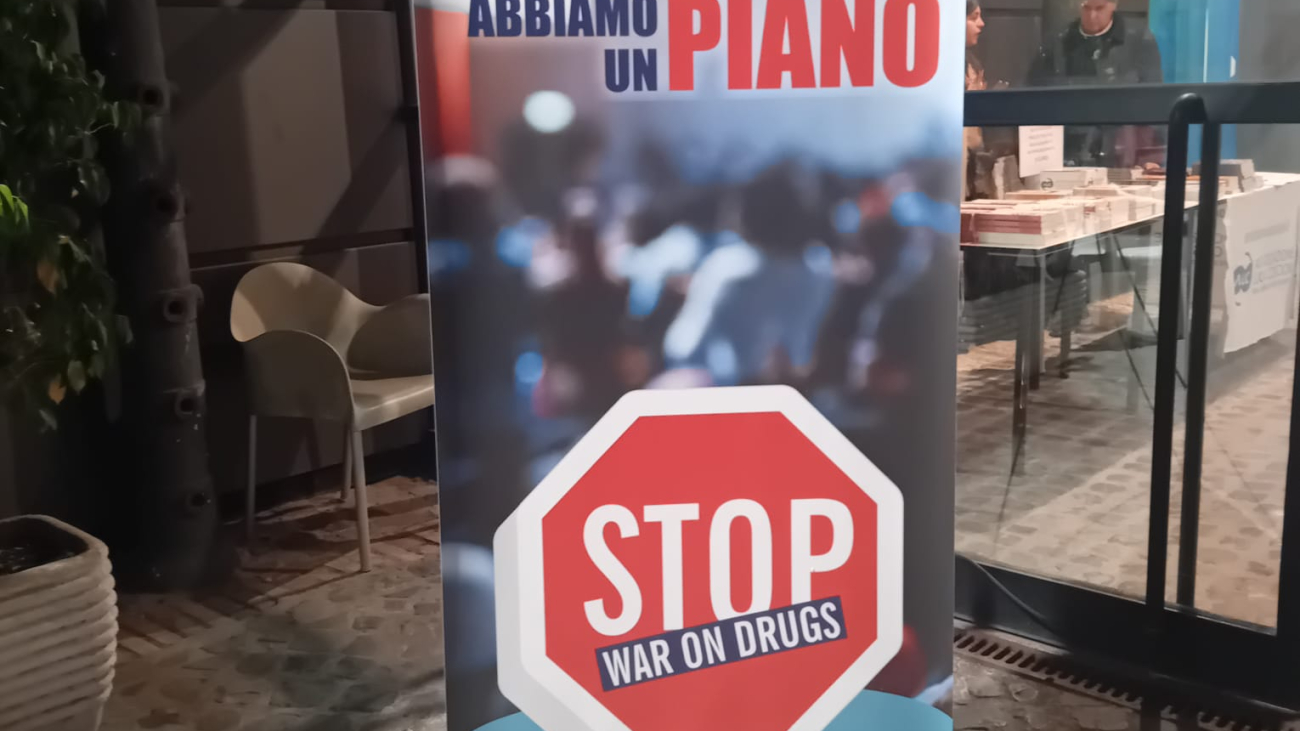
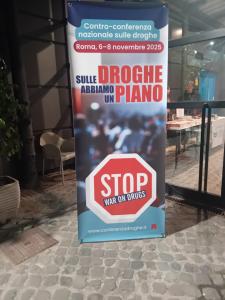
Counter-conference on Drugs: “Let’s stop the war on drugs, let’s guarantee civil and social rights!”
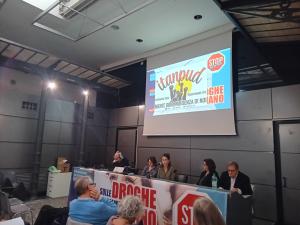
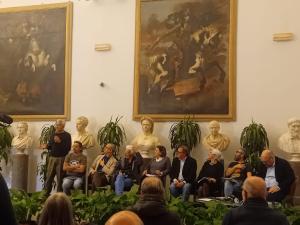
Meeting in Rome between 6th and 8th November, over 200 participants reaffirmed the shared commitment towards human rights, people centred drug policy reform, and closer alignment to the responsible regulation of all drugs.
This sentiment was also shared by Mr Zaved Mahmood, human rights advisor at the United Nations. He underlined that national governments are responsible from promoting the full realisation of the right to health and thus including the utilisation of human rights tools to address drug use in society. Mr Mahmood emphasized the centrality of addressing drug policy in its entirety and apply decriminalisation, depenalisation, and regulation tools in tandem with broader social services such as housing, nutrition, and meaningful gainful employment.
The extensive list of speakers, and key messages focused on the importance of inclusivity, dialogue, and concrete action preventing stigma, and restoring dignity to many. Furthermore, all those present agreed on the pivotal importance to place people who use drugs at the helm and centre of all decisions, discussions, and project implementation concerning their lives.
Various speakers expressed concern at a growing wave of the ‘securitisation’ of borders, and a rise in right wing politics and policies. This was recognised as a newfound risk for people who use drugs, especially people already carrying other stigmatised labels such as migrants, gender queer people, and those facing homelessness.
Whilst recognising that the years 2024/2025 have been particularly significant for international drug policy reform, especially when one considers the broken Vienna consensus on the war on drugs, and the inclusion of Harm Reduction in UN resolutions, speakers recognised that the translation of international dialogue into effective national policies will require much more than just diplomacy. This will also be particularly difficult at a regional level when one considers the extensive and significant funding cuts across the EU, including challenging long standing and new found barriers for civil society organisations providing different harm reduction and other services for people who use drugs.
The UN International Guidelines on Human Rights and Drug Policy was recognised and heralded as a key and most significant document to guide governments in developing and sustaining people centred drug policies and laws. Highlighting the current red-flags by the Italian government, in particular the ‘security law – Legge Sicurezza’ and other laws restricting movement, and the assembly of people on the pretext of ‘protecting and preserving public peace’, the speakers warned that this is not only an attack on people who use drugs, but on the democratic principles and processes of the Italian nation and state. In fact, representatives from the association Meglio Legal were arrested just a few hours before. Their sole crime? Trying to peacefully participate to the Government’s own conference on drugs which was held during the same days.
The contro-conference included also testimonials from countries who have recently regulated some form of supply for recreational cannabis use. Mr Andrew Bonello from Malta, and George Wurth from Germany provided a general overview of the legal provisions, including positive and negative measures directly impacting the cannabis reform.
In conclusion, the contro-conference recognised the centrality of grass-roots movements in advancing the rights of people who use drugs, and ensure government, policies, and social institutions fulfil their role in advancing human rights for all.
This conference included the participation of the following partners:
– Forum Droghe
– ITARDD
– ENCOD – European Coalition for Just and Effective Drug Policies
– United Nations Office for Human Rights
– United Nations Special Rapporteur for Health
– International Drug Policy Consortium
– European Drug Policy Alliance
– EuroNPUD, ItalNPUD
– Harm reduction International
– C-European Harm Reduction Network
– Youth Rise
– Metzineres
– European Union Drugs Agency
– Associazione Luca Coscioni
– Multidisciplinary Association for Psychedelic Studies
– Psychedelic Access Research European Alliance
– Psychedelicare.eu
– CNCA
– Associazione Antigone
– CGIL
– Meglio Legale
– German Hemp Association
– ReLeaf Malta
– 
 Rete degli Studenti
Rete degli Studenti