Exhibition Website frenchdutchparadox.org

Travelling exhibition on French/Dutch cannabis paradox to premiere at United Nations in Vienna


VIENNA – A new travelling exhibition comparing the divergent cannabis policies of France and the Netherlands will premiere in Vienna on March 12, coinciding with the annual meeting of the UN Commission on Narcotic Drugs (CND).

The year 2026 marks a dual 50th anniversary: the birth of the Dutch tolerance policy for cannabis, which paved the way for their world-famous coffeeshops, and the publication of ‘L’Appel du 18 Joint’, a plea by a group of prominent French citizens for decriminalization of cannabis.

The exhibition, ‘1976-2026 – The French/Dutch Paradox in the Global Drug War’, explores half a century of cannabis policy within these two founding members of the European Union, contrasting pragmatic regulation with rigid prohibition.

Visitors can trace the evolution of the Dutch model, up to the current experiment with regulated cannabis cultivation, supplying around 80 coffeeshops. The contrast with France is stark. The 1976 appeal has evolved into a French “420”, with demonstrations for legalization all over France on June 18. Yet the law remains strict and repression persists. Despite decades of criminalisation and mass arrests, France continues to see the highest cannabis consumption rates in Europe.

What’s on display? The heart of the exhibition is a narrative wall featuring photos, illustrations and English texts. A display case contains historical artefacts depicting Dutch and French cannabis culture. There’s a live cannabis plant in a cage and a section dedicated to the late Joep Oomen (1961-2016), drug reform activist extraordinaire and co-founder of NGOs Encod and stichting VOC.

The project is a collaboration between Encod (European coalition for just and effective policies), stichting VOC, Cannabis Sans Frontières, FAAAT and the Cannabis Embassy.

Nine cities in seven countries

Following its Vienna debut, the exhibition will travel to Bilbao, Berlin, Paris, Brussels, Prague, Amsterdam, The Hague and Eindhoven. The goal is to show it in nine cities in seven countries. Leaflets with translations of the exhibition texts in five languages are available, as well as a comprehensive 24-page guide featuring further information and imagery.

Vienna: March 12

The exhibition will be stationed in front of the Vienna International Centre (VIC) on Thursday March 12. Board members from Encod and stichting VOC will be on site to talk to visitors, international delegates and journalists.


Website: www.frenchdutchparadox.org

Gaby Kozar, Encod coordinator (Vienna): gaby@encod.org Phone: +43 699 123 790 86

More information: www.voc-nederland.org


THE FRENCH / DUTCH PARADOX IN THE GLOBAL DRUG WAR 

LOGO centenary of Cannabis Prohibition 1925-2025

UNESCO’s Mondiacult to Spotlight Cannabis in Global Cultural Policy for First Time


Read the new in Business of Cannabis Online : https://businessofcannabis.com/unescos-mondiacult-to-spotlight-cannabis-in-global-cultural-policy-for-first-time/

For the first time in its history, UNESCO’s flagship cultural policy conference will give cannabis a prominent platform, marking the centenary of its international prohibition and reflecting its growing cultural acceptance.

UNESCO’s (United Nations Educational, Scientific and Cultural Organisation) World Conference on Cultural Policies and Sustainable Development, Mondiacult, is the world’s largest cultural conference, welcoming delegations from all 194 member states, aimed at setting the cultural agenda across the globe for the coming years.

From September 29 to October 01, during the 25th edition of the event, two contributions from civil-society organisations FAAAT (Forum Drugs Mediterranean) and the Cannabis Embassy, will make the case to position cannabis at the heart of global cultural policy discussions as the UN prepares its post-2030 development framework.

FAAAT and the Cannabis Embassy have submitted two official contributions: a technical paper, Cannabis: A Plant Without Borders. Cultural Diagnosis, One Hundred Years After Its Prohibition, and a consultation report on the role of cannabis-linked communities in preserving intangible cultural heritage, with insights drawn from events in Barcelona and Santiago de Chile.

This inaugural inclusion of cannabis comes on the centenary of cannabis being simultaneously recognised in the international pharmacopoeia and listed as a ‘narcotic’ under treaty law. The initiatives at Mondiacult seek to reframe this legacy by integrating cannabis-linked practices into broader heritage and sustainability agendas.

Mondiacult is the largest international gathering dedicated to culture, bringing together thousands of participants who will shape the global agenda for years to come,” said Sébastien Béguerie, president of FAAAT.

Kenzi Riboulet-Zemouli, an expert on international drug policy, added that the 2025 edition represents a “decisive moment to enshrine cannabis-related cultures within the United Nations’ next development strategy“.

The move reflects a broader trend from prohibition towards cultural recognition. FAAAT, which has been active in drug policy reform for over two decades, played a key role in the UN’s 2020 rescheduling of cannabis. The Cannabis Embassy, formed in 2024 to unify international advocacy, continues this work by appointing ‘cannabis ambassadors’ and participating in global forums.

Mondiacult gathers thousands of policymakers and cultural practitioners every four years. With the 2030 Sustainable Development Agenda nearing its end, the 2025 conference provides a rare opportunity to re-evaluate the place of traditional and contemporary cannabis cultures in global policy-making.

  • https://mondiacult2025.org/
  • https://agoracivica.cat/en/


More infos

En français :

  • https://www.newsweed.fr/lunesco-met-pour-la-premiere-fois-le-cannabis-a-lhonneur-dans-la-politique-culturelle-mondiale/?fbclid=IwY2xjawM3a-RleHRuA2FlbQIxMQABHifsR8JXRYN4zJuCyDcrZGlqPOKHvahIL2bX3eBu4sQxm_PvAGBVj1EFJzut_aem_LlRt5vca3VRNMt0qjrJ4kQ

Spanish :

Barcelona marca un punto de inflexión histórico para la liberación del cannabis


Cannabis growers as gardeners: results from a survey among Italian and British small-scale growers

In the last issue of the International Journal of Drug Policy

Volume 144, Part 3, October 2025, 104959, we can read this very interesting analysis of a survey.


Cannabis growers as gardeners: results from a survey among Italian and British small-scale growers

Background

The horticultural nature of growing cannabis is often overlooked in the study of cannabis production, and subsequent policies. Little is known about whether growers’ horticultural expertise influences cannabis cultivation methods, the growing of other psychoactive plants, substance use behaviors, or interactions with the criminal justice system. The trajectory of cultivation, in terms of whether cannabis is a gateway to more general gardening, or vice versa, is also unexplored. Studying individuals who combine cannabis cultivation with other gardening activities is valuable because it provides insights into the motivations and practices of cannabis growers as illegal drug market participants.

Methods

Data from 1302 small-scale cannabis growers in Italy and the UK was collected through an online survey from 2020 to 2021. We ran two regressions to compare (1) those who only grow cannabis with those who also grow other plants and; (2) those who started growing cannabis and then grew other plants and vice versa.

Results

Most people in our sample grew cannabis and other plants (General Gardeners; 82 %). In comparison with the Only-cannabis group (OCG), General Gardeners (GG) tended to be older, more educated, and more likely to be in a relationship. GG grew more cannabis crops outdoors, and the purposes for growing were more related to ecological or medical reasons rather than selling cannabis. The OCG group had higher odds of using stimulant drugs and meeting cannabis use dependence criteria compared to GG. Among GG, the majority (71 %) started growing other plants and later moved to cannabis.

Conclusion

Gardening other plants is common among cannabis growers and precedes cultivating cannabis far more than the reverse pathway. As general gardeners appear focused on cannabis alone, concerns about spillover to growing other psychoactive plants or fungi may be overstated. Given the lower expected harms associated with general gardening, it could serve as a proxy for reduced supply involvement in legal assessments.
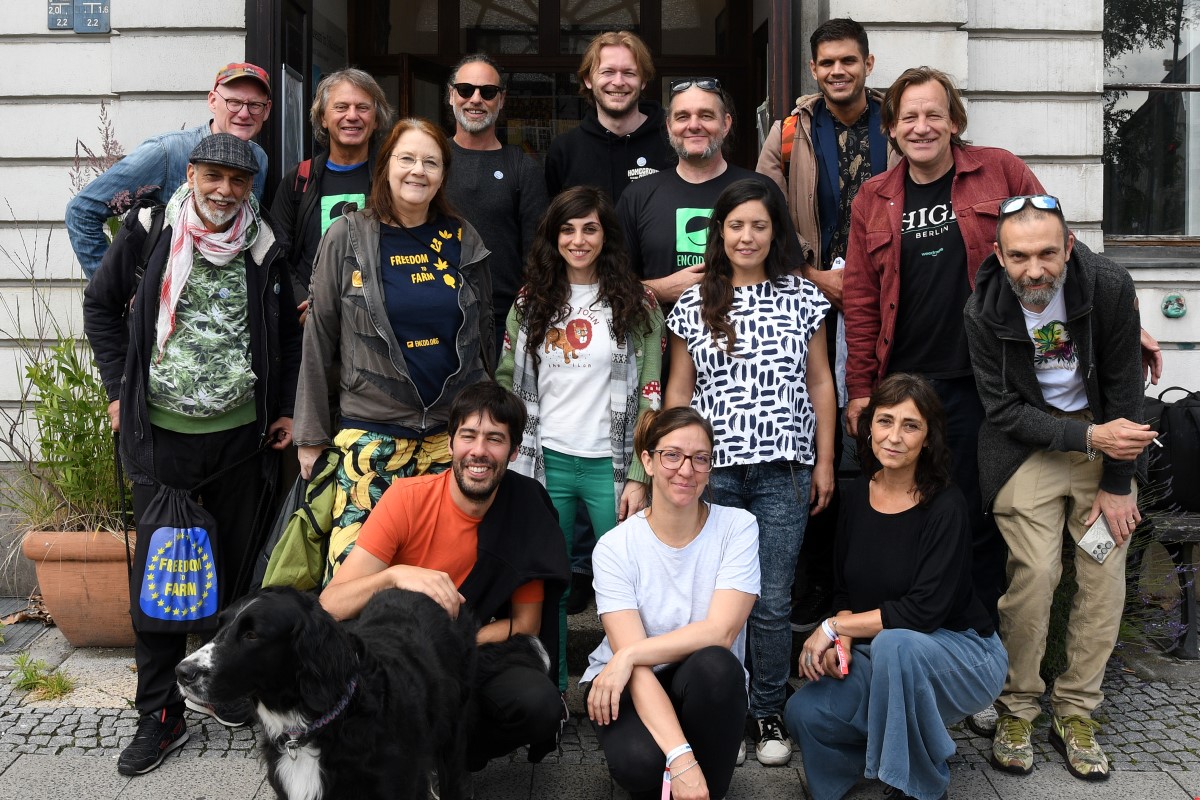
ENCOD GA Berlin 2024

ENCOD and our duty toward a new policy on drugs.

ENCOD and our duty toward a new policy on drugs. 

Since 1993, ENCOD has been advocating for drug policy reforms based on a humane, just and effective approach. In four points below we’re describing below what ENCOD is struggling for, and we hope that you’ll follow and support us to make this.

First

We’re defending the right of the people to use drugs in a responsible manner, free from stigma and discrimination. We are defending a humane approach which allows people to alter their mind and enhance their consciousness with proper substances, within the Harm reduction paradigma. So that we’re advocating for the decriminalization of all drug uses. Also, we are strongly opposing the counter drug policies that are opposing Human Rights with law enforcement measures, especially those countries using the death penalty against drug offenders (or those supposed)!

Second

We’re advocating for the people to grow (not only their rights) their own plants, because we know that the best way to tackle the market logic of making money and profit over the trade of some products, and to design the cultivation up to the needs of the people. 

The right to grow, the freedom to farm up to the needs of peoples. We’re still wondering why the international narcotic control still keeps a large part of the world population in suffering because of the lack of access to pain killers. As well as we need Cannabis or Coca for medicine, we need to reconsider Poppy for medicine to end this global inheritage of the “war on drugs, which is a war on the (poor) peoples”.

Third

We have been defining a way to manage the market within the social and solidarity economic growth, by establishing the rules and code of conduct of the Cannabis Social Clubs, a design model that can also be adapted to other drug types. We therefore are promoting the self supply of consumers, out of scope of the capitalist way to make money. This model allows the real democratic monitoring of activities respecting the will and rights of the people to manage their needs.

Fourth

ENCOD is still advocating for a global approach to illicit market, not only the substances, but all related criminal activities like the money laundering, human trafficking, and other precious ressources as wood timber, gems…etc.    

EU level

At EU level, we as ENCOD are still promoting the implementation of the Catania report adopted by EU parliament on december 14th, 2004.

At  EU level, we as ENCOD are always concerned by the claim of the respect of Human Rights, and policy based on the respect of those principles, as it was adopted recently by the Council of Europe, in December 2022.   

At EU level, even if it is a step by step (either than federal), country by country reform, we are very supportive of the Malta ongoing process, as well as we’re trying to push Germany into the right direction, and we are very enthousiast with the ongoing process in Czech Republic which is driving a very new innovative framework by defining “psycho modulatory substances” to be regulated. 

Support ENCOD

We as ENCOD are still keeping up grassroots claim for drug policy reforms, adocating from local cities to United Nations. Please support ENCOD and all our efforts for just and effective drug policies.

Responsibility ping-pong in the German capital

Responsibility ping-pong in the German capital

Since 1 July 2024, cultivation associations in Germany have been able to apply for permission to cultivate cannabis to supply their members in accordance with the Consumer Cannabis Act. Over 300 applications have now been submitted to the relevant authorities across Germany, and around 25 of these have been granted a licence. The state of Lower Saxony is the front-runner when it comes to granting licences.

Number one in the ranking of federal states that delay or openly refuse to grant licences is the capital of the stoners: Berlin.

The Bavarian Prime Minister Markus Söder of the CSU has publicly announced that he will hunt down cannabis users wherever possible, that they are not welcome in his state and is massively delaying the granting of licences. A special authority has been set up, at a cost of 36 million euros, and they are pretending to comply with a federal law, although no licence has yet been issued. A lawsuit against the federal state is in preparation, initiated by an alliance of the SPD, Die Linke and DHV.

In Berlin, the health senator Dr Czyborra claims in a statement from July* that she has been negotiating with the districts since 2023 about the granting of permits for cultivation communities and says that the districts have refused. The districts, in turn, say that the Senate did not want to provide them with any resources for the task, which makes the refusal understandable in view of the tight budgets and staff shortages.

Added to this are the local addiction support centres, which, together with the youth care organisations, allow themselves to be driven by conservative doctors and put the protection of minors first. They are not responsible for ‘the regulation of addictive substances’. Discussions usually follow the same pattern: as soon as it comes to making cultivation associations possible in concrete terms, the medical profession is cited as a reason to hide behind the protection of minors (we can already see how harmful cannabis is for young people), and all attempts at constructive cooperation are blocked.

‘We are waiting for the Senate and are not responsible,’ is the unanimous opinion of the mayors from 12 districts. Everyone is afraid of doing something wrong, the funding remains unclear and the necessary resources are not available.

There has been talk in the media of transferring the authorisation procedure to the State Office for Health and Social Affairs, starting with the Senate. In an early statement, the LaGeSo announced that it was not willing to take on this task and was not responsible for it as it does not fall within its area of competence. The acceptance of applications was still rejected in August, and we have received emails to this effect. 

So it was a positive surprise when LaGeSo invited Olli Waack-Jürgensen, representing the umbrella organisation German Cannabis Social Clubs, together with Georg Wurth from the German Hemp Association to a meeting at short notice. Olli was welcomed by the prevention officer of the CSC High Ground Berlin e. V., Georg came with his press officer. Our interlocutors were the head of LaGeSo, Dr Merx, the head of the department in which the authority responsible for permission procedures is to be set up, Dr Pelz, as well as the head of the LaGeSo press department and the future head of the permission authority department.

The discussion lasted over 90 minutes and was factual, pragmatic and open. The LaGeSo would like to ‘implement a federal law’ and has received questions and catalogues from other federal states in preparation. ‘We want harmonious applications’ was said, which presumably means not as disproportionate as in Hamburg or Bavaria, for example, but orientated towards the requirements of Section 11 KCanG. They want to work with us, which we do not reject, on the contrary. We welcome this step and will seize the opportunity.

In order to be able to process the authorisation procedure with legal certainty, the authority needs a statutory order from the Senate. The Senate had claimed that this would require an amendment to the law. In Berlin, this change means that it can take a long time. Legislative procedures take an average of 40 months here, and although an amendment to the law takes less time, it is significantly longer than a statutory order. Frustrated, clubs have already turned away and are trying their luck in the federal state of Brandenburg. Now we have learnt that a statutory instrument is sufficient, and that is good news, because the statutory instrument is significantly quicker than the amendment to the law and is more favourable to the clubs.

LaGeSo expects to be able to start work on 1 January 2025, and the job advertisements for the four positions in the future licensing authority are already public. The districts will be responsible for monitoring the AVs.

The clubs can be job engines for those without opportunities on the regular labour market; the sooner they can start working, the sooner the social security funds will be relieved. Most AVs are already in the starting blocks and want to get started. 

The blockade strengthens the illegal market, hinders evaluation and stigmatises adult cannabis users, which should end with the KCanG.

It is now up to the Senate to decide when the authorisation procedure can finally start in Berlin. The boards of the AVs are not prepared to wait just one day longer than necessary and are demanding precise information on when the authority can begin its work. The legal decree must be issued immediately; any further delay is an affront to dozens of clubs, their members and boards.

The monkey dance around cannabis, it really must be said, must end. The KCanG, which was passed in the Bundestag by over 60%, must be implemented across the board without delay. 

It’s not up to us, we are ready.


OWaack


*Press release Senate:

https://www.berlin.de/sen/wgp/presse/2024/pressemitteilung.1476859.php

ENCOD GA 2023

ENCOD General Assembly 2023

Thanks very much to our dear friends Konopex, to help us with their invitation.
Konopex

GA ENCOD 2023, April 21st – 23rd, Ostrava, Czech Republic

https://konopex.cz/en/
Agenda
Hybrid : In a meeting room or on stage / Online via Zoom

Friday, April 21st
19:00 Stage at Conference space
Open fora “Cannabis and the EU: Ongoing regulations” / Public
Focussing on Cannabis Social Clubs (CSC) as a model for a legal non-profit market
International Organizations, their past and their future
[this event will be held in English with translation to Czech and vice versa] Unfortunately is limited to 30 minutes, but is the last presentation on Friday. As ENCOD is having its annual General Assembly during the fair we will be happy to continue the dicussion office@encod.org or let’s just sit down and discuss, all positive input welcome.

Saturday, April 22nd, half public
from 11 a.m. –
Country reports / Public – approx. 1 hour
– in a seperate room on floor 0
– we will put up signs and give exact directions as soon as available.

4:20 p.m.– 6 p.m.: Guest intervention – CSCs in Czech republic (with online presence/presentation of
German CSCD roof organisation, CatFAC Barcelona, ReLeaf Malta) – to be announced, most probably in room on floor 0 too
18:00: Encod Road map 2023 – 2025 / Public (1 hour approximately)

Sunday, April 23rd, private, from 10 a.m. to 3 p.m.
Presentation activity report 2022 – Vote
Presentation financial report 2022 – Vote
General debate / ENCOD situation
Election Executive Committee – Vote
Election Board – Vote

Earth Garden Report ENCOD Website Karen Mamo Pic 01a

ENCOD at Earth Garden Festival Malta 2022

As the festival season kicked-in in Malta, ENCOD participated at the first harm reduction booth set up at Earth Garden festival. Organised from 3rd to 5th of June, Earth Garden Festival is synonymous with the local entertainment scene and provides a family friendly atmosphere to those visiting the festival grounds. Spread over three days and including the participation of numerous local and foreign artists, the festival attracted thousands of people throughout the weekend. The different music genres, information stalls, but also a number of workshops addressing health and well-being facilitated an innovative educational and talking hub.

ENCOD‘s new president Dr Fabian Steinmetz delivered a very well attended workshop on cannabis quality and transparency. Dr Steinmetz congratulated Malta for the historic legislative change decriminalising cannabis, and the possibility to establish non-profit cannabis associations, like ENCOD’s own Cannabis Social Club model. He spoke about the importance of promoting an educated approach, especially for those who have found a new passion for horticulture and anything green. Focusing on the role of education and knowledge about different risks associated with home growing, the ENCOD President highlighted the importance of identifying possible contamination of cannabis and bioburden (presence of microorganisms), especially in country’s prone to humid weather and thus increased risk of mold, as is the case in Malta.

The Harm Reduction booth, sponsored by the University of Greenwich, was set up by ENCOD member Ms Karen Mamo who for the past couple of years has been pushing for a humane and a harm reduction approach for drug use in Malta. Through the facebook page Harm Reduction Malta, Karen is the first local researcher to advance a human rights-based approach to drug policy and is further advocating for the rights of people who use drugs.  Together with Dr Giulia Zampini – founder of the People and Dancefloors project, Karen spoke about the nexus between drugs in society, education and public health.  


During the visit to Malta, President Steinmetz also used the opportunity to meet with Ms Mariella Dimech, Chairperson of the Authority for the Responsible Use of Cannabis, whereby discussions revolved around the role of testing and the dialogue between cannabis growers, consumers, and authorities.  

ENCOD’s participation was covered by the excellently penned article No more ‘war’: reducing harm is the new language on drugs, written by journalist Maya Dimitrijevic, working with one of the leading newspapers in Malta, MaltaToday

In the picture from left to right:
Dr Fabian Steinmetz, ENCOD, Schildower Kreis, LEAP Germany, Delphic HSE
Dr Giulia Zampini, senior lecturer University of Greenwich and founder of People and Dancefloors project.
Ms Mariella Dimech, Chairperson of the Authority for the Responsible Use of Cannabis.
Ms Karen Mamo, researcher and promoter of Harm Reduction in Malta, and member of ENCOD since 2019.


Just Coca webinar 2022

2 days | 4 workshops

The two-day event (with interpretation in English and Spanish) features 20+ international, multidisciplinary speakers: scientific experts, users, entrepreneurs, drug reform advocates and policy makers providing testimonials, keynote lectures, panel & round table discussions, and plenty of Q&A opportunities for interaction with the audience.

Just Coca | Solo Coca | 18–19 May 2022

Day 1 Introduction https://youtu.be/W46AI1-ZeUU

Day 1 part 1/3  https://youtu.be/kbDkSqD9um4

Day 1 part 2/3  https://youtu.be/WTRtNwyrHqk

Day 1 part 3/3  https://youtu.be/qZLnYKxdv7U

WATCH on YouTube!


Screenshot at 2022-06-19 11-08-17

Farmability and pharmability

Our team has published a paper on the farmability / pharmability potential of different drug categories. We argue that certain drug categories can be regulated with a self-supply model. To find out more see below.

Farmability and pharmability: Transforming the drug market to a health-and human rights-centred approach from self-cultivation to safe supply of controlled substances

Authors

Fabian Pitter Steinmetz, Maja Kohek

Published

May 3, 2022

Background

The supply chains addressing the global demand for major recreational drugs are hardly addressed due to international contracts, particularly the UN Single Convention on Narcotic Drugs. Currently applied regulatory changes have several disadvantages ranging from political tensions to the neglect of ecological aspects. The aim of this study is to show some implications associated with a transformation of the recreational drug market that is focused on self-supply of different categories of drugs. The concepts of “farmability”, the feasibility to cultivate relevant plants and fungi, and “pharmability”, the feasibility to refine materials to drugs by chemical synthesis, purification etc., are addressed.

Methods

68 drug experts were invited to fill out an online survey on the feasibility of self-supply of different categories of drugs. The online survey was a five-point Likert scale and had seven questions.

Results

26 experts (38.2%) responded to the online questionnaire. Cannabinoids were considered easy to cultivate/manufacture, depressants and psychedelics were ranked with moderate difficulty, opioids and stimulants were regarded as difficult to cultivate/manufacture, and empathogens/entactogens and dissociatives were ranked very difficult. The study found that some controlled substances, in particular cannabis, could be decriminalised without the need for a commercial market. However, some drug categories, such as dissociatives and empathogens/entactogens, would require the establishment of professional manufacturers. Psychedelics and depressants are ranked in between.

Conclusion

Different drugs are associated with different cultivation and/or manufacturing steps with contrasting difficulty levels. Those differences are likely to shape use prevalence to more accessible and safer drug markets which also decrease the involvement of organised crime groups. Hence, when decriminalising the possession of drugs for personal use, it is therefore recommended to allow also for personal cultivation or cultivation within social clubs. This is particularly relevant for drugs with moderate to high farmability but also if pharmability is sufficiently high.

This research was published in the Drug Science, Policy and Law Journal.

The full report of this research is available at: https://journals.sagepub.com/doi/full/10.1177/20503245221097797