ENCOD GA Berlin 2024

European drug activists of Encod meet in Berlin for General Assembly

Text by Dutch Foundation VOC

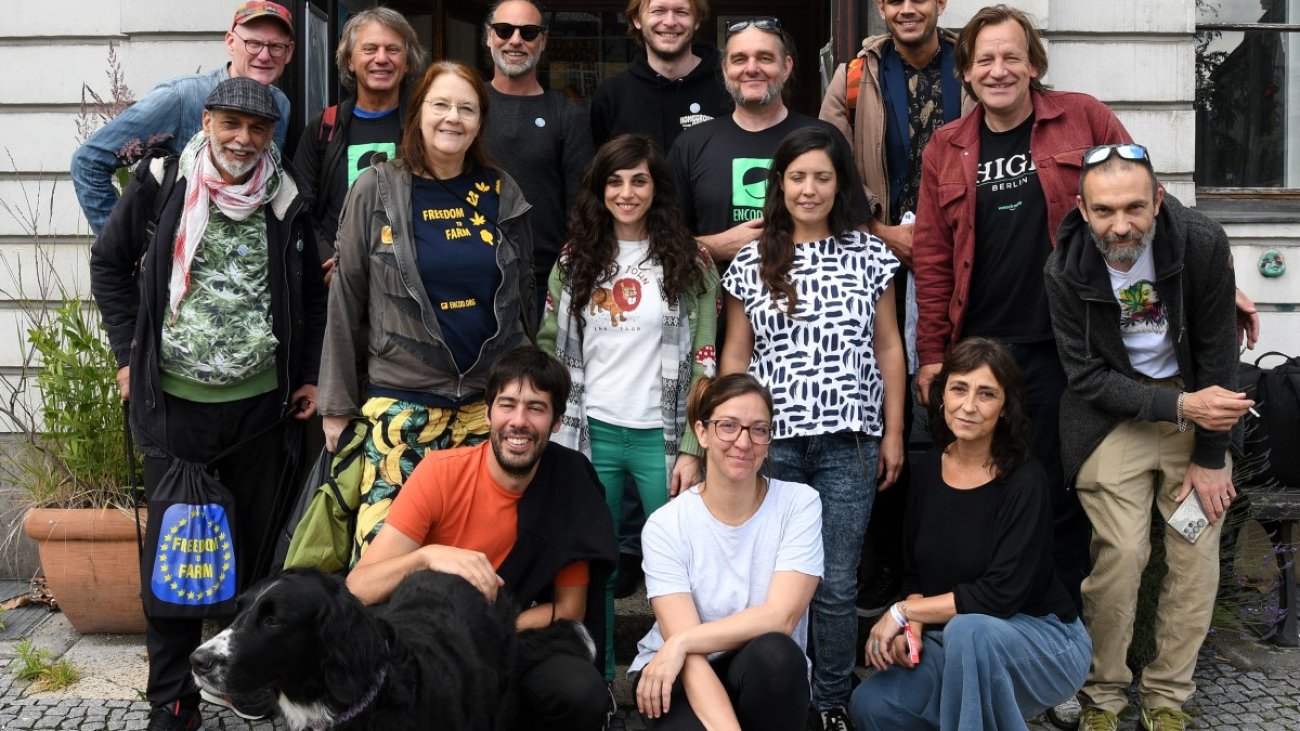
During the weekend of the well-attended Mary Jane cannabis fair in Berlin, Encod held a general assembly in the basement of the Hanf Museum (Hemp Museum) in the German capital. The VOC, the Dutch Union for the Abolition of cannabis prohibition, is a member of Encod, and its chairman Derrick Bergman and secretary Mauro Picavet attended the general assembly.

The European Coalition for Just and Effective Drug Policies has existed since 1994. And without Encod, the VOC would probably never have existed. Joep Oomen, Encod’s co-founder and driving force for many years, is one of the founders of the VOC. He brought a great deal of knowledge, contacts, and experience and played a key role in the VOC until his sudden death in 2016. Joep’s death was a major blow to both organizations; he is still missed.

Encod was hit by an even more difficult-to-grasp tragedy at the beginning of this year. After Joep Oomen died, the secretariat moved from his hometown of Antwerp, Belgium to Vienna. The Austrian Gaby and her German husband Erec ran the secretariat. Erec had been struggling with mental health problems and called the police on January 5, 2024, because he was not doing well. The police came to his house, attacked Erec with pepper spray, and shot him four times. “He wanted help and was murdered,”; Gaby wrote on Facebook a few days later.
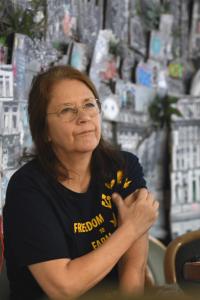
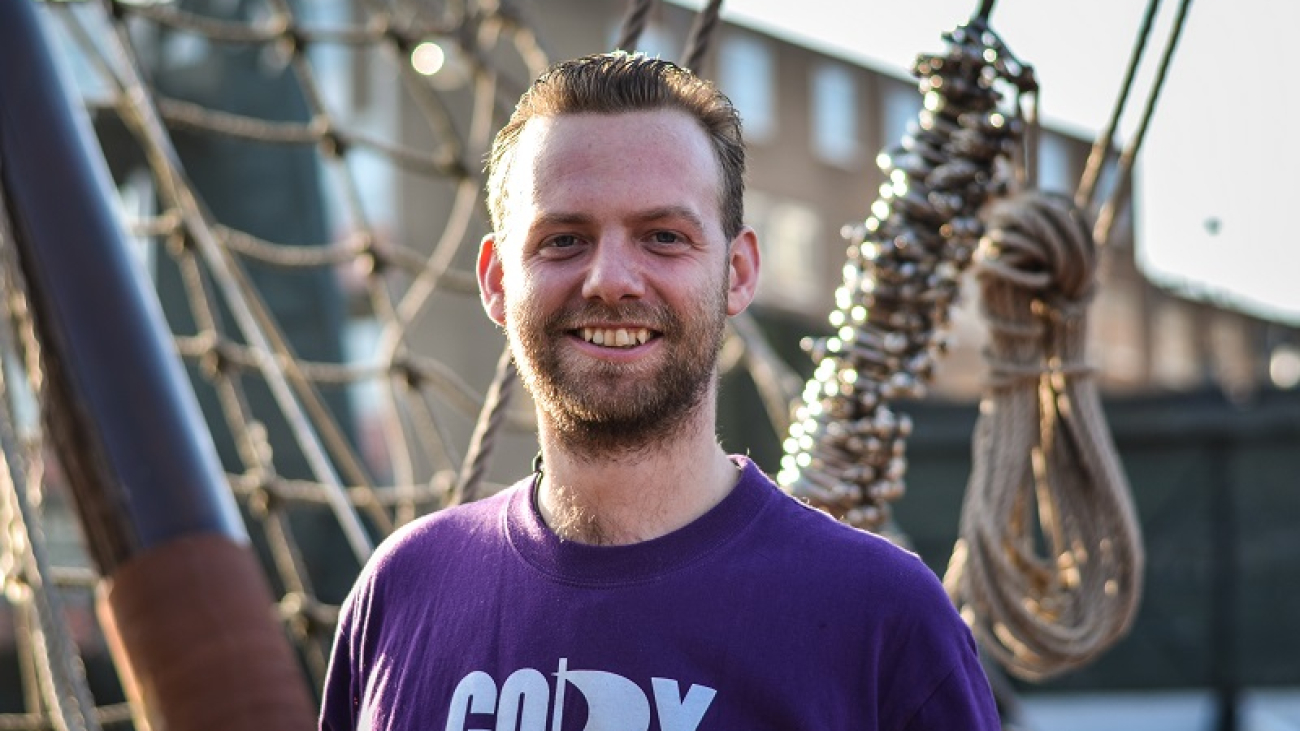
Gaby Kozar Encod alv Berlijn 15-6-2024 Foto Derrick Bergman 8842
Photo: Derrick Bergman / Gonzo Media

For many Encod members, the general assembly in Berlin was the first time they had seen Gaby since the violent death of her husband. She showed herself to be strong and combative and she has no intention of stopping her work for Encod and improving drug policy. The General Assembly was a special one, with members from Germany, Austria, the Czech Republic, Malta, Spain, Italy, France, and the Netherlands attending. The decriminalization of cannabis in Germany clearly gives energy and inspiration to all European countries.

The fact that the German government has opted for the cannabis social club model, which Encod has been promoting for decades, is a boost. But the German version differs from the Encod version in crucial points. In particular, the ban on consuming cannabis in the club goes against the basic concept of the cannabis social club. Enjoying cannabis together in a safe and social environment is essential. The rules that German clubs must adhere to are unnecessarily strict and restrictive. In the rest of Europe, the climate for cannabis consumers is significantly worse than in Germany.

Farid Gheoueche Encod alv Berlijn 15-6-2024 Foto Derrick Bergman 8841
Photo: Derrick Bergman / Gonzo Media

A Czech Encod member was quite pessimistic about the legalization law that has been in the making in the Czech Republic for years. He expects a Luxembourg scenario: no commercial cultivation or shops, but only home cultivation and maybe non-commercial cannabis clubs.

Encod chairman and Parisian Farid Ghehiouèche was even more pessimistic about French drug policy. For the time being, it is all about repression in France. He told the attendees that a friend had received a one-year prison sentence a few days earlier for just eight cannabis plants. The man lives with his elderly mother and a disabled brother, whom he now has to leave to their fate.

VOC secretary Mauro Picavet gave an update on the Dutch cannabis experiment, the new Dutch government, and the VOC’s activities and campaigns, such as veiligthuiskweken.nl, De Gouden Gieter, and cannabisenverkeer.nl.
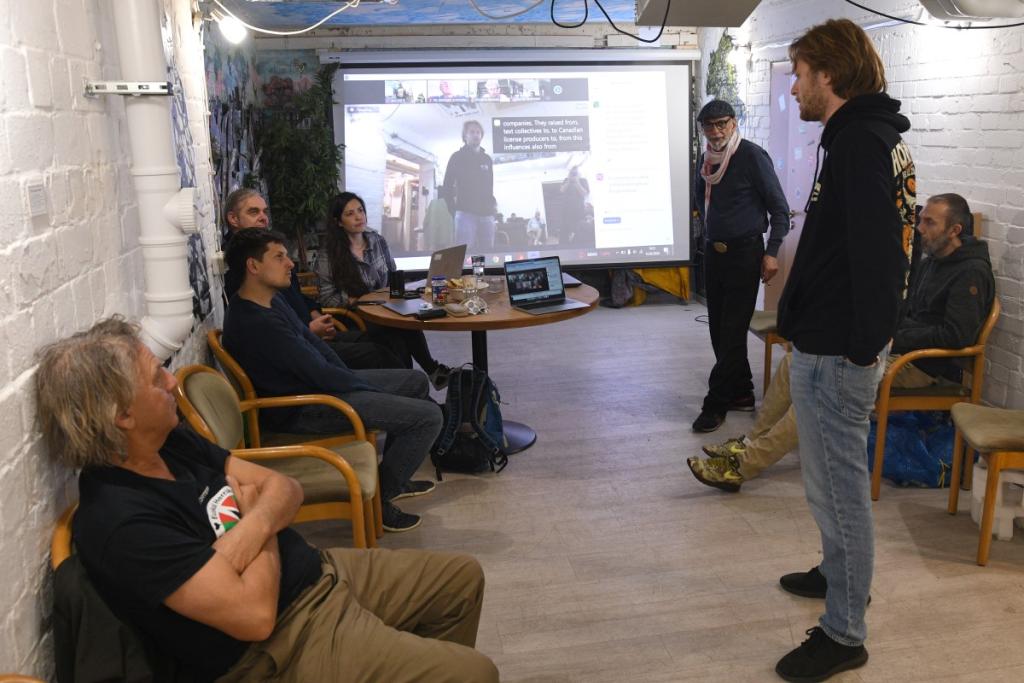
Mauro Picavet Encod ALV Hanfmuseum Belijn 14-6-2024 Foto Derrick Bergman
Photo: Derrick Bergman / Gonzo Media

Malta, the first EU country to legalize cannabis, now has seven cannabis social clubs, three of which supply their members. Consumption in the club is prohibited; perhaps the German government copied this nonsensical rule from Malta. Andrew Bonello of ReLeaf Malta said that a lot of people also grow at home. His organization advocates for increasing the amount of cannabis you can have on the street from seven to thirty grams as well as the amount you can have at home. Now that is a maximum of fifty grams, which means that every home grower runs the risk of being prosecuted. The same maximum applies in Germany, and therefore the same risk for home growers. ReLeaf Malta also wants to abolish the ban on sharing cannabis with friends.
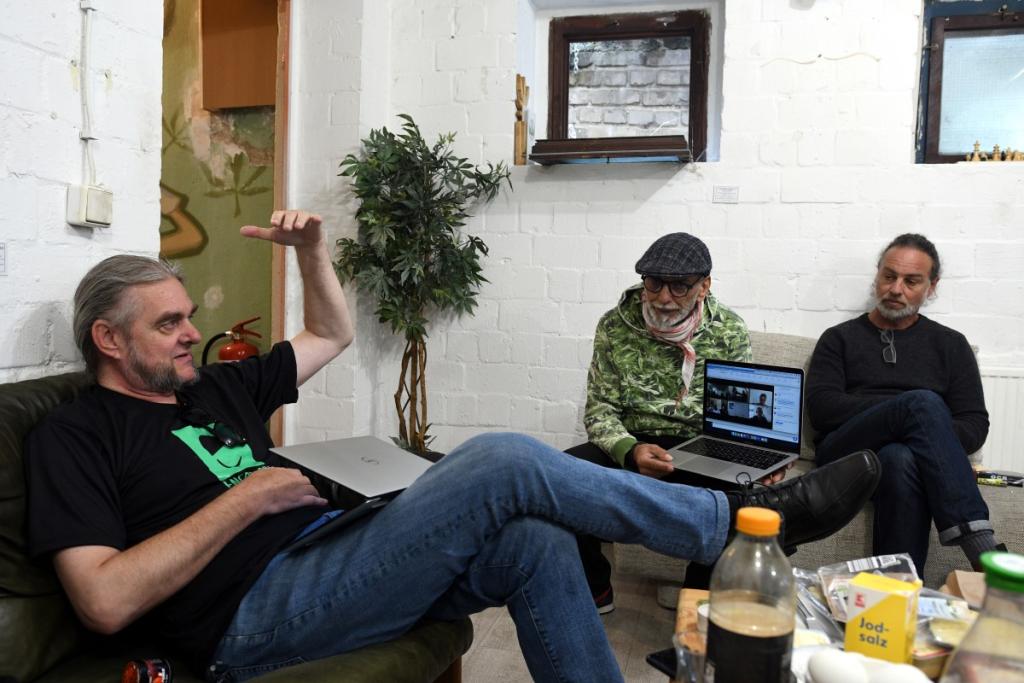
Encod ALV Berlijn 14-6-2024 Olli Waack Farid Ghehiouèche en Andrew Bonello 8839 Foto Derrick Bergman
Photo: Derrick Bergman / Gonzo Media

It was good to see that Encod is still vibrant after thirty years. In the power struggle between government on the one hand and commerce on the other, an independent organization of consumers and activists with knowledge and experience is sorely needed. If you want to know more about Encod or become a member, check out this page.

[this article was first published in Dutch, as part of the “VOC Logboek” in HighLife Magazine 4, 2024]
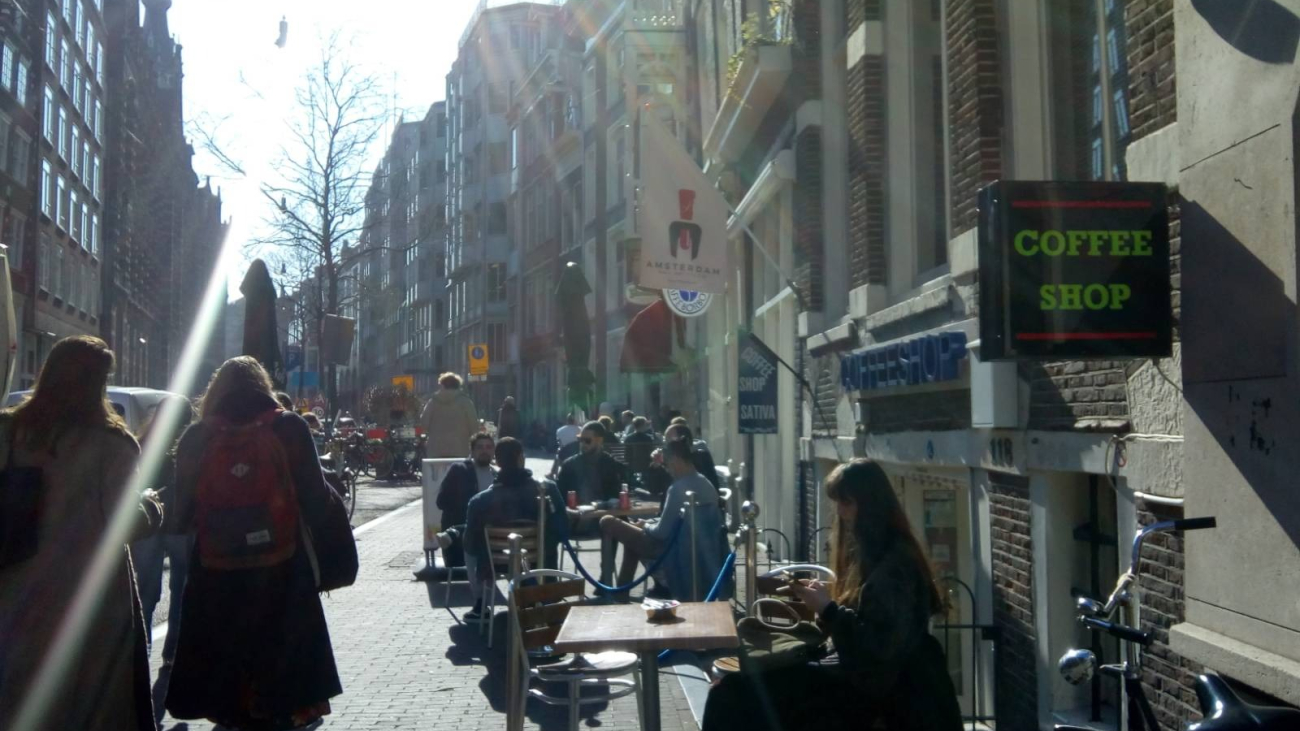
signal-2022-03-11-205507_001

More delays for the Dutch cannabis experiment

The Dutch government’s announcement of more delays for the cannabis experiment has led to sharp criticism from mayors of the cities that are taking part. Paul Depla, mayor of Breda said: ‘Perhaps we should just move directly to legalization given the number of countries which do now have experience of legalized marijuana cultivation.’

The two responsible ministers for the experiment, health minister Ernst Kuipers and justice minister Dilan Yeşilgöz, sent a four-page letter to Parliament on March 30, outlining the lack of progress and the problems the designated licensed producers are dealing with. These problems include not being able to get a bank account and trouble finding a location without the local government or city council panicking.

To make things even more complicated: the new government, appointed last January, has decided to add one big city to the ten cities taking part in the experiment. But they haven’t succeeded in finding that eleventh city yet. And they are still working on formulating the criteria for the assessment of the outcome of the experiment.

The result of all this: the first experimental weed will not be sold in the coffeeshops of the participating cities in 2020, as was initially planned. Nor will it be available in the second half of this year, as was the adjusted plan. The government now estimates the arrival of the regulated weed in the second quarter of 2023. ‘The road to the start of the experiment turns out to be bumpy’, the responsible ministers write.

The new delays were sharply criticized by the mayors of two participating cities. Tilburg mayor Theo Weterings told Dutch news agency ANP: ‘More delays… how much more can you delay? We expect that some members of parliaments will now scratch their heads and ask what’s happening here?’

His colleague from Breda, Paul Depla, told ANP: ‘It’s clear that everyone who supports the weed experiment is disappointed. Perhaps we should just move directly to legalization given the number of countries which do now have experience of legalized cannabis cultivation.’ A great idea, indeed. Especially if that legalization includes home growing, which remains illegal in the Netherlands, with the repressive laws resulting in hundreds of evictions every year.


Links:
Letter by ministers Kuipers and Yesilgöz (in Dutch):
https://www.rijksoverheid.nl/onderwerpen/experiment-gesloten-coffeeshopketen-wietexperiment/documenten/kamerstukken/2022/03/30/kamerbrief-over-het-experiment-gesloten-coffeeshopketen
ANP article (in Dutch):
https://www.binnenlandsbestuur.nl/bestuur-en-organisatie/begin-van-proef-met-legaal-gekweekte-wiet-opnieuw-uitgesteld
Dutch recreational cannabis production pilot beset by delays, MjBizdaily:
https://mjbizdaily.com/dutch-recreational-cannabis-production-pilot-beset-by-delays/

By Derrick Bergman, Dutch Encod member, chairman of VOC (Union for the abolition of cannabis prohibition), cannabis journalist


IMG_4433-1

Update on Dutch cannabis policy: Moving like a tortoise

The Dutch cannabis policy is as famous as it is inconsistent. The biggest inconsistency is the fact that coffeeshops are allowed to sell cannabis under strict conditions, but growing cannabis remains illegal and is actively persecuted. This paradox is known as ‘The backdoor problem’ and has many negative effects. Cannabis is grown in unsafe conditions, there is no regulated quality control, a lot of cannabis is contaminated, gangs are involved… basically all the negative consequences of prohibition.

Since the 1990’s the Dutch cannabis policy has become even more repressive. Laws were expanded, penalties were raised and the number of coffeeshops went down from over 1500 in the nineties to just 565 now. In the new millennium, there have been repeated attempts at solving the backdoor problem by regulating the production of cannabis. Mayors have come up with manifestos, members of parliament have gotten majority votes on the issue and the VOC and other organizations do their best to raise awareness and create change.

From weed law to weed experiment

The long-awaited breakthrough seemed imminent in 2017. A well-prepared law proposal to regulate the supply of the coffeeshops by liberal party D66 won a small majority in the ‘Tweede Kamer’, the House of Representatives. But alas, elections were held soon after this vote and during the talks to form a new government the D66 weed law was put in the freezer. Instead, the new government announced a weed experiment: ten cities could join and have their coffeeshops supplied by ten regulated growers.

More than four years later the first plant has yet to be put in the soil. The experiment is a bureaucratic bonanza, with an excessive amount of rules and provisions. Just one example: the weed has to be transported in the armoured trucks that are used for money transport… After a first selection round, the ten growing companies were chosen by means of a lottery. Seven have been officially approved, after extensive background checks.

The names of the growing companies have not been confirmed yet, but most of them are known, including a few foreign companies. In December 2021 a new government came to power, the fourth consecutive coalition led by Mark Rutte of the conservative VVD party. After a record-breaking formation of almost ten months, the country ended up with the exact same coalition: Rutte’s VVD, D66 and two Christian parties, CDA and ChristenUnie.

Biggest cities don’t take part

These two Christian parties squarely oppose further regulation and legalization of cannabis and tolerate the weed experiment as a necessary compromise. D66 is the only coalition party that supports full legalization. The VVD is somewhere in between. The new government will carry on with the weed experiment and add one big city. It’s worth noting that the three biggest cities, Amsterdam, Rotterdam and The Hague do not take part in the experiment. The mayor of Utrecht, the fourth biggest city, wants Utrecht to be the eleventh participant, but this has yet to be decided.

Some more perspective: out of a total of 355 Dutch municipalities, only 102 have one or more cannabis coffeeshops. From these 102, eleven will be part of the experiment. If Utrecht is selected, 90 coffeeshops would take part, around 16% of the total number. Drawing meaningful conclusions from such a limited experiment seems very hard.

But the main goal of the experiment isn’t scientific, it’s political. A compromise between the Christian parties and D66, to keep all three aboard the coalition. Some see it as a necessary step for politicians to pivot from repression to regulation and legalization. Drug policy expert Tom Blickman at the Transnational Institute recently called it ‘an experiment that no one asked for, that no one really wants, overregulated and heavily over time’.

What about home growing?

Both the weed experiment and the D66 weed law are only about coffeeshops. Home growing is not mentioned. You might think Dutch people are allowed to grow up to five plants for personal use, but we are not. Housing corporations routinely evict home-growers, for any amount of plants. If they don’t, the mayor can, using a clause in the Dutch drug law known as the Damocles law.

Since an update of this Damocles law in 2019, you can get evicted without having a single cannabis plant. It’s enough to have materials that are used for growing cannabis. Having more than 5 grams of cannabis in your house can also get you evicted. Only very recently, in the wake of a massive scandal involving tax officials wrongly accusing thousands of parents of fraud, the evictions of home growers are being criticized as disproportional.

Robin: evicted for drying one plant

A case that led to national publicity and questions in parliament is that of Robin, a man suffering from autism who was evicted for drying one cannabis plant in his home. He had grown it in a nearby forest for fear of getting into trouble. The mayor, a member of the Christian party CDA, was ruthless and Robin has been living at a campsite ever since his eviction.

The weed experiment means a status quo for the cannabis policy until the experiment will be evaluated, in 2024 at best. In the meantime coffeeshops can still have no more than 500 grams in their shop, forcing them to operate secret stashes, increasing the risk of rip deals and violence. Police still raid these stashes, resulting in the temporary or permanent closure of coffeeshops. Selling edibles or concentrates, delivery services and even getting cannabis tested for contaminants remains forbidden for coffeeshops.

Amsterdam: tourist ban for coffeeshops?

The capital Amsterdam is home to 166 of the 565 Dutch coffeeshops. The first-ever female mayor of the city, Femke Halsema, surprised many by saying she’s considering banning tourists from the coffeeshops. She could do this because of the ‘residence-criterium’, introduced by former justice minister Ivo Opstelten, a notoriously anti-cannabis hardliner in 2013. In typical Dutch fashion, the rule officially applies to the whole country but is only enforced in a few cities, most notably Maastricht.

To this day, the residence-criterium has never been enforced in Amsterdam. But it’s not off the table, as mayor Halsema has repeatedly stated. The corona pandemic has resulted in huge revenue declines for coffeeshops in the historic centre, that largely cater to tourists. Now that the tourists are returning, the residence-criterium remains a worry. And it’s not just the coffeeshops that expect street dealers and other black-market operatives to step in if non-residents are banned from coffeeshops.

Trying to sum up the state of the Dutch coffeeshop and cannabis policy, an old N.W.A. lyric comes to mind: ‘Movin’ like a tortoise, full of rigor mortis’. Let’s hope that the legalization plans of our big neighbour Germany will help speed things up a bit here.


By Derrick Bergman, Dutch Encod member, chairman of VOC (Union for the abolition of cannabis prohibition), cannabis journalist


matthijskl.jpg

REPORT ON THE NEDERLANDS

Here you can find the names and adresses of Members of Parliament in the Netherlands

Legislation on consumption and possession of drugs

Consumption of cannabis is legal, but in practice restricted to private places and coffeeshops. In over eighty Dutch cities local rules prohibit consumption of cannabis in public spaces
(outside). Possession of cannabis for personal use of up to 5 grams is a misdemeanor and is usually not prosecuted. Medicinal use of cannabis is legalized in a strict formal fashion. Patients need a prescription from their GP to purchase cannabis (grown legally by monopolist Bedrocan) at a limited number of pharmacies. A lot of GP’s are very hesitant to prescribe cannabis.

Cannabis Social Clubs

The city of Utrecht is trying to set up a Cannabis Social Club and has applied to the ministry of health for an exemption from the Opium Law in order to make this possible. The club will consist of no more than 100 members. In Amsterdam a CSC has sprung up at the grassroots level, hoping to become active in 2014. In the small southern city of Helmond there is the ‘stichting Grow Your Own Free Medicine’, that is concerned with all medicinal plants, not just cannabis. Unlike Belgium, there is no legal right for Dutch citizens to grow cannabis, not even one plant. Police guidelines state that growing of up to 5 plants will not be prosecuted if the owner is an adult and if he or she gives up the plants to the police. New guidelines contain a number of criteria like using artificial light or fertilizer to assess ‘professionalism’. This means you can be prosecuted as a professional commercial grower even with less than 5 plants.

User rooms

User rooms have existed in the Netherlands since 1997. According to the latest available data (2010) there are now 37 user rooms in around 25 different cities. Most have restricted entry. There are worries about the accessibility of user rooms for foreigners, especially people from Eastern Europe.

Main political parties for the European Elections

CDA (Christen Democratisch Appèl) – Christian Democrats > European People’s Party
PVV (Partij voor de Vrijheid) – Freedom Party
PvdA (Partij van de Arbeid) – Labour Party > Party of European Socialists
VVD (Volkspartij voor Vrijheid en Democratie) – Liberal Party > Alliance of Liberals and Democrats for Europe
D66 (Democraten 66) – Liberal Democrats > Alliance of Liberals and Democrats for Europe
GroenLinks – Green Party > European Green Party
SP (Socialistische Partij) – Socialist Party > European United Left/Nordic Green Left
ChristenUnie-SGP – Christian Parties > European Christian Political Movement
Partij voor de Dieren – Party for the animals
50Plus – Party for the elderly
Piratenpartij – Pirate Party > European Pirate Party

What is the position of these parties on:

Drug Policy Reform

Parties that favor and promote drug policy reform are PvdA, D66, GroenLinks, SP, Partij voor de Dieren and Piratenpartij.

Harm Reduction, health-based approach on drugs

Harm reduction is supported by most political parties. The conservative parties have increasingly adopted a zero tolerance stance on drugs however. These include CDA, PVV, ChristenUnie/SGP and to a little lesser extent VVD.

Decriminalisation of cannabis and/or other drugs

Since cannabis has been decriminalized in 1976, most political parties support this concept. The exceptions are PVV, CDA and ChristenUnie/SGP; they favor prohibition and a total ban on cannabis (and all other illegal substances).

Cannabis Social Clubs

Most prominent supporter of the Cannabis Social Club concept is D66; the D66 city alderman of Utrecht has made the opening of a CSC in his city one of his political priorities. The idea is relatively new and alien to the Dutch public because of the (cannabis) coffeeshops that have been operating since the 1970’s. Left and left leaning parties PvdA, SP, GroenLinks, Partij voor de Dieren and Piratenpartij have no objections to CSC’s.

What are the two most important threats on the political and legal front?

Minister of justice Ivo Opstelten (in power since 2010) seems to be on a personal crusade against coffeeshops and cannabis consumers. He introduced the weedpass to ban foreign visitors from coffeeshops and a whole series of other repressive measures. A big threat is his law proposal to declare all cannabis with more than 15% thc hard drugs. This could be the end of any coffeeshop and will drive a lot of consumers to the illegal market. The other big threat is a new law aimed at growshops, banning pretty much anything that can be linked to cannabis production. A final worry is the relentless hunt for people who grow cannabis, even for personal use. People are thrown out of their house and are confronted with huge fines, tax assessments and electricity bills.

What is the most promising or positive development concerning drug policy?

On the local level the resistance against the repressive policy of the minister of justice has been growing recently. No less than 25 cities want to experiment with regulated cannabis production to supply the coffeeshops. Liberal party D66 is developing a law proposal to legalize cannabis, although there is no majority for it in Parliament at the moment. This might very well change after the next elections (2016) or after a breakdown of the government coalition between natural enemies VVD (Conservative Liberals) and PvdA (Labour Party). A recent poll showed 65% of Dutch people favor legalization of cannabis.

Encod contact in the Netherlands

Derrick Bergman (VOC): info@voc-nederland.org