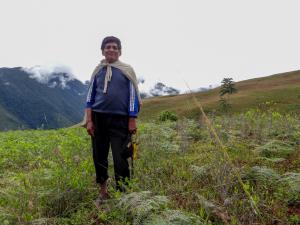
Joep_Oomen_Cannabis_Hearing_EU_Brussels_8_12_2010_foto_db

The ECDD’s Hands Tied: The Structurally Impossible Descheduling of the Coca Leaf from Schedule I

Oral and written statement submitted to 48th ECDD – Information Session – October 20th 2025

The ECDD’s Hands Tied: The Structurally Impossible Descheduling of the Coca Leaf from Schedule I 

Distinguished Chair, dear members of the ECDD, all delegates here,

The forthcoming evaluation of the coca leaf by the WHO Expert Committee on Drug Dependence offers a moment of historic importance. It invites the international community to reflect on the coherence and fairness of the Single Convention on Narcotic Drugs (1961).

Yet it must be acknowledged that, under the current structure of the Convention, an effective descheduling of the coca leaf from Schedule I is legally impossible without a formal treaty amendment.

The coca leaf (Erythroxylon Lam.) holds profound cultural, medicinal, and nutritional significance for Indigenous and Andean communities. Nevertheless, since 1961 it has been treated as equivalent to cocaine. This is because coca, alongside opium and cannabis, constitutes one of the three botanical pillars upon which the Convention’s control system was built.

Under Articles 2(6), 26, and 27, the coca leaf is subject to all control measures applicable to Schedule I substances, irrespective of its formal inclusion in the Schedule. Therefore, even if the ECDD were to recommend, and the Commission were to approve, its removal, the same control obligations would remain in place.

Such descheduling would result only in a change of terminology, not of substance. It could even generate regressive effects:

  1. The coca leaf would remain fully controlled;
  2. It would lose access to Article 2(9), which permits exemptions for industrial or non-medical uses;
  3. The system would face a new inconsistency, applying narcotic drug controls to a substance no longer defined as one.

This would neither correct a historical error nor advance the decriminalisation of traditional and medicinal practices. Instead, it would perpetuate the rigidity of a system that has constrained Andean States and Indigenous peoples for over six decades.

If this process is to honour the principles of the United Nations — respect for cultural diversity, human rights, and scientific evidence — it must move beyond scheduling debates to address the structural limitations of the Convention itself.

We therefore urge Member States, the WHO, and the Commission on Narcotic Drugs to:

  • Recognise the legal and structural barriers inherent in the Convention;
  • Acknowledge the distinct cultural and pharmacological nature of the coca leaf; and
  • Initiate an inclusive dialogue toward a coherent and equitable reform of the international drug control system.

Only through such reflection can we move from symbolic revision to substantive reform, and honour the spirit of the United Nations Charter by upholding the dignity and rights of the peoples for whom the coca leaf remains a living heritage.

In memoriam Joep Oomen, Jorge Hurtado and so many friends of the coca leaf

Thank you, Chair.



Submissions form – Oral Statement ENCOD-FAAAT-CSF.docx
 

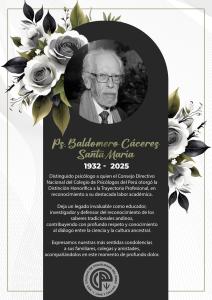
Baldomero Caceres Santa Maria 1932-2025

ENCOD deeply regret the passing of Pr. Baldomero Cáceres Santa María (1932–2025)

ENCOD deeply regret the passing of Pr. Baldomero Cáceres Santa María

We, as ENCOD, as well as the Regional Board of Directors I Lima and Callao of the College of Psychologists of Peru, deeply regret the passing of Pr. Baldomero Cáceres Santa María (1932–2025), a distinguished psychologist recognized for his outstanding academic career, his research on the coca leaf, and his defense of Andean knowledge.

He was one of the panelist of the “Just Coca 2022” (read presentation below), and delivered the keynote speech at Just Coca Workshop 1 #medicine: Coca leaf in medicine: lege artis on safety & therapeutics for physical & mental health.

He was recognised in Peru and abroad for his academic activism for the decriminalisation of marijuana (Cannabis sativa) and coca leaf (Erythroxylum coca), promoting their medicinal uses, among others.

He leaves behind an invaluable legacy as an educator and researcher.

We express our condolences to his family, colleagues, and friends.


 Just Coca 2022: Health | Science | People.  Workshops in the Series “People and Psychoactive Plants” from the Centre for Biocultural Diversity: Coca leaf and coca products: uses, safety, medical applications, and regulatory challenges. 18–19 May 2022. https://justcoca.org/
✅ Free event | Interpretation English-Spanish | Organized by: ENCOD, FAAAT, Fairtrade Cocaine Foundation, and Center for Biocultural Diversity (Universidad de Kent). Sponsors: Coca Leaf Café, KFN+ Law Office, ICEERS Foundation.
Workshop 1 #medicine Coca leaf in medicine: lege artis on safety & therapeutics for physical & mental health.
Workshop 2 #nutrition Coca leaf and industrial products: lege artis aspects of nutrition, wellbeing, safety, innovation and process engineering.
Workshop 3 #nature Sustainable coca cultivation & production in fragile environments: an engine for development, not a threat.
Workshop 4 #policy From the Andeans to the Alps: the changing landscapes of coca leaf laws.
➡️ Info & registration: https://justcoca.org
–––


ENG: Baldomero Cáceres Santa María is a Peruvian social psychologist, researcher, university professor and writer. He is recognised in Peru for his academic activism for the decriminalisation of marijuana (Cannabis sativa) and coca leaf (Erythroxylum coca), promoting their medicinal uses, among others. He delivered the keynote speech at Just Coca Workshop 1 #medicine: Coca leaf in medicine: lege artis on safety & therapeutics for physical & mental health.


ESP: Baldomero Cáceres Santa María es un psicólogo social, investigador, docente universitario y escritor peruano.​ Es reconocido en Perú por su activismo académico por la despenalización de la marihuana (Cannabis sativa) y la hoja de coca (Erythroxylum coca),​ promoviendo sus usos medicinales, entre otros. Hizo la charla magistral en el Solo Coca Taller 1 #medicina: La hoja de coca en medicina: lege artis sobre seguridad y terapia para la salud física y mental. Just Coca webinar: https://justcoca.org/


More info :

https://www.facebook.com/100087096976195/posts/713122124934347/?rdid=s1lYXcGgs8e12J21#

https://es.wikipedia.org/wiki/Baldomero_C%C3%A1ceres

cocazakje

Amigos de la Hoja de Coca: history of a pioneering coca leaf fair-trade

This is a masterpiece for all ENCOD’s friends and supporters ; A real piece about ENCOD history and attempt to keep the experience alive and make it possible for the future… Thanks to the magazin Drugs, habits and Social policy and its editing team for keeping the importance of the subject and the publishing of it. Please download, read, spread and share this very very nice article. Click here to get all articles published.

Amigos de la Hoja de Coca: history of a pioneering coca leaf fair-trade

Drugs, Habits and Social Policy

ISSN2752-6739

Article publication date: 29 July 2024 

Issue publication date: 28 November 2024

Abstract

Purpose

The leaves of the Erythroxylum “coca” plant are a well-known food, beverage, and nutraceutical in their native Andean region. A decade ago, the European non-profit “Amigos de la Hoja de Coca” (Friends of the Coca Leaf) operated a short-lived fair-trade in raw coca leaves between Bolivia and the European Union. The chronicles of this initiative can be insightful, as interest in natural, wellness, and self-care products continues rising in Europe.

Design/methodology/approach

Historical review of the inception, and documentation of the organisation of the scheme and its outcome, via all primary sources available.

Findings

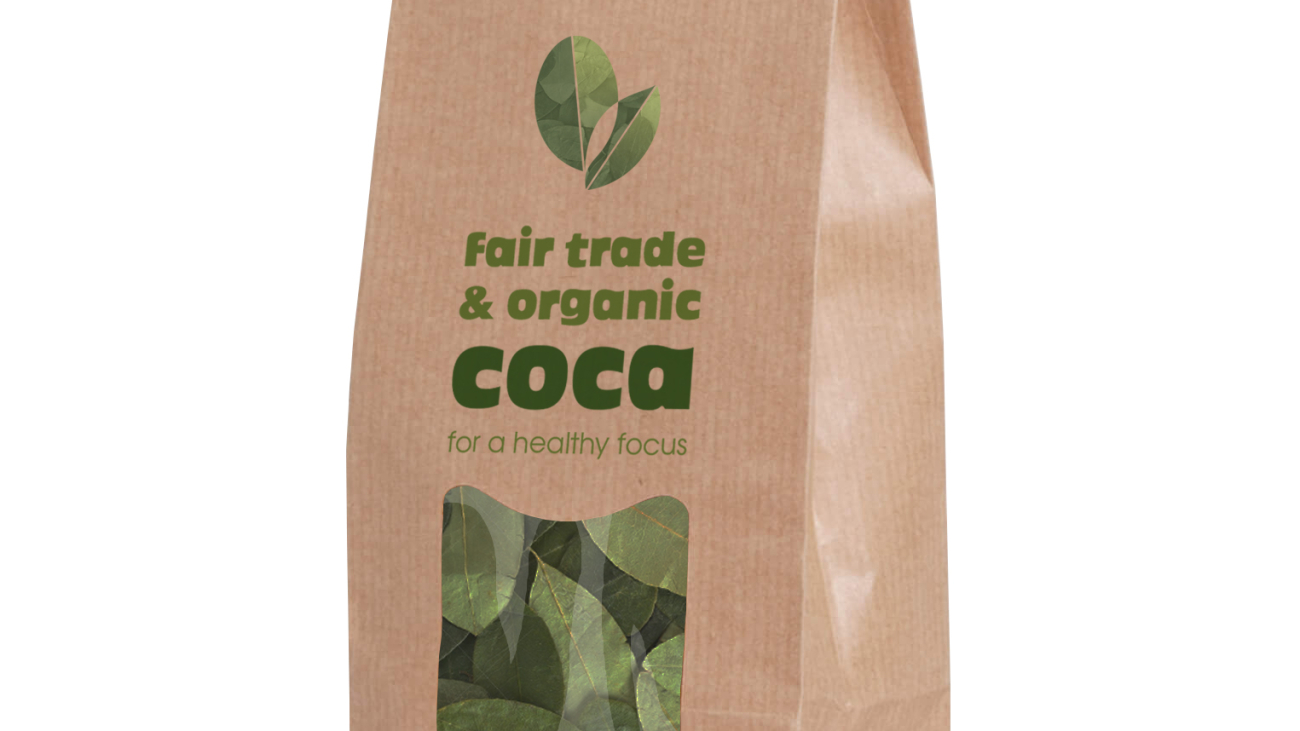
From the 1990s to the early 2010s, civil society groups organised several campaigns to normalise coca leaf in Europe, finding echo at the European Parliament, culminating in 2012-2013 when a periodical distribution system was set-up: growers in Bolivia shipped 150 g. coca leaf packets directly to Friends of the Coca Leaf members in Europe. Initially, most parcels reached their recipients without issue but after technical hurdles and reduced political support, the scheme was eventually discontinued.

Originality/value

European civil society campaigns surrounding coca have been poorly documented. Historically, Friends of the Coca Leaf emerged alongside Cannabis social clubs, but only the latter has prospered. While Friends of Coca Leaf was short-lived, its political outcomes (both at the institutional level and via a fair and do-it-yourself trade initiative) may prove inspirational to current drug policy reform discussions.

Keywords

Citation

Ghehiouèche, F. and Riboulet-Zemouli, K. (2024), “Amigos de la Hoja de Coca: history of a pioneering coca leaf fair-trade”, Drugs, Habits and Social Policy, Vol. 25 No. 2, pp. 155-172. https://doi.org/10.1108/DHS-10-2023-0040