IMG_20200303_155518-8

Side-events at the 64th Session of the Commission on Narcotic Drugs (CND)

Dear friends and members,

Once again the time has come.

At the 64th session of CND, ENCOD is organizing a side-event on the Heroin and Ibogaine Assisted Treatments, and co-organizing one about Strengthening the Prevention & Treatment of Cannabis Problematic Use.

You can join the virtual event about the Heroin and Ibogaine Assisted Treatments on the 13th of April 2021 from 9.00 to 9.50 (CET).

Heroin and Ibogaine Assisted Treatments CND 2021 ENCOD flyer

Check out the report from Ukraine here.


You can join the virtual event about Strengthening the Prevention & Treatment of Cannabis Problematic Use on the 15th of April 2021 from 14.10 to 15.00 (CET).

Strengthening the Prevention & Treatment of Cannabis Problematic Use CND 2021 DIANOVA flyer


Erec Hand & Topbud 2018

Coming up…

Dear friends and members,

In the past two months, our team was busy organizing a conference on the recreational use of cannabis in collaboration with the Maltese MEP Cyrus Engerer and his team.

Check out the teaser for the conference below, and we hope you tune in on the 19th of April at 10.30 (CET) to watch the conference online.

More information coming soon…


Joep Cocawasi

In memoriam Joep Oomen

Dear friends and members,

It’s been five years since the sudden and unexpected passing of Joep. He will always be in our hearts and remain an inspiration in our lives.


We invite you to read the last bulletin he wrote in February 2016 entitled “Grow Your Freedom”:

The first step to understand how drug policy works is to understand how policy works. Most people who live close to either drug consumers, traffickers, or producers do not understand how policy works. They understand the sense of urgency, the terrible harm that can be avoided if the legal framework applying to those people would improve today. When these people are placed in high-level meetings of diplomats where UN Conventions on drugs are discussed – such as UNGASS 2016 – they are entering a world where people hate the word ‘urgency’. Most people coming to these meetings consider them as a career opportunity, and being seen to promote drastic changes is not the best way to improve your perspectives.

Drug policy reform is not something the government will do for you.

Once in a while though, an exception confirms the rule. Twenty-five years ago, in the middle of the war against the cocaine cartels in Colombia and the outbreak of AIDS in Europe, French President François Mitterand made an urgent call for the development of a European policy on drugs that would be different from the US ‘war on drugs’ approach. Upon his initiative, the European Commission created a European Scientific Institute to study the drug phenomenon and a European NGO network to channel the opinions of citizens whose lives were affected by drug policies. In 1993 both EMCDDA and ENCOD saw the light of day, but already a few years later the dream of developing an evidence based drug policy in Europe was shattered to pieces.

The EMCDDA turned out to be ruled by technocrats instead of scientists. As a result, it started to produce statistics on seized kilogrammes, rough estimates on numbers of consumers and euros spent, but until today did not bring any new insight into the relationship between human beings and psychoactive substances. ENCOD was kicked out as a bastard child once it became clear what kind of message it was expressing, struggled for years in order to re-establish some kind of dialogue with EU authorities on drug policies, succeeded in those efforts in 2007, only to find out that the real purpose of this so-called ‘Civil Society Forum’ was to actually avoid any meaningful dialogue to take place.

For UNGASS 2016, the same scenario is played out. The United Nations pretend to hear the voice of citizens affected by drug policies with the creation of a so-called Civil Society Task Force, whose objective is to “ensure a comprehensive, structured, meaningful and balanced participation of Civil Society during the UNGASS process.” That is a diplomatic way of saying there will be an exchange between civil servants working for governments and UN bodies and some academics pretending to represent citizens whose opinions have never been asked. Both merge into a grey mass that finally is just interested in things to remain as they are.

At summits like UNGASS, sticking to the status quo is part of the dress code. Words are polished, infrastructures are impressive and lunches are as good as free. As time goes by, it becomes increasingly harder for the people who actively participate in these summits to produce a declaration that can be taken seriously by people who are aware of the daily problems caused by drug policies, among them many local and regional authorities. In the drug debate on a local level, people look for solutions. On the international level, people look for ways to maintain the problem. We still want to be part of the show next time!

A quarter of a century after Mitterand it is now each and every serious observer of drug policies who knows that 100 years of drug prohibition have failed completely to protect anyone from whatever harm could relate to drugs. Despite such obvious truth the voices of those who are hardest hit by that failure are still being marginalized. In the meantime, it seems some people found out how to open small holes in the wall of prohibition, but instead of making them wide enough for everyone, are enjoying life on the other end and even dedicate themselves to refill the hole they just came through.

While the efforts of European citizens to unmask the Great Lie of Drug Prohibition were successfully crushed by bureaucrats, in the United States the referendum system enabled those with huge fortunes to actually pay for legal change. The only thing they needed to do is set up an effective campaign team and approach voters long and persistently enough to make them support a certain proposition. This democratic tool made it possible until today to legalise cannabis for medicinal purposes in 23 and for all purposes in 5 states. A cannabis consumer’s paradise in the making, you might think. But the reality is more complicated.

Drug policy reform is not something the rich and famous will do for you.

If legal change is something that can be bought, the next thing that happens is what Ethan Nadelmann, one of the stars of the global drug policy reform movement, calls the ‘Budweiserization’ – or exaggerated commercialization – of the drug market. Nadelmann referred to the events in the US state of Ohio, where a small group of private investors spent 25 million dollars in a campaign to pass a legal proposition that would have given them the monopoly to produce and distribute cannabis in the state, thus creating a first legal cannabis oligarchy.

The campaign in Ohio failed to convince voters. But news from other states where propositions to legalise cannabis did pass is not exactly promising either. Although private enterprise has jumped on the legal cannabis market, prices continue to be relatively high: in Colorado, cannabis is sold in dispensaries for 20 USD / gramme. The only other legal option people have is to grow at home. Of the 6 plants they are allowed to have, only 3 may be in the flowering phase, which is impossible for outdoor and quite difficult for indoor growers. Besides purchasing seeds and clones is illegal or very complicated.

In capitalism, big fish rule the game, not small ones. Undoubtedly, the efforts of some small fish to set up a private cannabis industry in the US are closely monitored by the real big investors on the agro-industrial and pharmaceutical market such as Monsanto, Bayer and their ilk. If the small ones are successful, the big fish will not hesitate. Their goal is not to reform drug policies for the good of the people or the earth, but to ensure that whatever happens in the drug debate it is good for (their) business. They either want to conquer the world with currently illegal drugs once it will be possible to sell them like cigarettes or – if they remain prohibited – invent synthetic products that imitate their effects.

The consequences of efforts to copy nature came to light in a tragic way in France when 1 person died and 5 others were seriously wounded during a drug trial in January. The Biotrial company was testing a new painkiller compound aimed at the endocannabinoid system, the body’s own system which also interacts with e.g. cannabis. While one scientific study after the other proves that adding natural cannabis to the endocannabinoid system can have many positive effects for the body and mind, the efforts to invent an artificial substitute that can be easier commercialised continue to fail. Big Pharma meets Karma.

The original and time-honored function of taking psychoactive substances is to enable people to obtain a deeper connection to themselves, other people, or the universe. The nature of this connection is spiritual, not economic. Whatever is done by others (such as the government or private middlemen) to limit or manipulate that very personal connection for economic purposes is doomed to fail and return to them like a boomerang. Money has a spirit as well, and in general, it is not a very good one.

Drug policy reform is something you should do for yourself and for society as a whole

All those who are involved in the world of drugs (consumers, producers and distributors) need a legal framework that is based on the protection against harm and the defense of individual rights. Therefore, none of the efforts to reform drug policy will be meaningful if they do not include the right of every adult human being to (home-)grow plants for personal consumption.

Every citizen can become involved in a campaign to change drug policies by promoting an alternative to both prohibition and the illegal market based on home-growing and not-for-profit distribution. Adults living in a European country who desire to grow cannabis (or any other controlled plant) for these purposes can invoke European conventions and the EU Constitution to legitimize the concept. ENCOD can strengthen these initiatives in various ways, with information and contacts to technical advice on how to grow, harvest, and distribute in a responsible and safe way, and to local activist networks who may support. ENCOD members who encounter legal problems while growing for personal use will be able to receive all political and moral support to reduce the impact of the consequences (such as high lawyer costs).

Now that years have passed during which people have employed millions of words to convince authorities of the utter madness that their drug policies are bringing the world into, it is time for the plants themselves to become actors in the debate. By growing plants for personal use we can demonstrate that it is possible to regulate the drug market in a manner that ensures transparency, accountability, honesty, sustainability, and health. With or without the consent of the United Nations.

By Joep Oomen (with the help of Peter Webster)

cropped-logo-Cannabus-page-001-1-1

Free ‘National Cannabis Newspaper’ aims to get cannabis consumers to vote in Dutch elections

EINDHOVEN – A free ‘National Cannabis Newspaper’ will be available throughout the Netherlands from February 9 to March 17, the day of the national elections. The paper is published by the VOC, the Union for Abolition of Cannabis Prohibition. The 100.000 copies will be distributed via the 570 cannabis coffeeshops in the country.
The twenty-page newspaper is free of advertisements and contains articles, columns, an interview with Member of Parliament Vera Bergkamp, recipes, home growing tips, an English Readers Section, an overview of the political parties’ positions on cannabis and a cannabis crossword puzzle. Bergkamp says in the interview: “It is now tolerated that people grow five plants. I would like to see that this is no longer punishable at all. This point is still on my to-do list.”

Golden Tickets

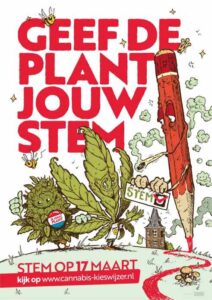
Seven of the hundred thousand copies of “De Nationale Cannabis Krant” contain a Golden Ticket. The lucky finders get to spend an unforgettable cannabis day in Amsterdam, including a visit to the Cannabis College, the Hash, Marijuana & Hemp Museum and various coffeeshops, a private canal tour and a VIP dinner with special guests. Participation is limited to persons aged 18 and older. The VOC foundation, established in 2009 to speed up legalization of cannabis in the Netherlands, cooperates with the “Maatschappij en Cannabis” foundation, creators of the “Cannabis-Kieswijzer” and the new “Cannabis-Stemwijzer”, and with the national coffeeshop unions PCN and BCD. The paper will be available for free at cannabis coffeeshops from February 9, the website www.denationalecannabiskrant.nl contains a PDF and additional information. Cannabis-friendly voting With “De Nationale Cannabis Krant”, the VOC tries to get the negative effects of cannabis prohibition higher on the political agenda and to get as many cannabis consumers as possible to vote cannabis-friendly in the elections. The center pages feature an election poster, designed by Amsterdam based artist Mossy Giant. The slogan “Geef de plant jouw stem” translates as “Give your vote to the plant”.
In the first week of March, all 570 Dutch cannabis coffeeshops will receive a campaign package in the mail, containing election posters, campaign vests for staff, filter tips and eighty copies of “De Nationale Cannabis Krant”. From February 9 the paper will be available at 24 distribution points in eleven of the twelve Dutch provinces, listed on the back page.

Website VOC foundation: www.voc-nederland.org | Twitter: @vocnederland
Website De Nationale Cannabis Krant: www.denationalecannabiskrant.nl

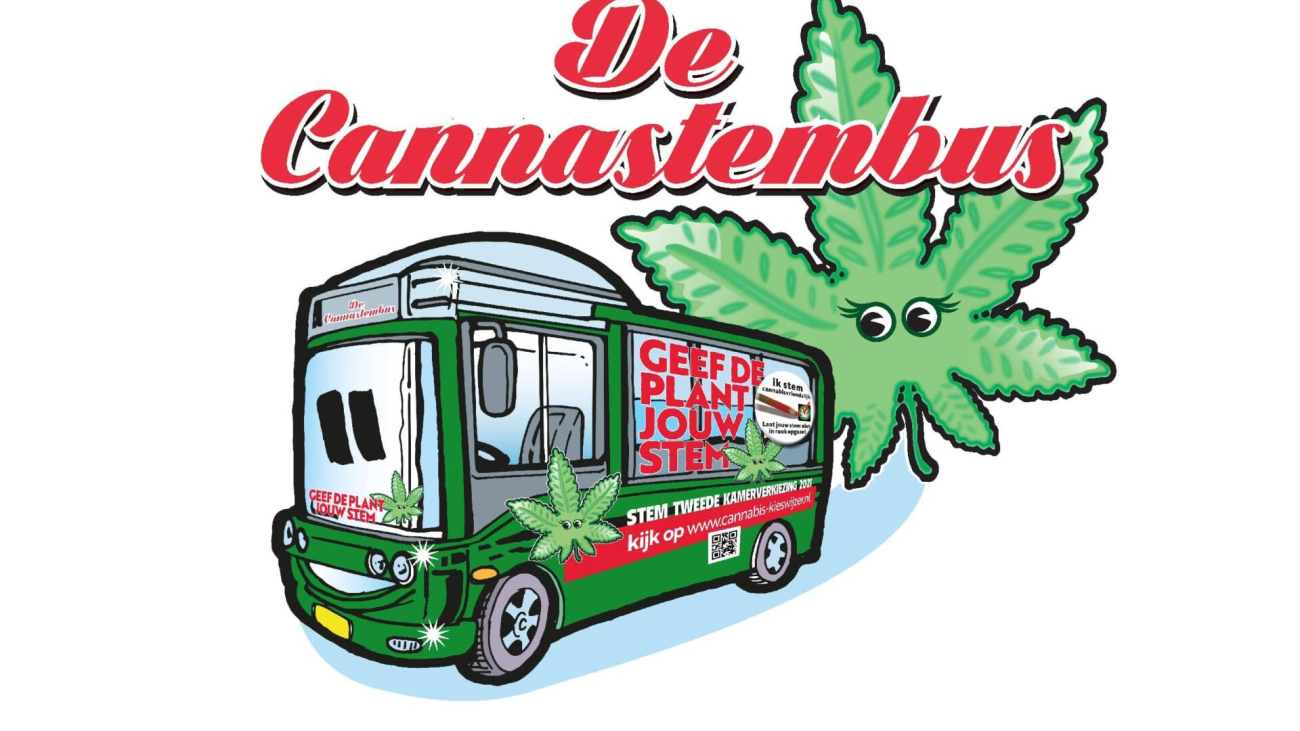
Website of the CannaStemBus: https://cannastembus.nl/

Check out the cannabis friendly voting assisting websites:


Screenshot_2021-02-25 Unhappy Birthday

The 100th anniversary of the Belgian “drug law”

The Belgian drug law is 100 years old. For that long, it has been there as a legal basis to stigmatise and punish people who use drugs. For that long, this law has had a negative impact on public health and human rights.

Now that this experiment has been going on for literally a century without producing any significant results, we are ready for a critical evaluation of Belgian drug policy.

The campaign Unhappy Birthday is an action of the civil movements SMART on Drugs and #STOP1921. This initiative advocates the decriminalisation of the possession of all illegal substances for personal use and the establishment of a parliamentary working group to review the drug policy with a human approach.

Check out the webpage of the campaign Unhappy Birthday.


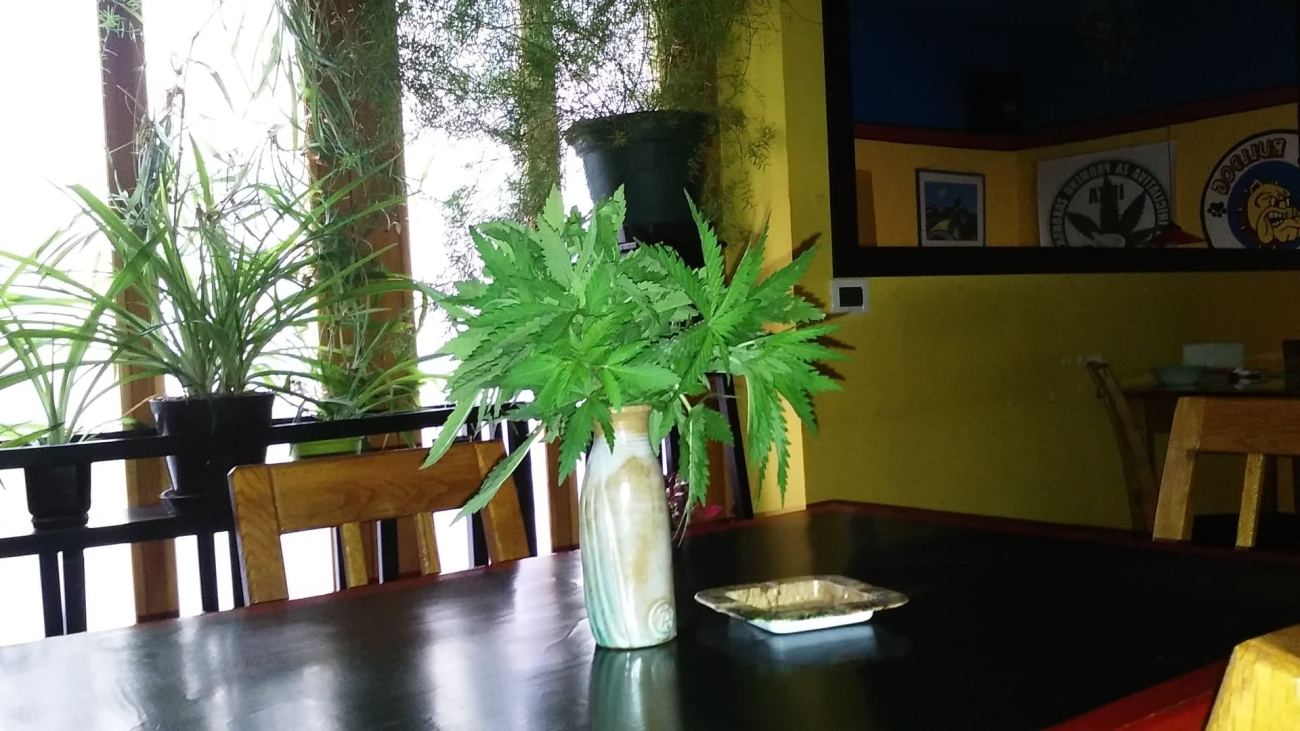
skksao

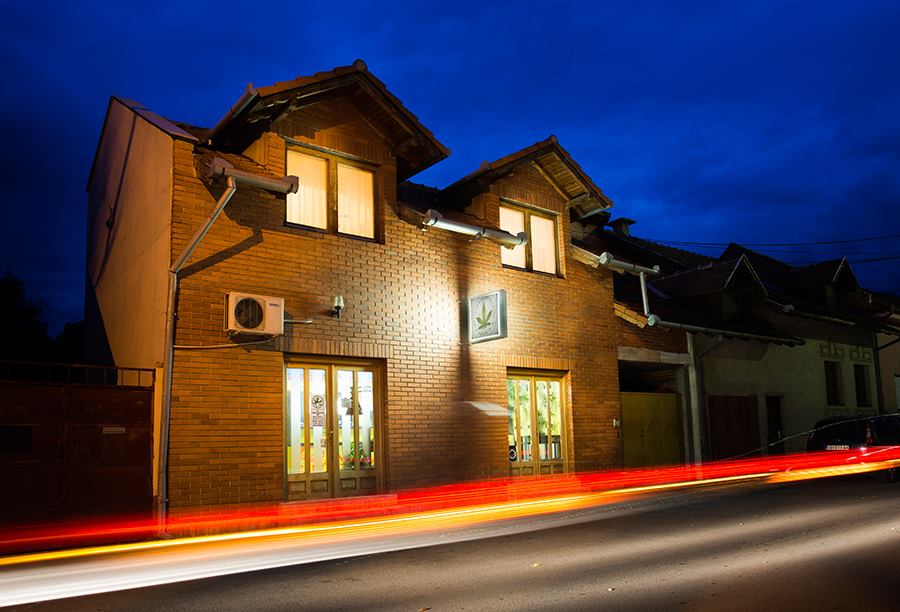
Social Cannabis Club SKK Sombor

The citizens’ association “Social Cannabis Club SKK Sombor” is a humanitarian, non-governmental and non-profit association. We were renewed in 2015, and we officially registered in January 2016. Previously, there was a bar at this location and people with open attitudes and opinions came, and for these reasons, this association was formed.
From 2015 until today, we had many lectures and presentations about cannabis, people who are treated with cannabis gathered, and those who would like to be treated, we had TV shows, guests from the field of cannabis came to us and we participated in various festivals.
We hope that cannabis will be legalized soon.


Suomen kannabisyhdistys: Finnish Cannabis Association

SKY, The Finnish Cannabis Association, has been founded in 1991 in order to influence drug policy in a way that cannabis cultivation and possession are permitted for adults and production and distribution become regulated.
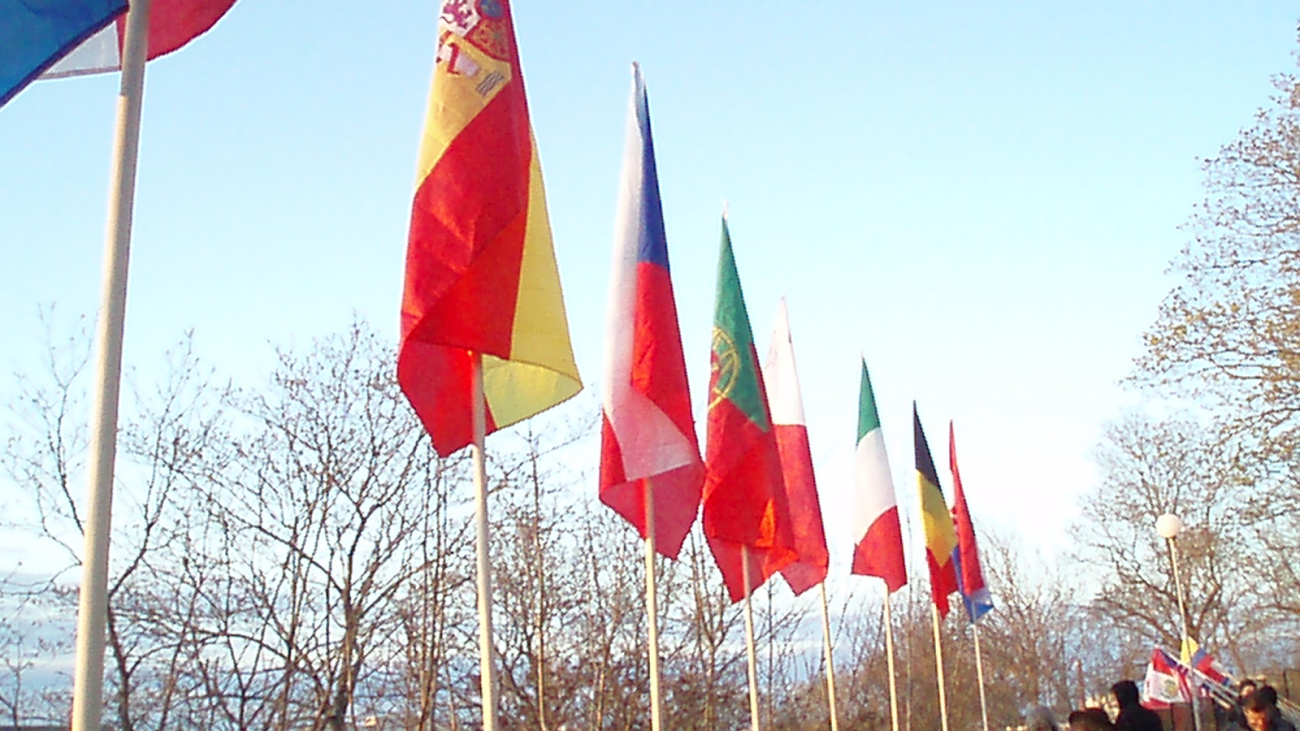
As a veteran organization, it has a long experience with public appearances like the Wind Direction Action in 2020, an installation that showcased flags of countries that have already taken at least the first steps to a more reasonable drug policy.
Like many groups of civil society SKY suffered from a serious lack of funding, people stopped being interested when legalization did not happen instantly. But with a recent action SKY managed to regain attention, bringing an increase in membership, especially young people who have joined to strengthen their ranks.
SKY has initiated a successful citizens initiative to decriminalize cannabis use, for which they gathered 60.000 signatures. The initiative would stop punishing for using cannabis, allow a person to possess 25 grams, and grow 3 plants.
It was presented to Finland’s parliament on November 5th 2020, it is receiving a lot of media coverage and has reinvigorated the discussion within society. There will be a law committee hearing about the initiative on February 17th 2021. For updates and developments on the citizen’s initiative click here.
SKY is a long-standing member of ENCOD.

Sky.org


06

Report General Assembly 2020

Minutes from the ENCOD online GA 2020 on the 31st of January 2021 from 2 pm to 19.30 pm.

In total 17 members were present.

1. Country reports: France, Germany, Malta, Netherlands, Slovenia, Spain, Italy, Czech Republic, Austria, Belgium

France

People think cannabis is legalised, there are many CBD shops even though some are targeted by police. KanaVape company contributed much to this perspective of CBD being legal.

Evolution in the harm reduction sector, they are interested in the CSC and putting cannabis in the harm reduction programs.

On the policy level, there was a lot of change. You can get fined for smoking cannabis on the street (200 € if paid immediately), if you are caught several times you can be prosecuted.
In the parliament there’s a group of MPs from different political parties, they want to study all different uses of cannabis: medical (France has launched a program for 3000 patients to get access to medical cannabis), well-being (CBD hemp products), adult use (recreational use), industrial uses of cannabis (what kind of products can we obtain from cannabis).

More willingness for civil disobedience. French public opinion: 75% of people think the current law is bad and it should change, 85% people think public health and human rights should be taken into account when reforming drug policy.

Due to Corona the prices on the black market rise for double or triple. Also the quality is decreasing. CBD is being sold as high THC weed on the black market being sprayed with synthetic cannabinoids. This can cause problems. Alcohol consumption is increasing too.

Germany

It took three years to grow medical cannabis in Germany and from now on it will be available for patients on prescription. The quality of the medical cannabis from pharmacies increased and is getting better, but there’s not enough in quantity, so the plans are to keep on with import.
Similar to France, Germany had raids of CBD shops and harsh sentences. It’s not legal but it’s being done a lot.

The DHV made a huge campaign with judge Andreas Müller and filed a “Normenkontrollantrag” (request to review the cannabis laws by the federal constitutional court). The authorities tried to stop Müller’s involvement in cannabis cases but were not successful so far.

All the events (GMM and Hanfparade) were online and quite successful. People were invited to give their opinion on social media and post it to the national decision-makers. “Cannabis is not broccoli”: https://www.youtube.com/watch?v=L27ffKWOBBE. The DHV made a campaign with 6 billboards to react to this statement of Bundesdrogenbeauftragte Daniela Ludwig, as part of a campaign to criticise Betäubungsmittelgesetz BtMG (narcotics act, law on narcotics).

Cannabis is not broccoli” is reminiscent to “the prohibition of carrots” video clip: https://encod.org/uncategorized/the-prohibition-of-carrots/

Malta

In 2020, the situation of drug policy in Malta did not change and continued to echo the legal amendments introduced in 2015 (Drug Treatment not Imprisonment Act), whereby small amounts of substances (3.5grm cannabis, 2 XTC pills, 2grm cocaine) have been de-penalised and a fine, instead of court proceedings apply.

It is curious that official EMCDDA reports and other data related to Malta define these changes as falling under a ‘decriminalised’ system. However, this is not the case and a Government official (behind closed doors), made it clear that Malta is in de-penalized system. In fact, persons caught with an amount within the law are still picked up and interrogated by the police at the police station. The person then is summoned before a tribunal and given a fine.

Cases before the tribunal amounted to 790 in 2016, 708 in 2017 and 608 in 2018 [1]. Media reports highlight that by the end of 2018, the numbers between 2015 and 2018 totalled to 3,000 [2]. Data from 2020 is not yet available, however due to the ongoing Covid-19 pandemic and restrictions on entertainment venues, there was obviously less media attention to busts carried out by the police, potentially also because the usual summer festivals where not held and therefore the police had less access to mass gathering events. Interestingly, a recent study using university students as samples highlighted that there was increased drug use by students during the lockdown and that religion acts as a protective factor against substance misuse [3].

The situation concerning medicinal cannabis patients has somewhat improved in some areas, yet remained the same in others. Malta has now a total of 4 different strains and CBD:THC ratios. Nonetheless, only flower form is available and this continued to be heavily priced (16.50 € / gram). Patients have no other means to obtain cannabis and if found cultivating a plant, although not facing effective jail term, are still taken to court to prove that this is not done for trafficking. Furthermore, persons requiring medicinal cannabis but had a history of problematic substance use are barred completely from applying.

[1]https://family.gov.mt/en/Documents/EN%20Drug%20Report%202019.pdf

[2]https://timesofmalta.com/articles/view/close-to-3000-drug-offenders-handed-second-chance-since-2015.707411

[3]https://cdn-others.timesofmalta.com/7420b7de4c1f321b8e974cf44dca9345e1025211.pdf

Local experts explain that once a person has been addicted to heroin, then the person will become addicted to cannabis (THC). This is causing grave injustices, especially for persons who have stopped using heroin for over 15 years and now need medicinal cannabis for other ailments. CBD oil is still technically not officially available in pharmacies and it is not clear if you need a prescription or not.

4/20 April 2020 Video by Parliamentary Secretary Hon Rosianne Cutajar, on the importance to combat stigma and discrimination for people who use cannabis and the government’s promise to bring about changes.

January 2021, the PM declared he is in favour of cannabis for recreational purposes.

ReLeaf Malta issued 2 resolutions in April and May 2020 and continued to liaise with the government and key local stakeholders. According to them 4 main areas are in need of urgent attention:

1) Decriminalisation of seeds and growing for personal use

2) Establishment of small cannabis social clubs

3) Removal of criminal sanctions and revision of ridiculously small amounts allowed by law

4) Promote the rights of medicinal cannabis patients (accessibility, affordability and choice)

Netherlands

Fair Trade Coke – towards a constructive, humane and sustainable alternative is an organisation to destigmatize the coca leaf and cocaine and to reframe the public opinion about the coca plant and cocaine. There are a lot of drug seizures of cocaine in the Netherlands and it is being destroyed. It’s a fail rather than a success.

The organisation is working on the spiritual value of the coca leaf, how it can be an example of how we look at nature, treating it as a spirit, and redefining our understanding of it.

https://www.instagram.com/fairtradecoke/

http://fairtradecoke.org/publications/

There’s the intention to prohibit coffee-shops in Amsterdam to sell cannabis to tourists. The experiment of the coffee-shop chain allows 10 growers to grow cannabis for coffee-shops in 10 municipalities. This means a standstill regarding any other cannabis innovation in the Netherlands for the next 8 years, with the exception of this experiment.

One CSC in the Netherlands specialises in the medical use of cannabis and has 200 members, each growing 5 plants from which they produce extracts and supply their members with it for free or a small contribution.

Spain

Conversation with parliamentary group Podemos will present a proposal about cannabis social clubs and medical cannabis regulation. Due to Covid, all the processes were delayed.
Agricultural NGO, harm reduction, and other organisations are joining forces and pushing for regulation.

People from CSCs got sentenced, seed companies are being shut down. The radicalization of organised crime groups. On one hand, social movements are repressed, on the other certain non-European companies are getting licenses to produce medical cannabis for export.

The tobacco shops started to sell CBD products, but that was discontinued.

There’s a new delegate on the national drug program. The discourse is changing in the country (for example: commission on the problem of drugs → commission on studying addiction).

Italy

Confusing situation since the fall of the last government. CBD shops are generally legal. Much of the CBD products are produced in Italy and sold in France. Cannabis mainly comes from social supply, mafia is generally more involved in cocaine business.

Slovenia

Far-right party is in power now. There was some news about them wanting to regulate the cannabis laws but nothing concrete came out of it. Recently, the municipality of Ljubljana closed a famous squat called ROG and threw out several organisations and initiatives working there, including harm reduction programs. More information is available at: https://vimeo.com/user9963769

https://idpc.net/blog/2021/01/ljubljana-authorities-destroy-community-hub-that-housed-harm-reduction-initiative

During the Covid-19 pandemic, there’s a lot of raids by police, mainly aimed at small cannabis growers across the country.

Czech Republic

Last year in-person GMM in September, with only 300 people, but it was good. Robert Veverka used it to campaign for the elections. It was a good meeting, representatives of the Pirate Party also joined and gave a speech.

The Czech Hemp Cluster did a presentation about licensing for medical cannabis cultivation. The price of medical cannabis produced in the Czech Republic is high so it was cheaper to import it from abroad. The health minister changed the law which will allow medical cannabis cultivation and export. That will improve the situation. 30g of 180g will be covered by health insurance. The new proposed law will be discussed in the near future.

Pirate party proposed to have the right to grow 5 plants but that didn’t succeed. There will be also more discussion on industrial hemp and extractions. One government representative is involved in the cannabis industry and also pushing the reform further. 2021 probably brings some improvements and a good future for cannabis in the Czech Republic is expected. Dušan Dvorzak is still in prison.

Austria

The last big meeting in Vienna was the 63rd Session of the United Nations Commission on Narcotic Drugs (CND) in March 2020. There was the terror attack, everybody was frightened. The police are doing a lot of raids and find grow-ops in private flats where the doors are left wide open, very strange. Due to Covid lockdown restrictions, there are many police controls and people are being raided at the same time for drugs.

The citizens initiative has been in the parliament for a bit over a year, being passed from one office to another. The political parties are not really in favour, though the official drug-control institutions who work with PWUD support our position and give feedback accordingly to the ministries.

Cannabis used for Covid-therapy:

https://kaernten.orf.at/radio/stories/3087614/?fbclid=IwAR35AwiaHi2HNrvD2aKXd3z2F9zI8UwfErmoEcDQMYAzJMWyJz-HTnUCEPw

Switzerland

Many people are in the flourishing CBD business. “Adult use” is widely tolerated, and a fine for users – up to 10 grams – was tried and the found unconstitutional. Cannabis is de facto decriminalised. However, a dispensary in Geneva (working in the grey area but accepted by the authority) was closed, due to a raided grow operation that was closely linked to the private space of the owner. The authorities are very aware of the scientific research in the field but find it difficult to change the cannabis laws accordingly.

Belgium

The situation in Belgium hasn’t changed since Joep left us. The only news is that the third appeal for Trekt Uw Plant will be decided on February 24 but that will not change anything because TUP went bankrupt last year.

2. Administration

In 2020 we received little memberships and donations due to the Covid-19 pandemic. There were other past debts to the Belgium government that we were not aware of. The debt will be paid but our budget will get significantly decreased. Therefore, we have to put even more effort into future fundraising campaigns.

Total income from memberships and donation in 2020 was € 4.506,97.
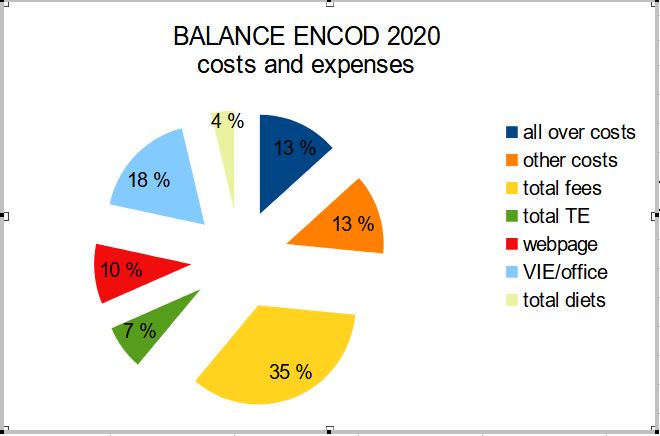
Since we are not having a representative in Belgium and are not familiar with the administrative procedures in Belgium, we think moving ENCOD from Belgium to Austria would be the best option we have. 14 people voted for moving ENCOD from Belgium to Austria, 1 remained neutral, 2 didn’t vote.

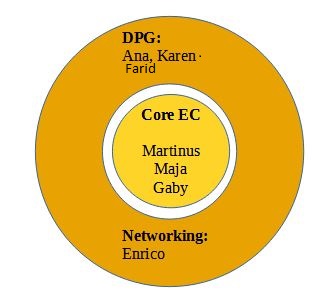
In Austria associations have three mandatory positions. Those are: president, secretary and treasurer. Gaby proposed to elect 3 people for these positions as the core Executive Committee (EC) who are in charge of administration and basic activities of the organisation, and implement the “inner circle” as the extended Executive Committee (EC), which will take care of project development. Gaby also proposed to include in our network little local initiatives and activists who are not able to pay the membership in exchange for a news article report or any other kind of contribution.

3. Project proposals and presentation of EC candidates

See all the applications here.

4. Elections for the new EC

The new core EC was elected. There was only one candidacy for the position of the treasurer: Gaby.

Also only one candidacy for the position of the secretary: Maja.

The candidates for the position of the president were Martinus van Lies, Enrico Fletzer, and Ana Afuera. After anonymous voting Martinus van Lies was elected president with 8 votes, Enrico Fletzer had 3 votes, and Ana Afuera also had 3 votes. 3 people didn’t vote.

The changes will take effect once the association is registered in Austria.

The new core EC is Martinus van Lies (president), Gabriele Kozàr (treasurer), and Maja Kohek (secretary). The rest of the applicants (Enrico Fletzer, Ana Afuera, Farid Ghehioueche and Karen Mamo) will all join the extended EC and participate in the monthly meetings with the core group. Any other members are invited to participate in the monthly meetings of the “inner circle”.
ibo1

In dubio pro reo: Free Sara Glatt!

ENCOD defends the freedom of persons to take an informed decision concerning the use of psychoactive substances and also supports ibogaine treatments but we emphasize that they have to be done in a secure context. We support the self-determination and empowerment of the people using all substances.

Therefore, we condemn the prosecution of Sara Glatt, who since many years practices ibogaine treatment to help the persons who want to stop using substances like heroin, methadone, cocaine, alcohol and amphetamines.

In the scientific literature, the withdrawal symptoms appear to be almost not existent after an ibogaine flood-dose although a complete medical check-up is needed since the treatment can be potentially fatal for persons with cardiovascular diseases or due to drug interactions during the session.

The treatment is not a magic silver bullet but allows the individuals to recover easier with proper after-care and sufficient personal motivation. The possible dangers are accounting for approximately 1 casualty every 300 patients. Being in the grey area does not mean to be responsible for the post-treatment patients or of treatments that were not activated.

500 years after the last witch trials in the Netherlands, the Dutch media call Sara the witch of Kockengen, the small village where she lived before she was arrested. We call out for a fairer trial under the motto “In dubio pro strigae” [In doubt for the witches].

According to the renown Dutch scientist Peter Cohen, the injustice of Sara Glatts’ conviction to 8 years in prison is based on the interpretation of the death of a person from Sweden, inside Sara’s house. This person came voluntarily but was refused both Iboga and an Iboga treatment by Sara because of her bad physical condition and because she came all alone (against Sara’s rules). The death of this person was nevertheless attributed to Iboga that the person somehow acquired inside the house where besides Sara also other people lived. In short, attributing this death to Sara’s responsibility is based on 2 weak interpretations:

1) it is scientifically impossible to make Iboga the CERTAIN cause of this death against the background of the person’s weak physical condition

2) it remained unknown who supplied the Iboga that entered the system of the Swedish person.

The attribution of this death to Sara Glatt’s responsibility is a consequence of the dominant (negative) perspective and narratives around drugs in general and Iboga specifically. I see this as resulting in a witch hunt, of which Sara is now a victim. Her conviction is a sloppy result of this process and does not satisfy a test of objectivity or even fairness. Without the weak interpretations, and with a bit more respect for all the unknowns and uncertainties around this death, Sara would have been free now. ENCOD requests that the doubts and uncertainties in this case will not be massively interpreted in Sara Glatt’s disadvantage. Where such serious doubts and uncertainties exist, objectivity and fairness should prevail.

Free Sara Glatt!