fernanda-de-la-figuera-award

Fernanda de la Figuera passed away last weekend

Fernanda de la Figuera passed away last weekend. She was known as the Spanish Marijuana Grandmother amongst the activists. Fernanda was a referent for any issue on cannabis in Spain, having a long career since 1973 when she became a home grower. In 1996, she launched ARSECA (Asociación Ramón Santos de Estudios sobre Cannabis de Andalucía), a cannabis association of the first wave.

She was co-founder of the Cannabis Party in Valencia and FAC (Spanish CSC Federation) in the early 2000s. Later, she collaborated with the European Coalition for Just and Effective Drug Policies (ENCOD) in Spain. In recent times, she founded Marias X Maria, a Cannabis Social Club run by women in Málaga, and the president of the Cannabis Party Green Light.

There leaves one of the most beloved activists in Spain, a tireless woman who demonstrated every day of her life that another kind of mind is possible with cannabis and that we have not to give up. Keep lighting our way from wherever you are!

National_Flag_of_Malta_colour_jpeg+-

The Malta hush CBD witch hunt

Malta has been heralded by international experts in drug policy for the recent changes to the law criminalizing cannabis and the establishment of not-for-profit cannabis associations. In fact, the new provisions of the law, establish that cannabinoids under 0.2% THC are outside the scope of national legislation pertaining to the control of narcotic and psychotropic drugs. This change moved Maltese legislation closer to regional and international developments related to cannabis, particularly the distinction between cannabis which produces mind-altering effects, and therefore falling under the UN Drug Control Conventions of 1961, 1971, and 1988, and Hemp or CBD dominant strains, the latter having no mind-altering effects and therefore no potential for abuse. CBD products, including oils and flowers, have been widely available within the European single market. It is therefore natural for Maltese consumers to earnestly enjoy equal rights and full access to the European Union Single market of Hemp, CBD flowers and other products.

Nonetheless, recent media reports, and information gathered by grassroots organisations, reflect a somewhat distorted reality unfolding on the ground. It seems a majestic Viennese Waltz is being coordinated between people at the customs department and law enforcement. The dance quickly turns into a fast-paced tango when police officers come marching down the street, knock on peoples’ doors, raid their homes, and arrest them to investigate further the terrible crime of obtaining a ‘novel food product’ from recognized EU retailers and through legitimate and transparent monetary transactions.

The most clamorous case was that of a respected family doctor with a specialization in pain medication, arrested and detained on cannabis trafficking charges. This doctor’s only crime was that of obtaining CBD dominant flowers with a lower content of 0.2% THC, bought within the EU and sold according to national legislation. Other cases not making it to the media include people ordering CBD oil or flowers in very small quantities from recognized European Union companies.

This newfound witch hunt for hemp and CBD is unfolding in a parallel fashion while local pharmacies have just recently obtained licensing to import GMP certified and controlled CBD products. All this is also taking place while the Authority for the Responsible Use of Cannabis is discussing regulation pertaining to cannabis associations and a high-level conference about psychedelic medicine is taking place just this week.

Could this be a coincidence? Maybe it is, or maybe it is not.

Before you reach a conclusion, it is important to look at what international and regional legislation about Hemp and CBD states.

When looking at Chapter 101 Dangerous Drugs Ordinance, amended recently in 2021, the law states that:

“Cannabis” means the inflorescence and leaves of any plant of the genus Cannabis and includes any resin obtained from the said plant and any preparations derived from the said plant, but does not include its seeds, or cannabinoid products containing not more than zero point two (0.2) percent of tetrahydrocannabinol (THC).   

The novel amendment included new terminology to replace the archaic and non-scientific term Indian Hemp, and to also differentiate between THC dominant Cannabis strains which are psychoactive, and other types of cannabis (with less than 0.2%THC) which have no psychoactive effect, and hence are outside of the scope of regulation.

Hemp is a crop grown across Europe and in recent years the area dedicated to hemp cultivation has increased significantly from 19,970 hectares (ha) in 2015 to 34,960 ha in 2019 (a 75% increase). In the same period, the production of hemp increased from 94,120 tonnes to 152,820 tonnes (a 62.4% increase). France is the largest producer, accounting for more than 70% of EU production, followed by the Netherlands (10%) and Austria (4%).

Hemp (Cannabis sativa Linn) is a species in the Cannabaceae family in which the level of tetrahydrocannabinol (THC) is very low, according to the provisions under the common agricultural policy (CAP). Hemp is grown primarily for its industrial uses and there are 75 different hemp varieties registered in the EU catalogue. Due to the very low level of THC, hemp complying with the provisions of the CAP is not used to produce narcotic drugs.

In accordance with Article 189 of EU Regulation 1308/2013, all imports of hemp are currently subject to an import licence requirement, and;

    1. The following products may be imported into the Union only if the following conditions are met:
(a) raw true hemp falling within CN code 5302 10 00 meeting the conditions laid down in Article 32(6) and in Article 35(3) of Regulation (EU) No 1307/2013;
(b) seeds of varieties of hemp falling within CN code ex 1207 99 20 for sowing accompanied by proof that the tetrahydrocannabinol level of the variety concerned does not exceed that fixed in accordance with Article 32(6) and in Article 35(3) of Regulation (EU) No 1307/2013;
(c) hemp seeds other than for sowing, falling within CN code 1207 99 91 and imported only by importers authorised by the Member State in order to ensure that such seeds are not intended for sowing.
  1. This Article shall apply without prejudice to more restrictive rules adopted by the Member States in compliance with the TFEU and the obligations under the WTO Agreement on Agriculture.

There are multiple uses of hemp, including cosmetics (oils, lotions, shampoos, etc.) and energy production (biofuels). There is also interest in the production and marketing of cannabidiol (CBD), a substance present in the hemp plant, due to its multiple uses in cosmetics, health and food. In November 2020, the Court of Justice of the European Union determined that the marketing of legally produced CBD is permitted under EU law.

On 3 December 2020, the EU Commission’s spokesman for public health and food safety Stefan de Keersmaecker declared that on CBD the Commission has taken into account the recent decision of the European Court of Justice, and on that basis, it has reviewed its preliminary assessment and concluded that cannabidiol should not be considered a drug within the meaning of the United Nation Conventions.

In the same year, the notification from the World Health Organization concerning cannabis and cannabis-related substances to the Reconvened sixty-third session of the Commission on Narcotic Drugs provided recommendations for a rescheduling of cannabis. The WHO explained that Cannabis and cannabis resin are included in Schedule I and Schedule IV of the 1961 Convention. Substances that are included in both these Schedules are particularly liable to abuse and produce ill effects and have little or no therapeutic use. Other substances that are included in both Schedules I and IV are fentanyl analogues, heroin and other opioids that are considered especially dangerous. The use of all these substances is associated with a significant risk of death, whereas cannabis use is not associated with such risk.

The evidence presented to the WHO Expert Committee did not indicate that the cannabis plant and cannabis resin were particularly liable to produce ill-effects similar to the effects of the other substances in Schedule IV of the 1961 Convention. In addition, preparations of cannabis have shown therapeutic potential for the treatment of pain and other medical conditions, such as epilepsy and spasticity associated with multiple sclerosis. In line with the above, cannabis and cannabis resin should be scheduled at a level of control that will prevent harm caused by cannabis use and at the same time will not act as a barrier to access and to research and development of cannabis-related preparations for medical use. The Committee concluded that the inclusion of cannabis and cannabis resin in Schedule IV is not consistent with the criteria for a drug to be placed in Schedule IV.

The WHO explained that CBD is found in cannabis and cannabis resin but does not have psychoactive properties and has no potential for abuse and no potential to produce dependence. Furthermore, CBD does not have significant ill-effects and has been shown to be effective in the management of certain treatment-resistant, childhood-onset epilepsy disorders. It was approved for this use in the United States of America in 2018 and is currently under consideration for approval by the European Union. The Expert Committee on Drug Dependence considered a critical review of CBD and recommended that preparations considered to be pure CBD should not be scheduled within the international drug control conventions

“Preparations containing predominantly cannabidiol and not more than 0.2 per cent of delta-9-tetrahydrocannabinol are not under international control”. 

In summary, CBD has no potential for abuse, is allowed within the EU, and has been identified in Maltese legislation as being separate from cannabis with a higher THC content of 0.2%.

Yet, we observe this hushed CBD witch hunt, and potentially lurking pharmaceutical interests seeping into and trying to dominate CBD availability in Malta.

We will let you decide what is going on. In the meantime, people continue to have their lives suspended and trampled on by a draconian interpretation and implementation of the law, and a complete mismatch between human rights and an evidence-based approach to drug policy.

By ENCOD

Contact us at: office(a)encod.org

signal-2022-03-11-205507_001

More delays for the Dutch cannabis experiment

The Dutch government’s announcement of more delays for the cannabis experiment has led to sharp criticism from mayors of the cities that are taking part. Paul Depla, mayor of Breda said: ‘Perhaps we should just move directly to legalization given the number of countries which do now have experience of legalized marijuana cultivation.’

The two responsible ministers for the experiment, health minister Ernst Kuipers and justice minister Dilan Yeşilgöz, sent a four-page letter to Parliament on March 30, outlining the lack of progress and the problems the designated licensed producers are dealing with. These problems include not being able to get a bank account and trouble finding a location without the local government or city council panicking.

To make things even more complicated: the new government, appointed last January, has decided to add one big city to the ten cities taking part in the experiment. But they haven’t succeeded in finding that eleventh city yet. And they are still working on formulating the criteria for the assessment of the outcome of the experiment.

The result of all this: the first experimental weed will not be sold in the coffeeshops of the participating cities in 2020, as was initially planned. Nor will it be available in the second half of this year, as was the adjusted plan. The government now estimates the arrival of the regulated weed in the second quarter of 2023. ‘The road to the start of the experiment turns out to be bumpy’, the responsible ministers write.

The new delays were sharply criticized by the mayors of two participating cities. Tilburg mayor Theo Weterings told Dutch news agency ANP: ‘More delays… how much more can you delay? We expect that some members of parliaments will now scratch their heads and ask what’s happening here?’

His colleague from Breda, Paul Depla, told ANP: ‘It’s clear that everyone who supports the weed experiment is disappointed. Perhaps we should just move directly to legalization given the number of countries which do now have experience of legalized cannabis cultivation.’ A great idea, indeed. Especially if that legalization includes home growing, which remains illegal in the Netherlands, with the repressive laws resulting in hundreds of evictions every year.


Links:
Letter by ministers Kuipers and Yesilgöz (in Dutch):
https://www.rijksoverheid.nl/onderwerpen/experiment-gesloten-coffeeshopketen-wietexperiment/documenten/kamerstukken/2022/03/30/kamerbrief-over-het-experiment-gesloten-coffeeshopketen
ANP article (in Dutch):
https://www.binnenlandsbestuur.nl/bestuur-en-organisatie/begin-van-proef-met-legaal-gekweekte-wiet-opnieuw-uitgesteld
Dutch recreational cannabis production pilot beset by delays, MjBizdaily:
https://mjbizdaily.com/dutch-recreational-cannabis-production-pilot-beset-by-delays/

By Derrick Bergman, Dutch Encod member, chairman of VOC (Union for the abolition of cannabis prohibition), cannabis journalist


IMG_4433-1

Update on Dutch cannabis policy: Moving like a tortoise

The Dutch cannabis policy is as famous as it is inconsistent. The biggest inconsistency is the fact that coffeeshops are allowed to sell cannabis under strict conditions, but growing cannabis remains illegal and is actively persecuted. This paradox is known as ‘The backdoor problem’ and has many negative effects. Cannabis is grown in unsafe conditions, there is no regulated quality control, a lot of cannabis is contaminated, gangs are involved… basically all the negative consequences of prohibition.

Since the 1990’s the Dutch cannabis policy has become even more repressive. Laws were expanded, penalties were raised and the number of coffeeshops went down from over 1500 in the nineties to just 565 now. In the new millennium, there have been repeated attempts at solving the backdoor problem by regulating the production of cannabis. Mayors have come up with manifestos, members of parliament have gotten majority votes on the issue and the VOC and other organizations do their best to raise awareness and create change.

From weed law to weed experiment

The long-awaited breakthrough seemed imminent in 2017. A well-prepared law proposal to regulate the supply of the coffeeshops by liberal party D66 won a small majority in the ‘Tweede Kamer’, the House of Representatives. But alas, elections were held soon after this vote and during the talks to form a new government the D66 weed law was put in the freezer. Instead, the new government announced a weed experiment: ten cities could join and have their coffeeshops supplied by ten regulated growers.

More than four years later the first plant has yet to be put in the soil. The experiment is a bureaucratic bonanza, with an excessive amount of rules and provisions. Just one example: the weed has to be transported in the armoured trucks that are used for money transport… After a first selection round, the ten growing companies were chosen by means of a lottery. Seven have been officially approved, after extensive background checks.

The names of the growing companies have not been confirmed yet, but most of them are known, including a few foreign companies. In December 2021 a new government came to power, the fourth consecutive coalition led by Mark Rutte of the conservative VVD party. After a record-breaking formation of almost ten months, the country ended up with the exact same coalition: Rutte’s VVD, D66 and two Christian parties, CDA and ChristenUnie.

Biggest cities don’t take part

These two Christian parties squarely oppose further regulation and legalization of cannabis and tolerate the weed experiment as a necessary compromise. D66 is the only coalition party that supports full legalization. The VVD is somewhere in between. The new government will carry on with the weed experiment and add one big city. It’s worth noting that the three biggest cities, Amsterdam, Rotterdam and The Hague do not take part in the experiment. The mayor of Utrecht, the fourth biggest city, wants Utrecht to be the eleventh participant, but this has yet to be decided.

Some more perspective: out of a total of 355 Dutch municipalities, only 102 have one or more cannabis coffeeshops. From these 102, eleven will be part of the experiment. If Utrecht is selected, 90 coffeeshops would take part, around 16% of the total number. Drawing meaningful conclusions from such a limited experiment seems very hard.

But the main goal of the experiment isn’t scientific, it’s political. A compromise between the Christian parties and D66, to keep all three aboard the coalition. Some see it as a necessary step for politicians to pivot from repression to regulation and legalization. Drug policy expert Tom Blickman at the Transnational Institute recently called it ‘an experiment that no one asked for, that no one really wants, overregulated and heavily over time’.

What about home growing?

Both the weed experiment and the D66 weed law are only about coffeeshops. Home growing is not mentioned. You might think Dutch people are allowed to grow up to five plants for personal use, but we are not. Housing corporations routinely evict home-growers, for any amount of plants. If they don’t, the mayor can, using a clause in the Dutch drug law known as the Damocles law.

Since an update of this Damocles law in 2019, you can get evicted without having a single cannabis plant. It’s enough to have materials that are used for growing cannabis. Having more than 5 grams of cannabis in your house can also get you evicted. Only very recently, in the wake of a massive scandal involving tax officials wrongly accusing thousands of parents of fraud, the evictions of home growers are being criticized as disproportional.

Robin: evicted for drying one plant

A case that led to national publicity and questions in parliament is that of Robin, a man suffering from autism who was evicted for drying one cannabis plant in his home. He had grown it in a nearby forest for fear of getting into trouble. The mayor, a member of the Christian party CDA, was ruthless and Robin has been living at a campsite ever since his eviction.

The weed experiment means a status quo for the cannabis policy until the experiment will be evaluated, in 2024 at best. In the meantime coffeeshops can still have no more than 500 grams in their shop, forcing them to operate secret stashes, increasing the risk of rip deals and violence. Police still raid these stashes, resulting in the temporary or permanent closure of coffeeshops. Selling edibles or concentrates, delivery services and even getting cannabis tested for contaminants remains forbidden for coffeeshops.

Amsterdam: tourist ban for coffeeshops?

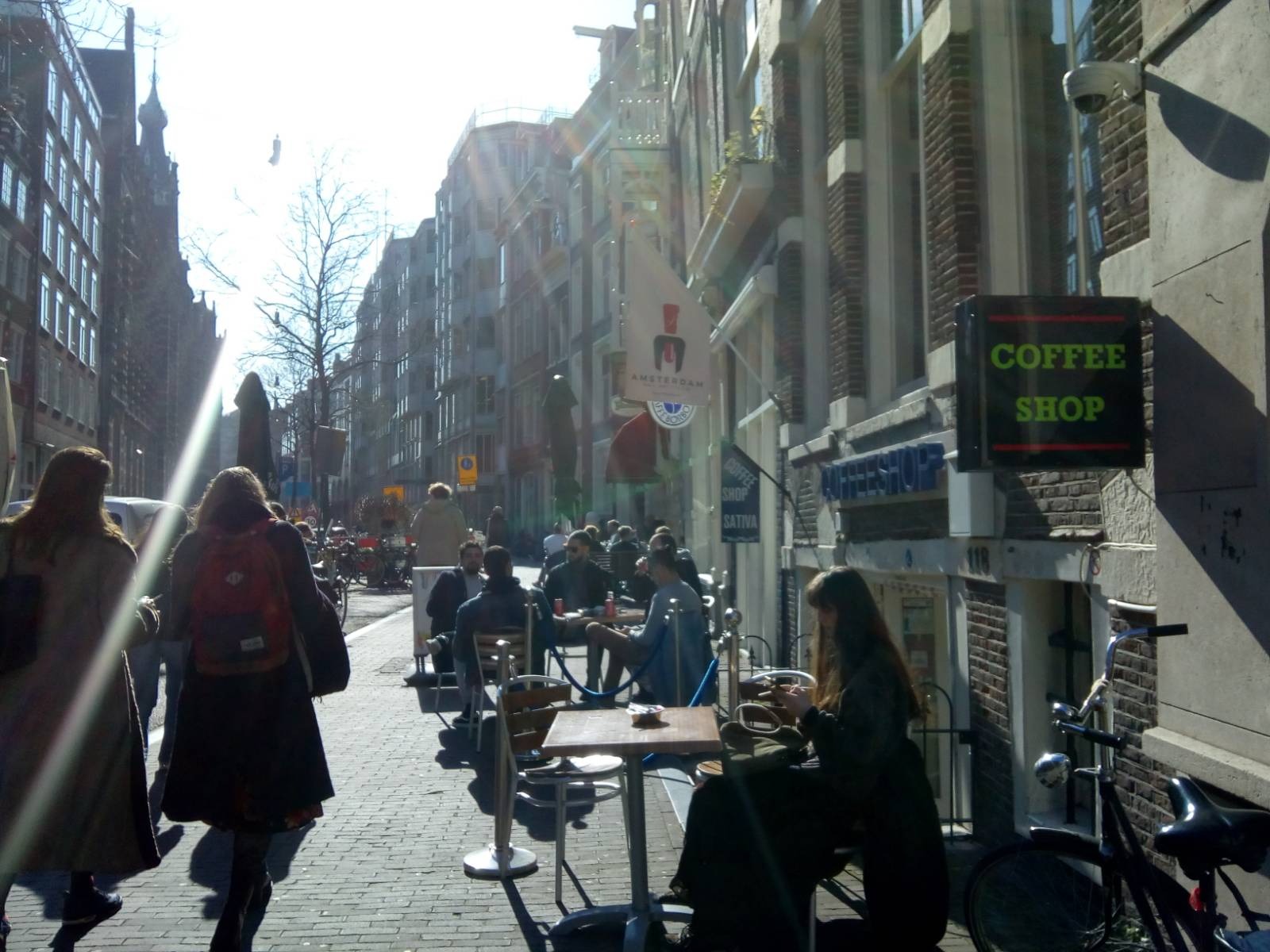
The capital Amsterdam is home to 166 of the 565 Dutch coffeeshops. The first-ever female mayor of the city, Femke Halsema, surprised many by saying she’s considering banning tourists from the coffeeshops. She could do this because of the ‘residence-criterium’, introduced by former justice minister Ivo Opstelten, a notoriously anti-cannabis hardliner in 2013. In typical Dutch fashion, the rule officially applies to the whole country but is only enforced in a few cities, most notably Maastricht.

To this day, the residence-criterium has never been enforced in Amsterdam. But it’s not off the table, as mayor Halsema has repeatedly stated. The corona pandemic has resulted in huge revenue declines for coffeeshops in the historic centre, that largely cater to tourists. Now that the tourists are returning, the residence-criterium remains a worry. And it’s not just the coffeeshops that expect street dealers and other black-market operatives to step in if non-residents are banned from coffeeshops.

Trying to sum up the state of the Dutch coffeeshop and cannabis policy, an old N.W.A. lyric comes to mind: ‘Movin’ like a tortoise, full of rigor mortis’. Let’s hope that the legalization plans of our big neighbour Germany will help speed things up a bit here.


By Derrick Bergman, Dutch Encod member, chairman of VOC (Union for the abolition of cannabis prohibition), cannabis journalist


Scan 1011

Our Little Pharm/Farm

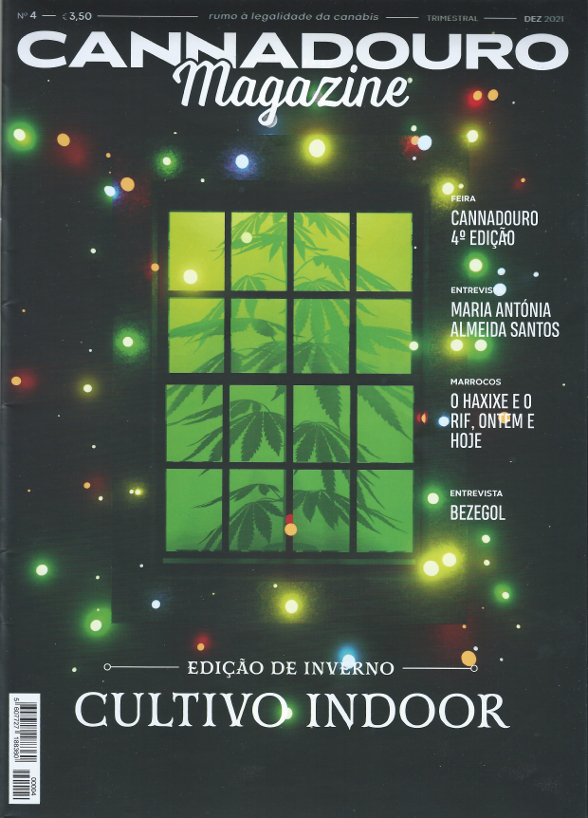
ENCOD regularly publishes articles in the Cannadouro Magazine from Portugal.

Here’s the last winter edition published in the Portuguese language with the English version below.

ENCOD, the European Coalition for Just and Effective Drug Policies, is advocating for the “freedom to farm”. But what does that mean? Whilst it is perceived as something totally normal to grow your own herbs and vegetables, many people worldwide are prosecuted for cultivating psychoactive plants and fungi for personal use. Due to multiple reasons, it is important that mankind does not lose its right to farm.

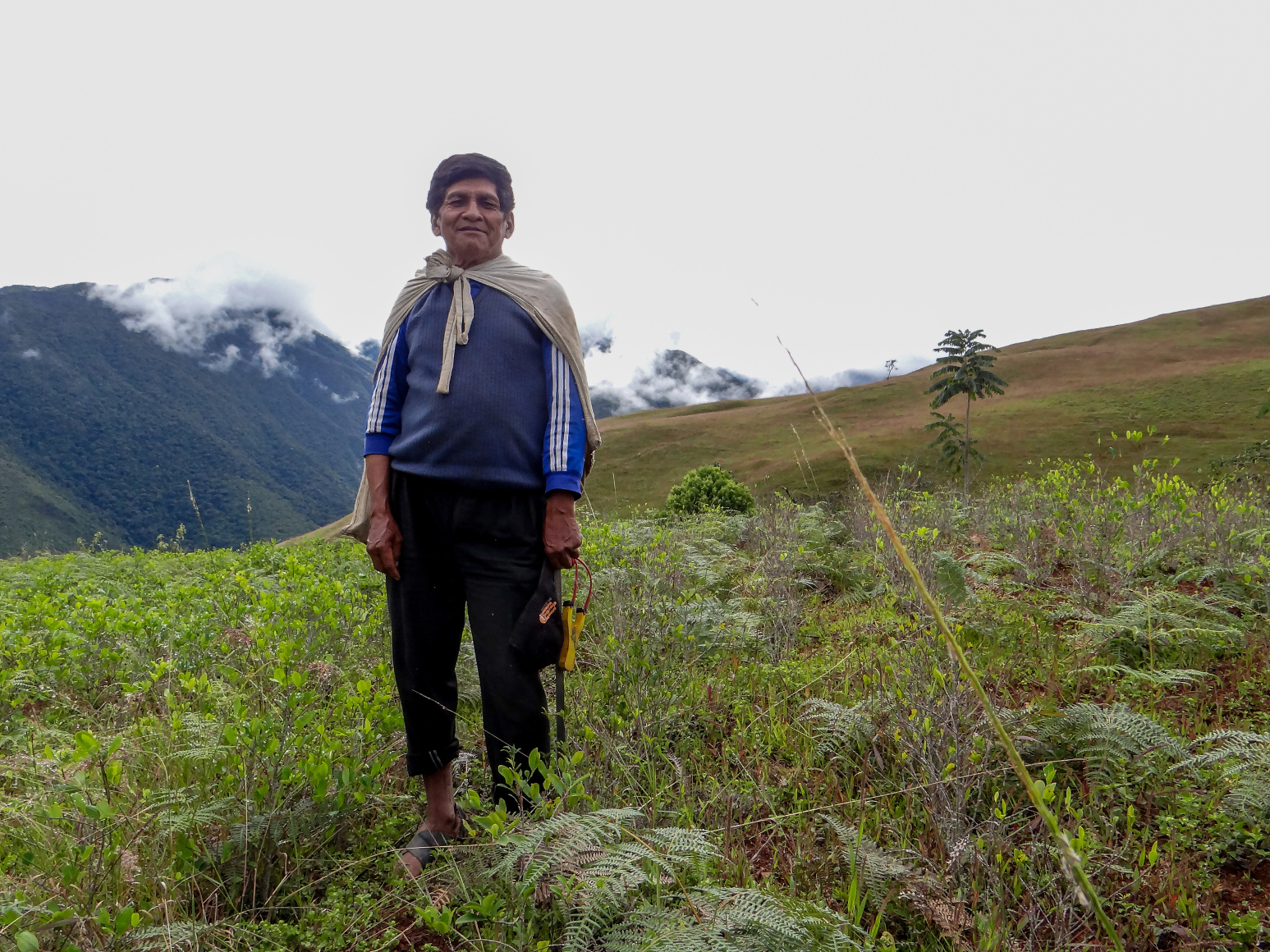
Farming, the contact with soil and plants is what made us who we are today. It sustained societies for millennia and we won’t allow these practices are being prohibited, restricted and controlled. However, small farmers have to be protected against corporate practices that are not only destroying families but whole species, cultivars and biodiversity in general. Several plants are prohibited by law, or their use is restricted, which is violating basic human rights. Even whilst more legislations adapt their hemp (Cannabis sativa) policies, there is still the debate about banning further plants, such as kratom (Mitragyna speciosa) or Iboga (Tabernanthe iboga). Many plants have been banned or tightly regulated without any obvious need for regulatory interference, e.g. salvia (Salvia divinorum) or kava (Piper methysticum). These regulatory practices are harmful to societies as they criminalise traditional cultivation and use and deter from getting involved in nature. 

Whilst it is debatable what would be the best regulatory model for cocaine, there was never a need for a ban on coca (Erythroxylum coca) and traditional coca products, such as tea and candy. To combat several contemporary challenges (such as prohibition, climate change, disrespect for human rights) ENCOD advocates for sustainable development of the world’s economies and farming policies that will protect and favour small farmers, self-sufficient production and social consumption models, as well as a public policy that is not prohibiting plants and substances that have been used by humans throughout history and can therefore be considered as part of the common heritage of humankind.

The so-called “war on drugs” is a war against people, plants and the whole environment. It is absurd that in some regions the beautiful poppy flower (Papaver somniferum) with its nutritious seeds is banned just because its latex, also known as opium, is used to reduce physical and mental pain. Of course, high and continuous consumption may lead to a substance use disorder, but is this a reason to ban a plant, ambush farmers and incarcerate those who disagree? Commercialising opium, as the British did in the 19th century, is something worth criticising and perhaps even impeding, but nobody should withhold this plant from mankind. Of course, the same applies to hemp and its THC-containing products, which are more and more used in the medical context.

Our concern about the impact of current drug policies upon society, the stigmatisation of users, together with economic disparity and associated harm to long-term human well-being, prompted us to emphasise the freedom to farm psychoactive plants, which should be declared the “common heritage of humankind”, irrespective of existing claims to national or international jurisdiction. “Freedom to farm” is proclaiming these plants as international commons, as significant natural resources that are acknowledged beyond the limits of national or international jurisdictions, and as such, are part of the common heritage of humankind. This is an ethical concept and a general concept of international law and therefore should undermine current regulatory practices. These resources should be available for everyone’s use and benefit.

Furthermore, we all hold the responsibility to care for and protect the environment, of which we are a part, for present and future generations. The global civil society is playing a crucial role in the development of, and advocacy for, freedom to farm. Please join our movement.

By Maja Kohek & Fabian Steinmetz

DSC05662

Why regulating cocaine benefits human rights

Today is Human Rights Day. Human rights and cocaine do not seem to go hand in hand. Human rights and the regulation of cocaine do though. By promoting cocaine regulation, we don’t mean to state cocaine isn’t a dangerous drug. We only argue that prohibiting cocaine makes the drug more dangerous, on both sides of consumption as of production. Regulating cocaine puts human’s individual and collective health first, prohibition focuses merely on the elimination of a drug and has clearly failed. Here’s why we claim regulated fairtrade cocaine is a human rights issue.

The War on Drugs failed to stop the flow of drugs, as between 2009 and 2018 the worldwide amount of people consuming drugs increased by 30%, from around 200 million people in 2009 to 269 million in 2018 (UNODC, World Drug Report 2020). This implies that around 269 million people consumed an uncontrolled substance.

The repressive approach and its failed objective created a few monsters: the global spread of violence, crime, and environmental crime. ‘Interdiction efforts are linked to the spread and fragmentation of trafficking routes – a phenomenon known as the “balloon and cockroach effect.” When interdiction efforts are focused in one location, drug traffickers simply relocate. Between 1996 and 2017, the Western Hemisphere transit zone grew from 2 million to 7 million square miles, making it more difficult and costly for law enforcement to track and disrupt trafficking networks. But as trafficking spread, it triggered a host of smuggling-related collateral damages: violence, corruption, a proliferation of weapons, and extensive and rapid environmental destruction,’ says Ohio State University scientist David Wrathall in Technology Networks Informatics.

While repression causes crime to spread around the globe, it does not protect its so-called initial objective, which is public health, as it leaves a risky product in hands of uncontrollable, uncontracted actors.

Latin America is known to be severely damaged by drug crime. The trade of illegal products is extremely violent. In 2018, in Mexico alone, the homicide toll was 28,816, a 15% increase from the previous year. Europe is also facing increasing competition, diversification, and violence due to the cocaine trade. Julia Viedma, Head of Department of the Operational and Analysis Centre at Europol: “Cocaine trafficking is one of the key security concerns we are facing in the EU right now. Nearly 40% of the criminal groups active in Europe are involved in drug trafficking, and the cocaine trade generates multi-billion-euro in criminal profits.”

When looking for humane and sustainable alternatives for the War on Drugs, one must not overlook the motivations for its origins. The current drug policy is a product of racism and oppression. Not entirely surprising, because when drug policy came into being 100 years ago, racism was woven into the institutions of white rulers who were the architects of the War on Drugs policy. Opium was the first drug to be banned because it allowed the government to take over control of Chinese migrants in the US. When the War on Drugs was announced by Nixon, it could target the Civil Rights Movement and left-wing hippies, as they were an obstacle in their governing. The War on Drugs is not a war aimed at resources but at people. And especially people of color: ‘It’s destroyed lives, torn families apart, filled our jails and prisons and hijacked countless futures of black and brown youth — but that’s what it was supposed to do.’

So, if we want to regulate cocaine, how can we ensure public health and social safety? What are the conditions for regulated fairtrade cocaine that is driven by human rights?

By taking the trade out of the hands of violent criminals, one reduces the financial capital of criminals and thus weakens their power. ‘If you decide to make a demanded product illegal, then as a government you lose control over both production and consumption. As a government you lose control over production, lose control over the price, there’s no control over the processing of drug waste and no control over the wealth accumulated by criminals,’ says Dutch drug researcher Ton Nabben. ‘If you regulate a product, then as a government you are able to exert regulations to protect its citizens.’

Regulation makes it possible to control the quality of drugs, like risky drugs such as cocaine, which is beneficial for public health. When a product is illegal one can only guess the dosage, the effect, and the side effects. Ton Nabben: ‘Under the current illegal policy, as a consumer, you have to rely on your dealer.’ If drugs were regulated, pharmaceuticals and pharmacists would be able to produce and sell them, in a controlled manner, they could provide information on side effects and set a minimum age. Also, if substances are legal, scientific research is easier to conduct. Like research on the effects and side effects, or research that would develop a less addictive form of cocaine, for example in the shape of a pill.

If we regulate cocaine, we are able to ensure fair-trade production. The cultivation of coca in Colombia, for example, is often the only option of income and a method of survival for marginalized and isolated communities. But because of the illegality of growing coca, their lives are constantly at stake as they are violently threatened by both the government and narco-traffickers. By involving coca farmers in the production of coca and cocaine, you strengthen their physical, mental and financial position. ‘A few tons of cocaine a year is enough in the Netherlands. We import them directly from a cooperating producing country, such as Colombia. In doing so, we cut off an enormous amount of unnecessary, costly, and violent distribution channels,’ Damián explains.

Strengthening the position of coca farmers can easily be achieved by allowing the sale of coca products. Coca is a healthy, medicinal plant and of the same psychoactive level as coffee. Despite its nutritional and medicinal properties, coca, like cocaine, is listed on Schedule 1 of the Single Convention on Narcotic Drugs. ‘If skiing is allowed, then we should certainly be allowed to drink coca tea,’ argues Dutch journalist Thijs Roes. ‘As consumers, we could benefit enormously from products such as coca tea or flour. So open shops and cafes where you can sell coca products.’

Before proceeding to the actual regulation of cocaine, we need to learn from our mistakes regarding the sale of legal drugs such as cigarettes and alcohol. The availability of cigarettes and alcohol is being more and more restricted, but alcohol is still being commercialized and is still openly displayed in supermarkets for example. In order to ensure the health of consumers, the trade of risky products must meet a number of conditions.

For the distribution of cocaine, imagine medical-recreational pharmacies with specialized staff who provide objective advice and education. The interior of such a pharmacy should not be too appealing and thus should have a neutral appearance. After all, we are dealing with a risky product and a neutral appearance makes people aware and more cautious. ‘Less hippie than a Dutch smart shop or a coca social club and more medical,’ says Thijs.

A regulation policy should balance between availability and invisibility, in a way that consumption will not increase. The sale of cocaine should be sufficiently accessible to counteract the illicit market, but not too widespread as consumption should not be made attractive. The price of cocaine must be below that of the illegal market, but not too low, because consumption must not be encouraged. Thus, no advertising, not too many outlets, and not too visible. These thresholds are also necessary to demonstrate cocaine is a risky product.

Regulating cocaine generates income from taxes. These can be used for drug education, for example. To prevent problematic drug use, it is important to offer lessons in secondary schools about self-knowledge, awareness, and resilience, because prevention of problematic substance use partly lies in not knowing your own limits. Being resilient and self-aware are important competencies for youngsters who grow curiosity towards drugs. ‘Who am I, what do I want, and am I doing something to fit in or because I want to myself?’ Drug education should therefore not merely be focused on the effect and side effects of a certain substance.

The total ban on cocaine has turned out to be an illusion. It is thus time to take a pragmatic and constructive approach by taking cocaine off the illegal market and regulating its sale. Just like with cigarette and alcohol sales, it will be a process of trial and error. But unlike a total ban, the regulation puts human lives and environmental protection first.

This article is based on a study by Fairtrade Cocaine on how to regulate cocaine. The findings of this study were published earlier in Het Parool, a Dutch newspaper.

Article by Janneke Nijmeijer:

As an anthropology student I saw the increase of products with a more sustainable and humane production chain. Nowadays we can buy slave-free chocolate, fair-trade coffee, and slow fashion. Simultaneously I experienced the normalization of recreational drug use within my personal life. These parallel phenomena made me wonder: how fair trade is the drugs we consume? I started studying the consequences of cocaine trade for societies that are involved in the production chain. The crime, violence, corruption, and ecological destruction that derive from the War on Drugs-policy motivated me to rethink the global vision on tackling the cocaine trade. As consumption is here to stay, why shouldn’t we consider fair trade drugs? If u would like to have more information about the foundation and its goals, send an email to info@fairtradecoke.org or to janneke.nijmeijer@fairtradecoke.org.

Visit http://fairtradecoke.org/ for more information!


Erec Hand & Topbud 2018-111

Germany plans to legalise cannabis: The beginning of the end of cannabis prohibition in Europe?

Cannabis will soon be legally available for consumption in Germany. Last week, the newly elected coalition of SPD, Greens, and FDP agreed on this in their coalition agreement. The distribution will be controlled in licensed shops and only to adults. Although in Austria the legalisation of cannabis seems to be a long way off, many assume that the German way will have an impact on the domestic drug policy in the long run.

Internationally, there are different models of legalisation or decriminalisation of cannabis for consumption purposes. For example in Canada, in parts of the USA, in Uruguay, Portugal, or the Czech Republic. While in Canada cannabis can be bought legally in shops or over the internet, in Portugal possession of cannabis is illegal but not prosecuted.

Natasa Konopitzky talks to toxicologist Fabian Steinmetz and lawyer Martin Feigl about the effects of cannabis prohibition, the consequences of legalisation, and the future of drug policy in Europe.

Listen to the interview (in German) here.


cultiva2021

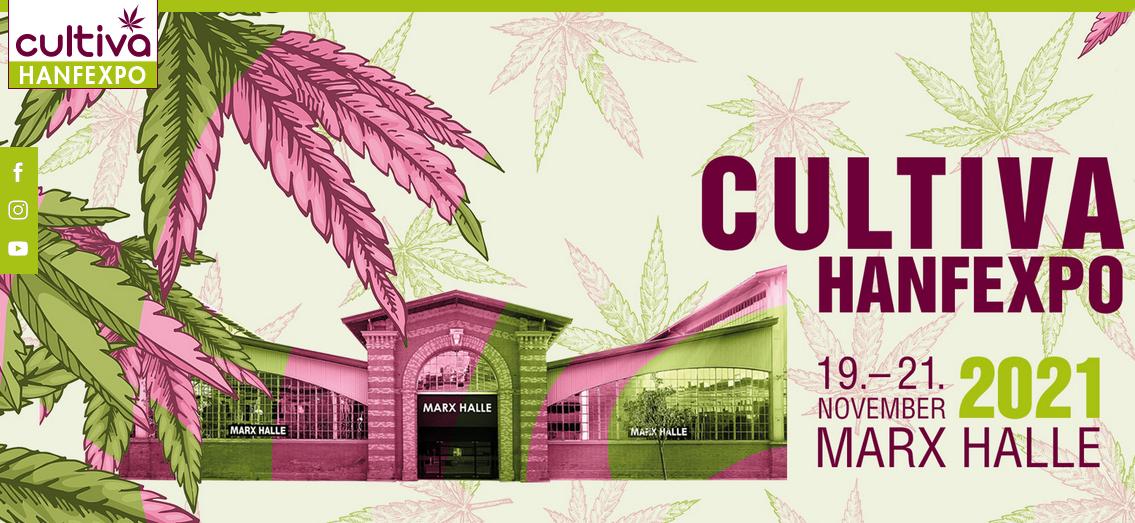
Hanfexpo/Cultiva 2021 in Vienna

From 19th to 21st of November 2021 we participated at the much expected Hanfexpo / Cultiva 2021 in Vienna. The strict COVID-19 measures (2G+: vaccinated or recovered + a negative PCR test and FFP2 mask when walking around) resulted in a fair with a small number of visitors, the exhibitors had only a small assortment, and some presentations were canceled. It was a game of chance from the very beginning. We wish them better luck for next year.

Here are some snapshots from the event.


IMG_4433-1

Translating cannabis legalization into numbers

The economists Justus Haucap and Leon Knoke published an updated report on the economic consequences of cannabis legalization in Germany.

A summary of their findings: the country could profit almost 5 billion € by collecting taxes (sales, trade, income, social security) and from savings of the police/court/prison system.

Download the full 2021 report here (in German).
Access the report from 2018 here (in German).