Putting people first; empowering communities and driving innovation.
Reflections following the 6th European Harm Reduction Conference.
In the first week of December around five hundred participants from across Europe travelled to Warsaw for a three-day conference on drug use and drug policy organised by the Correlation European Harm Reduction Network (C-EHRN). Echoing the United Nations Sustainable Development Goals ethos to ‘leave no one behind’, this year’s European Harm Reduction Conference’s motto, Putting People First, acts as a testament to the new found consensus on human rights, harm reduction and drug policy.
Various distinguished speakers, amongst which the Mayor of Amsterdam Femke Halsema, the Executive Secretary of the Pompidou Group Denis Huber, the UN Human Rights and Drug Policy Advisor Zaved Mahmood, and the UN Human Rights Commissioner Volker Türk, spoke about the importance of moving drug policies away from criminalisation, and closer to human rights principles. Some of the speakers also explored the role of the responsible regulation of drugs in transforming the present criminally monpolised market into one which is regulated, monitored, and adjusted according to evidence and research.
Speaking in the opening session Daphne Chronopoulou, Chairperson of the European Network of People who use drugs stated: As a woman who uses drugs, as an activist and Chair of the network, I am the definition of harm reduction. And therefore, she continued, Nothing About Us, Without Us!
This bold statement underlined the centrality of providing people with living experiences an equal opportunity to participate in discussions, conferences and policy design directly impacting their well-being and lives. The conference included multiple parallel sessions, and the participation of various speakers and experts in the fields of drug policy reform, human rights, civil society representing the voice of people who use drugs and regulation of drugs. An inclusive and broad definition of harm reduction was recognised as important to better reflect emerging drug trends and evolving challenges. Speakers underlined the need to move away from strictly medicalised and heroin focused interventions, and ensure all people who use drugs have equal access to health, social, economic and cultural rights.
The role of responsible regulation was also discussed as an important tool to significantly address the criminal and violent nature of illegal drug markets and ensure citizens are not exposed to adulterants and risky synthetic drugs. Multiple sessions explored various areas linked with drug policy, including considerations for gender equality, and the importance develop bottom-up and peer-led solutions addressing the needs of different communities and groups.
An art exhibition Junk(ie) Art and a civil society exhibition space further complemented the conference’s efforts of merging theoretical speeches and presentations with practical solutions and tools.
During the session on cannabis regulation Karen Mamo reminded government representatives from Switzerland, Malta, and Germany that one cannot fail to mention and recognise the pivotal role played by civil society and grass-roots organisations in advancing the cannabis frameworks they are now speaking about. She also mentioned the urgent need for European countries regulating cannabis to include in the discussion and regulatory framework measures to ensure restorative justice and social equity are prioritised and communities most negatively impacted by prohibition are provided with added tools to participate in the regulated cannabis market.
Speaking also during the session on harm reduction in the media in the age of disinformation, Karen Mamo underlined the central role of language in preventing or facilitating negative perceptions about people who use drugs. She underlined a shared goal between journalists, health practitioners, educators, and the broader community to move away from stigmatised language and policies, and recognise that language does matter!
In conclusion, what could be three keywords to describe the conference’s outcome? Dignity, for all people, irrespectively if using an illegal substance and have no intention to stop. Empowerment, to challenge discriminatory laws and prioritise human centred policies over criminalisation and dehumanising policies. Hope, for the next five years to advance increased opportunities for comprehensive and inclusive harm reduction tools, and a continued discussion on the responsible regulation of drugs, the latter recognised as a catalyst for innovation and positive social change.
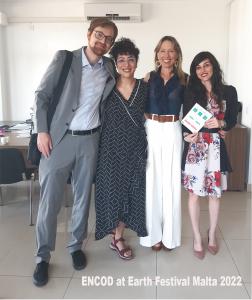
The 6th European Harm Reduction Conference was attended by the national focal point for CEHRN Ms Karen Mamo and young researcher and social worker Mr Mark Farrugia (Harm Reduction Malta).